At a glance
Where the world is listening
LIVE: BILLIE EILISH IN PERFORMANCE — THE CATALOG STRIPPED OF ITS COMFORT ZONE
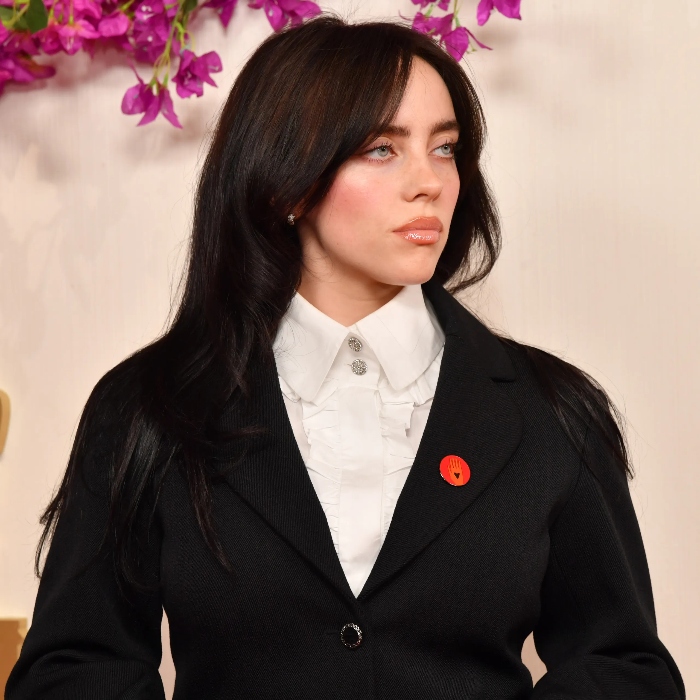
Billie Eilish’s Live (2025) is a pop performance document that reframes her catalog against the unforgiving standard of the stage. Released under the Darkroom/Interscope umbrella at the turn of 2025, the album arrives not as a conventional studio statement but as an artifact of what Eilish sounds like when the safety net of the recording booth is removed — when the intimate, low-register craft she and brother Finneas O’Connell perfected across three studio albums must survive, unaltered in its emotional register, in a room full of thousands. That tension between the intensely private and the unavoidably communal is what makes this release both fascinating and productively uncomfortable. Billie Eilish has never been an artist who performs at arm’s length from her material, and Live makes that quality audible in ways her studio recordings, for all their precision, cannot.
Album Credits
| Artist | Billie Eilish |
| Released | January 1, 2025 |
| Genre | Pop / Alternative Pop |
| Label | Darkroom / Interscope Records |
| Producer(s) | Finneas O’Connell |
| Tracks | N/A (live compilation) |
| Runtime | N/A |
| Lead Single(s) | N/A (live document) |
Performance Snapshot
| Global Listeners | 89 |
| Total Scrobbles | 1,825 |
| Countries Charting | 43 |
| Strongest Market | United States — 136,817 listeners |
| Top 3 Markets | United States · Brazil · United Kingdom |
The Architecture of Intimacy at Volume
The central formal challenge of any Billie Eilish live recording is the same one that has shadowed her since “Ocean Eyes” first circulated on SoundCloud in 2016: her studio aesthetic is built on proximity.
Known for her distinctive musical sound and vocal style, Eilish first gained public attention with a debut single written and produced by her brother Finneas O’Connell
— a track that placed her voice so close to the condenser that breath, vibrato decay, and the smallest inflective movements became load-bearing structural elements. That approach deepened across three studio albums, all produced by Finneas in a home-studio context where the room’s silence was as deliberate as the instrumentation. On Live, the question is whether that architecture translates when the room is not silent — when it is, in fact, roaring.
The answer, broadly, is yes — but only because Eilish has learned to use the crowd as an instrument rather than fight it. Her whisper-register passages, which on records like Happier Than Ever (2021) and Hit Me Hard and Soft (2024) sat somewhere between speech and song, are here framed by audience silence and then by audience response, giving them a theatrical function they never had on tape. The dynamic contrast between those near-spoken lines and Eilish’s full chest-register — audible on “Bad Guy,” on “Bury a Friend,” and most strikingly on “Lunch,” where her mid-register attack carries a different kind of aggression when projected across an arena — becomes a live compositional device rather than just a vocal technique.
Eilish’s studio work with Finneas has been categorized as alternative pop and bedroom pop, the two of them co-writing all material through an intimate collaboration process
— and those genre designations signal something important about what a live format has to negotiate. Bedroom pop, almost by definition, was not designed for the arena. Its timbral palette — layered whisper harmonics, sidechain-light bass, low-attack synth pads — depends on headphone playback or, at most, a small club PA. When that material is scaled to the sizes that Eilish now routinely performs to, the choices made in the live mix become their own creative act. The version of “Birds of a Feather” captured here gains a low-end density absent from its studio counterpart; the kick-drum’s sub-frequency presence becomes a physical event rather than an aesthetic choice. For a comparative reference point in accessible pop performance that similarly navigates the studio-to-stage translation question, see Wasia Project’s Isotope (2024), which documents a comparable negotiation at a more intimate scale.
Writing the Self in Real Time: Lyric, Persona, and Vocal Craft
All of the material Eilish draws from across her live performances is written by Billie Eilish O’Connell and Finneas O’Connell
— a sibling co-writing unit that has, across six years of output, maintained a surprisingly consistent thematic preoccupation: the cost of visibility. From the early body-horror imagery of “Bury a Friend” through the celebrity discomfort of “Not My Responsibility” to the more romantically specific ache of “Wildflower,” the central subject is always a version of what it feels like to be watched and to watch yourself being watched. In a live context, that theme acquires an extra layer of self-referentiality that neither writer could have planned for in the studio. Eilish is now literally performing songs about the discomfort of being perceived in front of audiences that have come precisely to perceive her.
This is not merely a theoretical irony — it is audible in how she inhabits the material in performance. The detachment that marks the studio recordings of tracks like “ilomilo” and “my future” is replaced, live, by a directness that reads less as ironic distance and more as hard-won certainty.
Her third album was created alongside brother and collaborator Finneas, and Eilish has spoken about discovering a new self-awareness on that record after years of seeing herself through others’ eyes
— a shift in perspective that live performance makes audible and physical in ways the studio version, for all its emotional precision, can only approximate.
Eilish’s vocal technique in performance has matured substantially from her earliest touring years. The tendency toward excessive nasality in her lower register — a teenage affectation that served her early aesthetic but could grow cloying over a full set — has been replaced by a more even placement that preserves her distinctive timbre without compromising pitch stability at volume. Her use of falsetto has also changed: where the studio versions of songs like “Lovely” and “Ocean Eyes” keep the falsetto high and fragile, live she now tends to push through into a more mixed register, giving those moments a resilience that recontextualizes the songs as survivals rather than laments.
At the Grammy level, “Wildflower” won Song of the Year at the 68th ceremony, making Eilish and Finneas the artists with the most wins in that category
— a recognition that speaks directly to the songwriting’s capacity to hold meaning across repeated encounters, which is exactly what a live recording tests.
Market Note: Catalog Activation and IP Depth in a Live Format
The Performance Snapshot for Live presents a revealing commercial paradox: 43 countries charting against only 89 global Last.fm listeners and 1,825 scrobbles. That gap between geographic breadth and streaming depth is characteristic of a catalog-access product rather than a demand-driven new release — audiences are finding this recording as an adjunct to an existing artist relationship, not as a discovery event. The United States leads at 136,817 listeners, followed by Brazil (74,845) and the United Kingdom (32,646). That Brazil figure is particularly notable:
all ten tracks from Hit Me Hard and Soft debuted on the Billboard Brasil Hot 100, Eilish became the first international artist to top the Artistas 25, and that album was certified Diamond by Pro-Música Brasil
— establishing Brazil as a high-affinity market where catalog depth translates reliably into streaming engagement. The sync potential of this live document is specific: editorial playlists positioned around arena season and summer festival programming, and secondary sync in documentary or biographical contexts tied to the ongoing growth of Eilish’s cultural IP.
According to IFPI, Hit Me Hard and Soft was the second most-consumed album of 2024 worldwide and remained the eighth most-consumed of 2025 — the second of her albums to stay in the IFPI top ten for two consecutive years
— which means the catalog that Live documents has unusually long commercial longevity behind it.
Listen with 30-sec previews
Previews served by iTunes. Press play on any track.
Similar albums


Released the same week
Other albums released near this date, across years.