At a glance
Where the world is listening
SWAG: Justin Bieber’s Quietest Comeback Is Also His Most Revealing
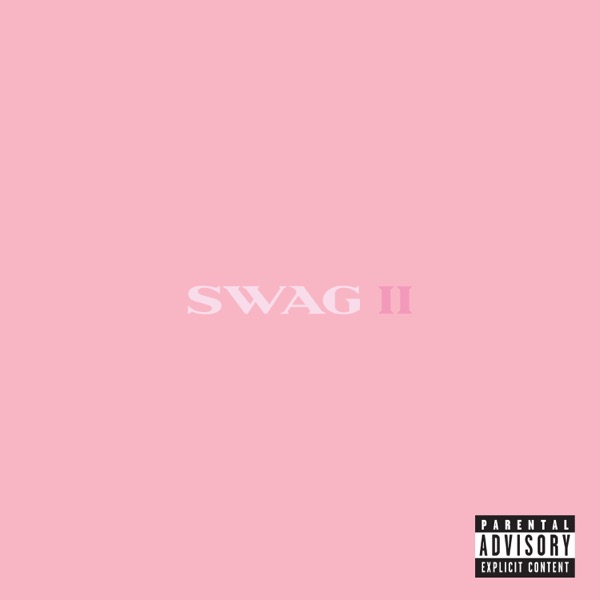
Justin Bieber’s seventh studio album SWAG, released July 11, 2025, is the most musically ambitious and personally exposed work of his career. After four years of public silence that carried the weight of health disclosures, managerial separation, and early fatherhood, Bieber returned not with a calculated radio reset but with a surprise-dropped, 21-track R&B and synth-pop record that asked its audience to sit with him rather than dance alongside him. The result is uneven, sometimes overlong, occasionally extraordinary — and almost always interesting in ways his earlier catalog rarely managed.
Album Credits
| Artist | Justin Bieber |
| Released | July 11, 2025 |
| Genre | R&B / Synth-Pop |
| Label | Def Jam Recordings / ILH Productions |
| Producer(s) | Justin Bieber, Carter Lang, Dijon, Eddie Benjamin, Mk.gee, Dylan Wiggins, Daniel Chetrit, Knox Fortune, Daniel Caesar, Eli Teplin, Harv |
| Tracks | 21 |
| Runtime | approx. 57 minutes |
| Lead Single(s) | “Daisies,” “Yukon,” “First Place” |
Performance Snapshot
| Global Listeners | 916,309 |
| Total Scrobbles | 24,034,865 |
| Countries Charting | 43 |
| Strongest Market | United States — 204,695 listeners |
| Top 3 Markets | United States, Brazil, United Kingdom |
Production Architecture: Warmth Over Gloss
An R&B and synth-pop album, SWAG serves as a follow-up to Bieber’s previous record Justice and his second extended play Freedom, both of which were released in 2021.
The four-year gap separating those projects from this one registers sonically as a meaningful reset. Where Justice leaned into compressed, radio-formatted productions built for quick-cycle streaming, SWAG favors lower tempos, wider dynamic range, and a general preference for organic texture over DSP-optimized polish.
Production was handled by Bieber alongside Carter Lang, Dylan Wiggins, Daniel Chetrit, Mk.gee, Eli Teplin, Knox Fortune, Daniel Caesar, and Harv
— a deliberately eclectic network that bridges indie-adjacent underground producers with established pop craftsmen. Carter Lang, known for his mid-register synth arrangements on SZA records, brings a dusty, unhurried warmth to several cuts. Mk.gee’s fingerprints — wiry guitar lines, slightly de-tuned harmonic atmosphere — surface most clearly in the album’s more introspective mid-section, giving tracks a faintly lo-fi intimacy that contrasts productively with the fuller, hi-sheen moments on “Sweet Spot” and “Way It Is.”
According to The Hollywood Reporter, Bieber made the album between “jam sessions” at his Los Angeles home and Iceland
, and that bifurcated geography shows up in the tonal range. The Los Angeles-recorded material carries the ease of late-night sessions — unhurried, bass-forward, pillowy — while the Iceland-completed tracks feel more open, cooler in register, with some arrangements that let the silence between notes do significant work. “Daisies,” the album’s lead single and arguably its most fully realized production, sits squarely in the former register: a slow-burn mid-tempo built on a delayed piano figure, sidechain-compressed sub bass, and Bieber’s falsetto riding a melody that keeps resolving a half-step lower than the ear expects. It is precise pop engineering dressed in the clothes of spontaneity.
Clash described the record as one that “broadly sits on 90s-adjacent synth pop — sometimes fixed in its approach, sometimes vaporised,” adding that “it’s always colourful, and for all its breadth, it’s always entertaining.”
That 90s adjacency is real and worth naming precisely: the harmonic language on several tracks recalls New Jack Swing’s tendency toward major-seventh chord voicings softened by minor-sixth passing tones, without fully committing to that genre’s rhythmic aggression. It is a mood-board rather than a revival, and the producers are skilled enough to prevent it from tipping into pastiche. Listeners interested in other releases that walk a similar line between contemporary R&B architecture and historical pop lineage will find a useful counterpoint in Katy Perry’s 143, which attempted a somewhat less graceful navigation of the same terrain in 2024.
Songwriting and Persona: Faith, Fatherhood, and Selective Candor
Bieber’s seventh album was “inspired by his devotion as a husband and father,” per a press release
, and while press releases are rarely reliable interpretive guides, this one maps accurately onto the album’s actual lyrical center of gravity.
Justin Bieber’s new album takes a cautious approach to pop, adding depth to the pop star’s familiar oeuvre while highlighting his newfound contentment.
That contentment is the album’s strongest thematic thread and, at times, its most limiting constraint.
AllMusic commented that “With rare exception, Swag is about doe-eyed seduction, loyalty, humility, and faith,” and that “Swag itself hardly shows Bieber embracing the term as he did in the early 2010s.”
The title, which reads as provocation or self-aware irony depending on one’s generosity toward the artist, functions more as a placeholder for a persona he is still actively reconstructing than as any genuine bravado. The album’s emotional architecture is mostly horizontal — accumulated reflections rather than dramatic arcs — which suits its production style but creates pacing problems across a 21-track runtime.
Each track speaks about his public life, mental struggles, and bonds with wife Hailey and son Jack Blues.
“Dadz Love,” featuring Lil B, is the album’s most unexpected and charming document of this domesticity, built around a conversational delivery that owes more to spoken-word intimacy than to conventional verse-chorus pop.
Cult rapper Lil B, who Bieber was recently spotted with in Los Angeles, makes one of his most high-profile appearances in years on the track
, and the pairing works precisely because neither artist is performing in the conventional sense — it registers as two friends in a room.
Comedian Druski appears on a handful of skits between songs, while the album ends with “Forgiveness,” credited to Marvin Winans
, who is a pastor and gospel recording artist. The sequencing from irreverent comedy (the Druski interludes, which are genuinely funny) to devotional close creates an unusual tonal bracket for the whole project — one that Bieber clearly means as autobiographical rather than theatrical. Vocally, he is in stronger shape than on several 2021 recordings; his upper-register control is more reliable, and he deploys falsetto with more restraint than in earlier periods, letting it land as emphasis rather than default. “First Place,” the third official single, showcases his midrange most effectively, with an understated R&B melisma that lands without the overselling that has occasionally characterized his live and recorded performances.
Market Note: A Surprise-Release Model and Its Streaming Ceiling
Bieber’s SWAG bowed with 163,000 equivalent album units, but almost none of those came from actual album sales since it was a late-breaking surprise release with no physical product in the marketplace at all, and no vinyl expected to be out for months to come — only 6,000 of those units were comprised of sales, all digital downloads.
The demand driver here was entirely streaming-led, and the numbers are consequential:
Bieber had the best streaming week of his career, notching 198.77 million streams per Luminate, with breakout hit “Daisies” debuting at No. 2 on the Hot 100 after topping Spotify and Apple Music’s daily U.S. charts.
With 916,309 global listeners and 24 million total scrobbles across 43 charting countries, the catalog’s geographic spread is broad enough to support multi-cycle sync placement and long-tail catalog investment. The Brazil market — 106,953 listeners, second only to the United States — signals significant Latin streaming infrastructure that is frequently overlooked in North American-centric release strategy.
Swag earned four Grammy nominations, including Album of the Year, Pop Vocal Album, Pop Solo Performance for “Daisies,” and Best R&B Performance for “Yukon”
— a nominations profile that extends the IP’s premium positioning beyond cycle-level streaming velocity into institutional recognition. For sync and licensing purposes, the album’s introspective mid-tempo productions, particularly “Daisies” and “First Place,” carry strong placement potential in prestige TV drama and long-form advertising formats.
Listen with 30-sec previews
Previews served by iTunes. Press play on any track.
Similar albums


Released the same week
Other albums released near this date, across years.