At a glance
Where the world is listening
MANCHILD: SABRINA CARPENTER OPENS A NEW ERA WITH HER SHARPEST SINGLE YET
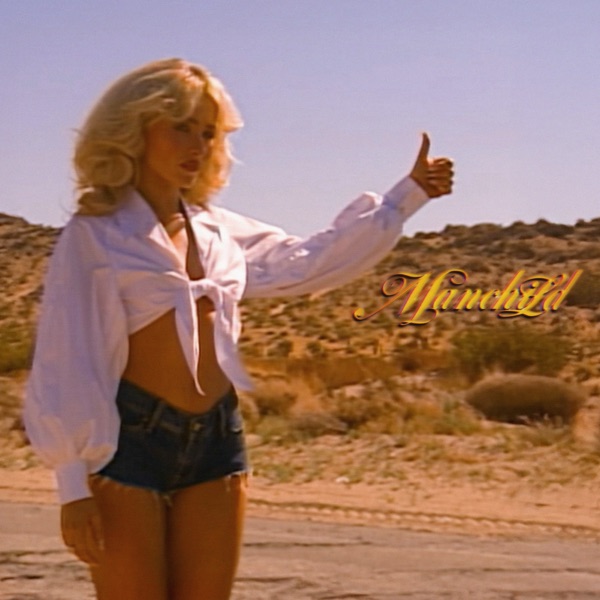
Sabrina Carpenter’s “Manchild,” the lead single from her seventh studio album Man’s Best Friend (Island Records, 2025), arrived on June 5, 2025 and immediately reshaped the pop chart conversation.
In the United States, “Manchild” debuted atop the Billboard Hot 100, earning Carpenter her second number-one single, after “Please Please Please,” and first number-one debut.
Co-written and co-produced by Carpenter and Jack Antonoff, with additional songwriting by Amy Allen, the track is a blend of country pop, bubblegum pop, pop rock, and synth-pop, featuring country influences and a disco-inspired energy.
In a pop moment crowded with careful hedging and studied persona management, the song landed with the blunt confidence of someone who had nothing left to prove — and knew it.
Album Credits
| Artist | Sabrina Carpenter |
| Released | June 5, 2025 (lead single); August 29, 2025 (parent album Man’s Best Friend) |
| Genre | Pop, Country Pop, Synth-Pop, Bubblegum Pop, Pop Rock |
| Label | Island Records (UMG) |
| Producer(s) | Sabrina Carpenter, Jack Antonoff, John Ryan |
| Tracks (album) | 12 (standard); 13 with vinyl bonus track “Such A Funny Way” |
| Runtime | N/A (single) |
| Lead Single(s) | “Manchild” (June 5, 2025); “Tears” (August 29, 2025) |
Performance Snapshot
| Global Listeners | 979,628 |
| Total Scrobbles | 14,504,143 |
| Countries Charting | 43 |
| Strongest Market | United States — 169,049 listeners |
| Top 3 Markets | United States, Brazil, United Kingdom |
Production Architecture: Where Disco Meets the Dust Road
The song begins with Carpenter laughing and saying “Oh, boy” in a sarcastic tone before it transitions to a synth-pop drum beat with a country twang.
That eight-second opening is a precise statement of aesthetic intent: the laughing woman who is also in complete sonic control. What follows is a production exercise in productive contradiction — Jack Antonoff’s fingerprints are everywhere, from the wide-ratio drum programming to the shimmer of sitar ornamentation, but the architecture belongs to Carpenter as much as it does to him.
With this album, Carpenter made her record producer debut, co-producing all the tracks with Antonoff and Ryan.
For a pop artist who had spent years being the beneficiary of other people’s boards, that credit matters.
Co-written and co-produced by Carpenter and Jack Antonoff, with additional songwriting by Amy Allen, the track is a blend of country pop, bubblegum pop, pop rock, and synth-pop, featuring country influences and a disco-inspired energy.
The instrumentation on “Manchild” is denser than its breezy surface suggests.
Antonoff contributed percussion, programming, synthesizer, electric guitar, bass, drums, acoustic guitar, banjo, sitar, and Mellotron across the album’s tracks,
and on “Manchild” specifically, the sitar sits in the upper-mid register as a texture rather than a melodic device — a choice that gives the track an offhand exoticism that keeps it from settling too comfortably into any one genre lane. The drum hits land with a compression ratio that pushes the kick into the chest without losing the room ambience; it’s loud mastering done with discipline rather than desperation.
The Man’s Best Friend album sees Carpenter and main collaborators Jack Antonoff and John Ryan continuing in a similar vein as Short n’ Sweet, paying homage to the past with the multi-culti, pan-genre pastiche of lead single “Manchild” bumping up against the Paula Abdul-era dance-pop of “House Tour” and the yacht-rock-meets-R&B standout “Never Getting Laid,” which is filled with smooth electric piano and some very ’70s-coded mono synth lines.
Listeners drawn to the retro-eclectic production sensibility on display here will find a natural companion piece in Kylie Minogue’s My Oh My, which mines a similar disco-pop lineage with comparable craftsmanship.
Critics have compared the album’s music to ABBA and Fleetwood Mac’s Tusk album,
which is a reference cluster that tells you something real: this is pop that knows its lineage and wears it without apology.
Songwriting and Persona: Comedy as a Precision Instrument
The lyrical mode of “Manchild” is comic aggression delivered in a major key — which is, when you think about it, much harder to execute than its surface ease implies.
Lyrically, the song is a pointed critique of an ex-boyfriend, characterized by Carpenter as “stupid, slow, useless, and incompetent.”
The setup is simple to the point of being reductive, except Carpenter and her co-writers understand that the simplicity is structural, not lazy. The insults land harder because the melody underneath them is sweet. Dissonance between form and content is one of the oldest comic devices in music, and the team here deploys it with enough awareness that it reads as choice rather than accident.
Throughout the song, she hurls “insults over sweet and upbeat melodies” and delivers “withering couplets.”
The song is about a pathetic ex-boyfriend who Carpenter “comically lays into.”
What distinguishes the writing from a generic breakup track is register control: Carpenter’s vocal delivery shifts from mock-sincere to openly sardonic within single lines, and the transitions are clean enough that a casual listener catches the wit without needing to excavate it. The humor is accessible — genuinely, strategically accessible — without being dumbed down.
The broader album places “Manchild” at the front of a thematic arc that runs through frustrated desire, emotional incompatibility, and darkly funny self-deprecation.
Playing the part of the romantically and sexually thwarted underdog in a failing relationship — as she also does in “Nobody’s Son” and “Never Getting Laid” — is a kind of smart self-deprecation that lets Carpenter be as much of an Everygirl as she is a glammed-up dream girl.
The trio of Carpenter, Allen, and Antonoff had previously worked together on her 2024 album Short n’ Sweet, reuniting as a Grammy-winning creative team for this release.
Their working chemistry by this point is audible as efficiency: no wasted bars, no melodic dead weight.
Vocally, Carpenter operates in a mid-soprano range that she rarely pushes to its ceiling, which is a deliberate choice. Her strength lies in diction and timing rather than in technical display — she is fundamentally a performer of phrasing, and “Manchild” gives her a verse structure with enough rhythmic flexibility to show that off.
She revealed that, having felt more “understood” by the success and positive reception of Short n’ Sweet, she started work on Man’s Best Friend almost immediately after in Los Angeles before continuing while in London and finishing the album in Los Angeles and New York.
That cross-city writing process shows in the song’s tonal confidence — this is not the work of someone anxious about the follow-up.
Market Note: Multi-Format Demand and Catalog Longevity
“Manchild” presents one of 2025’s clearest case studies in multi-format demand architecture.
Helped by an excellent start on streaming, an action-packed music video, and a good amount of physical sales on vinyl, Carpenter’s new single “Manchild” bowed atop the Hot 100.
It sold 14,000 copies on 7-inch vinyl, on which it was released with the exclusive instrumental B-side, “Inside of Your Head When You’ve Just Won an Argument with a Man,”
demonstrating that the physical format remains a meaningful demand driver when the product design is deliberate. With 979,628 global Last.fm listeners and 14,504,143 total scrobbles across 43 countries, the single’s streaming velocity reflects sustained algorithmic relevance well beyond its chart peak week.
The second season of Netflix’s Nobody Wants This was paced by “Manchild” on Billboard’s Top TV Songs chart,
confirming strong sync potential and the song’s capacity to move between platforms without losing contextual coherence.
The album debuted at number one in 18 countries, including the United States, where it was certified platinum by the Recording Industry Association of America.
IP strength is substantial:
“Manchild” earned four nominations at the 68th Grammy Awards, including Record of the Year and Song of the Year,
a profile that extends catalog longevity considerably beyond the typical lead-single cycle.
Listen with 30-sec previews
Previews served by iTunes. Press play on any track.
Similar albums






Released the same week
Other albums released near this date, across years.