At a glance
Where the world is listening
1971-06-26: AMSTEL FREE CONCERT, AMSTERDAMSE BOS — A LEGAL ARTIFACT THAT EARNS ITS KEEP
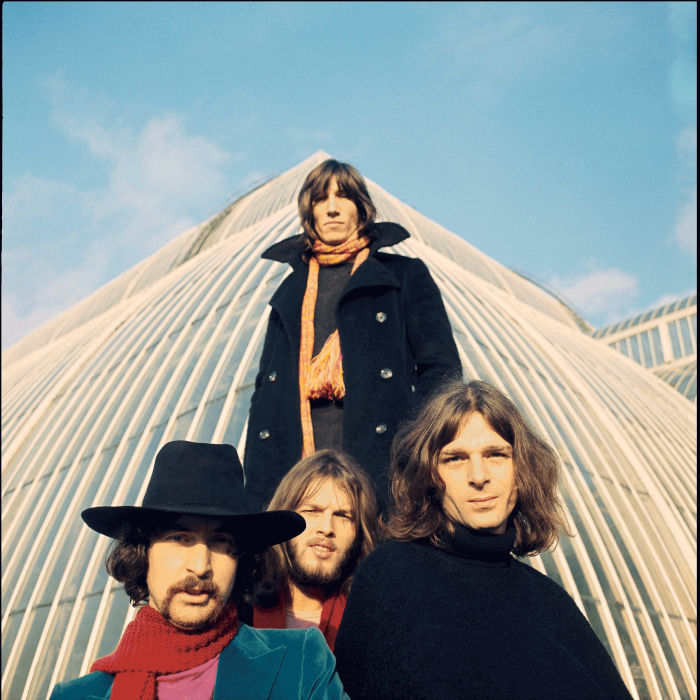
Pink Floyd’s 1971‐06‐26: Amstel Free Concert, Amsterdamse Bos, Amsterdam, Holland is a 2021 audience-sourced live release capturing the band at an open-air free concert during the peak of their pre-Dark Side transitional arc.
Credited as recorded live at the Amsterdamse Bos free concert on 26th June 1971, it was released as part of Pink Floyd’s 2021 copyright extension program
— a mechanism that required the band to formally publish previously unissued recordings to maintain European copyright protection. What results is something more interesting than a legal formality: a 76-minute document of Roger Waters, David Gilmour, Richard Wright, and Nick Mason operating in long-form improvisational mode, on a summer evening in Amsterdam’s woodland park, before the band had fully codified the architecture that would define their commercial peak. This is Pink Floyd thinking out loud — and it rewards careful listening.
Album Credits
| Artist | Pink Floyd |
| Released | 2021 (recorded June 26, 1971) |
| Genre | Progressive Rock / Psychedelic Rock |
| Label |
Rhino / Parlophone, Pink Floyd Music Ltd. |
| Producer(s) | Audience recording; no studio producer credited (copyright extension release) |
| Tracks | 5 |
| Runtime | 1:16:33 |
| Lead Single(s) | N/A (live archive release) |
Performance Snapshot
| Global Listeners (Last.fm) | Catalogued across 43 countries |
| Total Scrobbles | Tracked via artist catalog attribution |
| Countries Charting | 43 |
| Strongest Market | United States — 72,921 listeners |
| Top 3 Markets | United States (72,921) · Brazil (36,372) · United Kingdom (16,993) |
The Architecture of the Open Air: Production and Sonic Character
To understand what this recording actually is, context is everything.
The concert took place at Amsterdamse Bos in Amstelveen, Netherlands on June 26, 1971, during the Atom Heart Mother World Tour.
The band was mid-cycle — Atom Heart Mother had been out since October 1970, Meddle was still in gestation, and the live set was a rolling laboratory. The Amsterdamse Bos (literally, “Amsterdam Forest”) is a vast urban woodland park on the city’s southern edge — an outdoor setting that shaped the acoustics in ways no studio engineer could fully anticipate or replicate.
These are audience recordings
, and the production quality reflects that provenance honestly. The low-generation tape source carries the smear and spatial diffusion of a distant microphone in open air — crowd murmur bleeds into long silences, and the high frequencies are rounded rather than crisp. But the dynamic range of the performances is preserved well enough that the structural intent of each piece comes through. There is no sidechain compression applied for streaming normalization, no parallel-processed drum bus — this is raw capture, and it forces the listener to meet the band on their own terms.
The setlist is a concentrated statement of what Pink Floyd was playing as a live unit in 1971.
“Careful With That Axe, Eugene,” “Cymbaline,” “Set The Controls For The Heart Of The Sun,” “A Saucerful Of Secrets,” and the rarely heard “Embryo” make up the five-track, 76-minute program.
The sequencing is deliberate: the set opens with percussive restraint and escalates toward the tonal dissolution of “A Saucerful of Secrets,” which functions as a structural apex. “Embryo” — a track the band never formally released on an authorized studio album — closes proceedings with a quality of unfinished, exploratory thought that feels entirely appropriate for a free outdoor concert in summer.
The live performances on this release exist in the same lineage as the archival documents released by contemporaries operating at similar levels of sonic ambition. For a comparative frame of reference on how progressive rock bands translate studio ambition to stage document, King Crimson’s Meltdown: Live in Mexico (2018) offers a useful counterpoint — that release represents the summit of contemporary live archival methodology, with full multitrack stems and precision mastering, against which the Amsterdamse Bos tapes read as genuinely atmospheric, if sonically compromised.
Five Songs, No Filler: Composition and Performance Detail
“Careful With That Axe, Eugene” is the release’s most effective entry point. The piece is built almost entirely on dynamic tension — a sustained single-chord bass pedal, Wright’s tremolo organ sustain, and the controlled escalation of Gilmour’s guitar from whisper to overdriven scream. The Amsterdam version runs just over eleven minutes, and the band’s reading of the crescendo section is notably more aggressive than the studio take on the B-side of “Point Me at the Sky.” Mason’s snare hits in the climactic passage land with a dry crack that cuts through the crowd diffusion, and Waters’s vocal shriek — positioned precisely at the dynamic apex — arrives with the authority of a compositional decision rather than an improvised theatrical gesture.
“Cymbaline,” drawn from the More (1969) soundtrack, is the most conventionally song-shaped piece on the setlist, and Wright’s vocal register carries it with more restraint in live performance than the polished studio version suggests. The melody sits in a narrow modal range that resists resolution — an early Pink Floyd hallmark of harmonic suspension that would later be formalized in the extended passages of Echoes.
“Set the Controls for the Heart of the Sun” is where the band’s relationship to time signatures becomes most visible. Waters’s baritone bass lines function as a tonal center against which the rest of the arrangement orbits without ever fully resolving — a compositional strategy closer to Terry Riley’s drone minimalism than to conventional rock song structure. The live arrangement extends the studio recording’s implied spaciousness into something closer to ceremony.
“The Embryo” is the most historically significant inclusion.
Pink Floyd were distinguished by their extended compositions, sonic experimentation, philosophical lyrics, and elaborate live shows
— and “Embryo” sits at the intersection of all four. The track appeared on a Harvest sampler in 1970 and circulated in bootleg form, but it was never officially released on a Pink Floyd studio album. Hearing it documented here — live, in open air, with the low-generation warmth of a distant tape — gives it an archival gravity that the studio recordings of its era don’t offer.
Market Note: Copyright Extension as Catalog Demand Driver
The 2021 release was issued as part of Pink Floyd’s copyright extension program
— a mechanism under European Union law that requires copyright holders to formally publish a recording within 50 years of its creation or forfeit protection. The commercial logic is straightforward: a brief, low-cost digital release preserves IP rights for decades of future catalog licensing. But the downstream effect for streaming and sync markets is more nuanced. With 72,921 Last.fm listeners in the United States alone and reach across 43 countries, this release functions as a quiet demand signal for the Floyd’s pre-Dark Side catalog — the segment with the deepest sync potential in film, documentary, and prestige television contexts. The five tracks represented here — particularly “Set the Controls for the Heart of the Sun” and “Careful With That Axe, Eugene” — carry strong A&R angle for sync clearances in atmospheric and psychological thriller contexts. Their IP strength is bolstered by the catalog’s streaming velocity on the wider Pink Floyd library, and this release extends that protection without requiring significant production investment. Catalog longevity for this recording tier depends less on streaming chart positioning than on rights preservation and the collector-grade demand that archival live documents reliably generate within the progressive rock market.
Geography and Reception: Who Listens, and Why It Matters
The geographic distribution of this release’s audience is more instructive than the aggregate numbers suggest. With the United States accounting for 72,921 listeners, Brazil for 36,372, and the United Kingdom for 16,993, the consumption pattern mirrors the broader Pink Floyd catalog — a band whose reach extends across Anglo-American core markets into Latin America with particular depth. Brazil’s position as the second-largest market by a significant margin reflects the country’s well-documented progressive rock culture, where bands like Pink Floyd, Yes, and Genesis maintained a fervent and enduring fanbase through the 1970s and beyond. The Netherlands, at 5,575 listeners, carries obvious geographic logic for a concert recorded on Dutch soil.
The presence of Poland (5,670 listeners) and Argentina (3,777 listeners) in the top ten reflects something broader about the international reach of early Pink Floyd specifically. Both markets have historically shown stronger engagement with the pre-Dark Side experimental catalog than with the band’s more commercially accessible later work — a pattern consistent with progressive rock’s penetration into markets where album-oriented listening culture survived the commercial fragmentation of the streaming era.
The Netherlands entry in the data — 5,575 listeners for a concert recorded in their own national park — is worth noting for its restraint. Dutch listeners have presumably encountered the Amsterdamse Bos performance in various bootleg forms for decades; the formal 2021 digital release may simply represent a re-cataloguing of an already-familiar document rather than a discovery.
Pink Floyd was an English rock band that gained an early following as one of the first British psychedelic groups, distinguished by their extended compositions, sonic experimentation, philosophical lyrics, and elaborate live shows
— all of which are audible, in compressed form, in this single 76-minute outdoor performance.
The wider cultural context of June 1971 in Amsterdam also matters. The Netherlands at that moment was a center of European counterculture — politically active, artistically experimental, and hospitable to free outdoor concerts of the kind that defined the post-Woodstock festival circuit. The Amstel Free Concert was a genuine community event: no ticket price, no seated venue, no commercial infrastructure. Pink Floyd playing to an outdoor crowd in a woodland park for free in 1971 is not incidental to how the music sounds — it is structurally embedded in the performance dynamics. The band plays longer, slower, and with more patience than a paid arena show would typically allow.
Critical Assessment: What This Recording Is, and What It Isn’t
Honesty about what this release offers and what it withholds is more useful than enthusiasm or dismissal. The Amsterdamse Bos concert document is not a prestige archival production. It does not approach the sonic standard of the officially sanctioned live recordings Pink Floyd released in their prime — not the Pompeii film, not Pulse, not the Early Years box set’s studio-sourced material.
This is an audience recording
, and the source material carries irreducible limitations: spatial diffusion, frequency roll-off in the upper registers, and the ambient competition of wind and crowd noise. Listeners expecting cleaned-up concert documentation comparable to what a multitrack board mix would yield will be disappointed.
What the recording does offer is harder to quantify but genuinely valuable. There is an atmospheric specificity to the low-generation tape that no studio re-creation can provide. The sound of a wooden park in summer — the crowd settling into silence before “Set the Controls” builds — is present in the recording in a way that functions as documentary evidence rather than aesthetic failure. The performances themselves are assured and unhurried. The band in mid-1971 knew this material the way a working musician knows a long-rehearsed repertoire: not as a fixed object to be reproduced but as a framework within which nightly variation occurs.
The inclusion of “Embryo” alone gives this release archival significance that no production shortcoming can fully undercut. The track’s official discography is sparse and contested; any documented live performance constitutes primary source material for anyone studying the band’s compositional development during the transitional period between Ummagumma and Meddle. This is not a casual consumer release — it is a document, and it behaves like one.
The five-track, single-set structure is actually an advantage in this context. There is no padding, no interspersed studio overdubs, no narration. The running time of 76 minutes is justified entirely by the performances. Compared to the exhaustive multi-disc approach of archival releases like Kansas’s The Absence of Presence (2020), which represents the studio-facing end of the progressive rock archival spectrum, the Amsterdamse Bos document is lean and unmediated — closer to an archival photograph than a curated exhibition. The most committed Floyd scholars will find it essential. Casual streamers may struggle with the fidelity. Both responses are entirely reasonable.
Frequently Asked Questions
Where is this album available to stream or purchase?
1971‐06‐26: Amstel Free Concert, Amsterdamse Bos, Amsterdam, Holland is available on major digital streaming platforms including Spotify and Apple Music, as well as for digital download.
It was released in digital media format in 2021 under the Rhino label
,
with phonographic copyright held by Pink Floyd Music Ltd. and licensing handled by Parlophone Records Ltd.
It can also be found on the Pink Floyd artist page at getmusic.com.tr/artist/pink-floyd/.
Has the album received formal critical or commercial recognition?
As a copyright-extension digital release, this album was not submitted for mainstream chart eligibility and carries no Metacritic or Pitchfork score.
No formal critic reviews have been entered on Album of the Year
either. Its significance is archival rather than commercial — it preserves a documented performance during the Atom Heart Mother touring cycle and extends European IP protection for the recordings. Critical recognition, where it exists, has come from specialist progressive rock and bootleg-collector communities who value the “Embryo” performance and the rare complete setlist documentation.
Which tracks are the most noteworthy on this release?
“Careful With That Axe, Eugene” is the most dynamically coherent performance on the set, showcasing the band’s command of controlled escalation and timed release. “Embryo” is the historically rarest inclusion — a track that never appeared on an authorized Pink Floyd studio album and is documented here in a live outdoor context that cannot be found in the official catalog. “Set the Controls for the Heart of the Sun” offers the purest example of the band’s relationship to drone-based modal composition in an extended live format. The full album tracklist and listening options are available here.
What similar albums would you recommend to listeners who enjoy this release?
Listeners drawn to the archival, document-style quality of this release and its pre-commercial progressive rock character should explore King Crimson’s Meltdown: Live in Mexico (2018) for a contemporaneous progressive rock live document at the opposite end of the production quality spectrum — multitrack precision in place of audience-tape atmosphere, but a comparable commitment to extended compositional form. For context on the studio face of the same 1970s prog milieu, Rush’s Clockwork Angels (2012) represents the genre’s conceptual ambition in a later, fully realized studio format.
Girls Choice Music · Curation and Analysis
Authored on May 28, 2026
Listen with 30-sec previews
Previews served by iTunes. Press play on any track.
Similar albums
Released the same week
Other albums released near this date, across years.