
Listen / Follow
Tags
About Tyler Childers
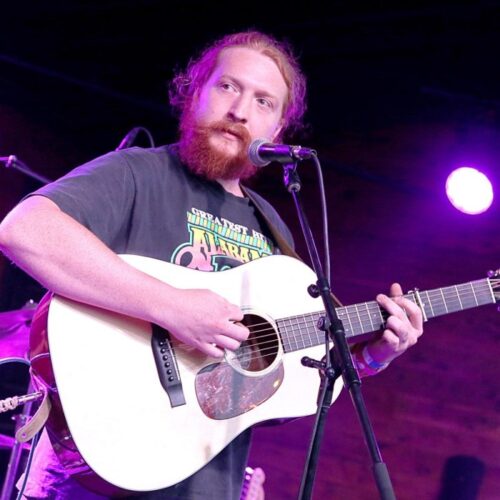
Tyler Childers (born June 21, 1991) is an American singer and songwriter. His music is a mix of country, bluegrass and folk. He released his breakthrough album Purgatory in August 2017. Childers released his third and most recent LP, Country Squire, via his own Hickman Holler Records, under exclusive license to RCA Records in August 2019. Tyler Childers was born and raised in Lawrence County, Kentucky. His father worked in the coal industry and his mother is a nurse.
Tyler Childers: Lawrence County’s Sharpest Pen, and Why Nashville Never Quite Owned Him
Tyler Childers, the Lawrence County, Kentucky singer-songwriter, has built one of the most durable independent careers in contemporary country music without conceding creative custody to anyone. Born into coal-country Eastern Kentucky, raised on the cadences of Appalachian speech and hard-luck gospel, Childers arrived at a moment when the mainstream country industrial complex had left an enormous gap — for specificity, for grit, for songs that actually placed you somewhere. He filled it methodically, album by album, on his own Hickman Holler Records.
He has released seven studio albums, three EPs, and six singles
, each one sharpening a sensibility that owes more to Merle Haggard and the holler than to any Brentwood zip code.
Artist Profile
| Origin | Lawrence County, Kentucky, USA |
| Years Active | 2011 – present |
| Genre | Country, Bluegrass, Folk, Appalachian |
| Labels | Hickman Holler Records; Thirty Tigers (2017); RCA Records (2019–present) |
| Notable Collaborators | Sturgill Simpson (producer), David R. Ferguson (producer), Rick Rubin (producer), Silas House (lyricist/director), The Food Stamps (backing band) |
| RIAA Certifications |
Purgatory: Platinum; “Feathered Indians”: Double Platinum ; Country Squire: Platinum |
| Grammy Nominations | Seven Grammy nominations across his career, including Best Folk Album for Long Violent History and Best Country Album for Rustin’ in the Rain |
| Albums in Catalog | 7 studio albums |
Performance Snapshot — Get Music Catalog
| Total Listeners | 85,088 |
| Countries Reached | 1 |
| Albums in Catalog | 1 (Snipe Hunter, 2025) |
| Top Market | United States |
From Lawrence County Dirt Roads to a Platinum Record: The Career Arc
Tyler Childers was born and raised in Lawrence County, Kentucky. His father worked in the coal industry and his mother is a nurse.
That biographical fact is not incidental — it shapes the entire moral posture of his catalog. Songs about physical labor, compound loyalty, bodily fragility, and geography that feels like destiny have been the structural tissue of his work from the start. Eastern Kentucky is not a backdrop in Childers’s music; it is the subject.
He debuted in 2011 with the album Bottles and Bibles through his own label Hickman Holler.
It circulated in regional Appalachian and independent folk circles with no major press machinery behind it — a calling card for those already paying close attention. The real rupture came six years later.
Purgatory was released in August 2017 through Childers’ own Hickman Holler Records and Nashville-based label Thirty Tigers.
He borrows heavily from the weathered, ornery progressive country records of the 1970s, a comparison brought into sharp relief on Purgatory, which was produced by the acclaimed Americana rocker Sturgill Simpson.
Simpson’s production choices — live-room warmth, restrained low-end, minimal studio gloss — gave Childers’s plainspoken narratives the acoustic authority they deserved. The album’s opening track, “Whitehouse Road,” announced something immediately: this was not manufactured Americana, not a mood-board country aesthetic. This was a writer who knew exactly where he was from and was not embarrassed by it.
The follow-up, 2017’s Purgatory, was his most commercially successful, receiving a platinum certification from the RIAA.
The track “Feathered Indians” from this album is his highest-certified, at double platinum.
That a slow-burn, fiddle-fronted country ballad with no radio placement would reach those streaming and sales thresholds speaks to the kind of catalog longevity driven entirely by word-of-mouth and live-audience devotion — the most durable demand driver there is.
Childers charted even higher in 2019 with Country Squire, his major label debut with RCA, anchored by the country-soul ballad “All Your’n,” the project going to No. 1 on the Top Country Albums chart.
He had arrived, commercially, without adjusting his register one semitone.
Discography Highlights: Seven Records, No Filler Cycles
Country Squire, released August 2, 2019, was recorded at the Butcher Shoppe in Nashville and produced by Sturgill Simpson and David R. Ferguson.
Where Purgatory was stark and linear, Country Squire introduced honky-tonk swing and a looseness in the rhythm section that suited the album’s themes of domestic contentment and land-bound desire.
The album peaked at No. 12 on the Billboard 200 and No. 1 on Top Country Albums.
It was certified Platinum by the RIAA.
Long Violent History, released September 18, 2020 on Hickman Holler — produced by Childers himself — is an album centralized on its title track, a protest song against racism, released with no publicity other than a six-minute video.
The move was deliberate and had real force: dropping a politically charged record into a country music market still largely avoiding the conversation, without press release or promotional tour, had the effect of a stone through a window.
It was nominated for Best Folk Album at the Grammy Awards.
The album topped the folk chart and hit number 45 on the Billboard 200.
The 2022 successor, Can I Take My Hounds to Heaven?, showcased his ambition, featuring a variety of styles spread over the course of three LPs.
It was the most conceptually sprawling entry in his catalog — a triptych organized around faith, tradition, and country-gospel architecture — and earned its own Grammy nomination.
It debuted at No. 8 on the Billboard 200.
Rustin’ in the Rain was released September 8, 2023, through Hickman Holler Records and RCA, produced by Childers and his backing band the Food Stamps, and includes the single “In Your Love.”
For that record, Childers received five Grammy nominations, including Best Country Album, Best Americana Performance, Best Country Solo Performance, Best Country Song, and Best Music Video for “In Your Love.”
The video for “In Your Love,” depicting two gay coal miners in Kentucky, directed by Silas House,
portrayed a poignant story of two gay miners in Kentucky, with one of the lovers taken down with black lung disease.
It was an act of cultural courage with no precedent in mainstream country’s visual grammar.
The most recent entry in the catalog available on Get Music is Snipe Hunter (2025).
Snipe Hunter is the seventh studio album by Tyler Childers, released on July 25, 2025, via Hickman Holler Records and RCA Records, produced by Rick Rubin.
He recorded the album primarily in Malibu and Hawaii, with Rubin encouraging an unstructured, organic creative process.
The result is the loosest, most texturally varied thing Childers has put his name on — and the most divisive.
Market Note
Childers’s IP position is structurally enviable: he owns his masters through Hickman Holler Records, licenses to RCA for major-label distribution muscle, and carries two RIAA Platinum album certifications with zero dependence on mainstream country radio.
“Feathered Indians” becoming Gold in 2020 signaled a new era when non-mainstream-supported artists could generate enough economic activity independently to earn RIAA certifications — and Childers opened the flood gates for that entire wave.
His audience skews 25–44, is disproportionately college-educated, and has demonstrated unusually high live-ticket conversion. Catalog streaming velocity on tracks like “Feathered Indians,” “All Your’n,” and “In Your Love” is self-sustaining years after release.
On Spotify alone, “Oneida” from Snipe Hunter struck over 11 million streams.
Sync potential across his first three albums is high — understated production, non-algorithmic timbres, and lyrical specificity that reads as authentic in advertising contexts. His back catalog is, at this point, a genuine revenue-generating asset that appreciates with every new release cycle.
Geography of an Audience: Where Childers Lands and Why
The core of Tyler Childers’s audience is American by geography and Appalachian by sensibility — which is not the same thing. Listeners from Tennessee, Virginia, West Virginia, Ohio, and of course Kentucky have claimed him as a regional representative, but his reach extends well beyond the counties that could plausibly claim biographical proximity. College towns across the South and Midwest — places where a certain listener maintains simultaneous subscriptions to literary journals and hunting licenses — respond to Childers because he does not perform authenticity, he simply has it.
International traction has been slower to develop, which is consistent with the market mechanics of heavily dialect-specific, place-rooted country music. The UK has shown modest interest —
Rustin’ in the Rain reached No. 9 on the UK Country chart
— and Canada has been receptive, with
Country Squire peaking at No. 86 on the Canadian albums chart.
These are not dominance numbers, but they suggest a slow-building international constituency of listeners who find something in his work that the Nashville commercial apparatus cannot supply.
The live dimension of his audience geography is important. Childers has headlined major festival stages and sold out amphitheaters by word-of-mouth momentum that predates any playlist algorithm influence. That organic fan acquisition — built through recorded performance and touring rather than DSP promotion — gives his audience unusual stickiness. People who find Childers tend to stay. His listener retention across a catalog that has shifted genre coordinates (honky-tonk, protest bluegrass, gospel triptych, Rick Rubin psychedelia) with each album is notable. The audience has followed, largely, even when the aesthetic has moved.
Snipe Hunter gave Childers his biggest debut week ever, landing at No. 7 on the Billboard 200 albums chart.
It also debuted at No. 2 on Top Country Albums and topped the Americana/Folk Albums chart.
This is not the chart trajectory of a niche artist — this is mainstream reach achieved without mainstream compromise, which is a rarer combination than the discourse around “Americana” generally acknowledges.
Critical Legacy: The Honest Accounting
There is a genre of music criticism that discovers Tyler Childers once every two or three years and announces him with the enthusiasm of someone finding a twenty-dollar bill in an old coat. This is slightly irritating to those who have been paying attention since 2017, but it is also a useful indicator of where he sits in the critical landscape: perpetually re-discoverable, never overexposed, always positioned slightly outside the mainstream conversation even as his chart numbers increasingly contradict that framing.
Sonically, he borrows heavily from the weathered, ornery progressive country records of the 1970s.
That lineage — Haggard, Kristofferson, early Waylon — is genuinely inhabited rather than costumed. The Appalachian inflection in his vocal delivery, the way consonants harden in the hollows of a phrase, the use of local idiom without self-conscious exaggeration: these are formal qualities that mark the difference between a singer who grew up in Lawrence County and a singer who watched a documentary about it.
Snipe Hunter scored 87/100 on Metacritic, with a Pitchfork rating of 7.8/10 and a Holler score of 9.1/10.
Those numbers track a critical consensus that appreciates the risk without fully endorsing every result.
Produced by Rick Rubin, the album has spawned a TikTok-viral song about rabies, theories about Beyoncé shoutouts, and discourse about whether Childers has abandoned his traditional sound by making a bigger budget, more genre-defiant record.
Rolling Stone gave the album 4.5 stars.
The dissenting view, most coherently articulated in the traditionalist country press, is that the Rick Rubin sessions pushed the production into Americana-by-algorithm territory — technically polished, spiritually ambiguous.
Some songs on Snipe Hunter remain brilliant works of Appalachian country, but when rock production is brought to them, they are pushed into the domain of “Americana,” meaning an amalgam of American music influences.
This is a legitimate critical position, not mere nostalgic complaint.
What is not in dispute is the quality of the songwriting underneath whatever production is applied to it.
Coming after a series of tightly controlled records, Snipe Hunter is disarming and a little exhilarating to hear Childers cut loose — it hits harder than any previous Childers album and is funnier, too.
The wit has always been there; the willingness to let it run at volume is new.
His critical legacy, at this point in his career, rests on three certainties. First: Purgatory is a canonical American country album of its decade, full stop. Second: his structural model — artist-owned label, selective major-label distribution, full creative custody — has influenced how a generation of independent country artists think about their own careers. Third: he is one of the few working country songwriters whose lyrical specificity holds up on the page, stripped of melody. That is a short list, and he is on it.
By synthesizing a variety of sounds and themes into an unshakeable whole, Snipe Hunter is the rare album that is both an aesthetic and a thrillingly profound philosophical statement,
according to Slant Magazine. Whether or not that assessment survives a few more listens is the kind of question worth sitting with. You can explore the full record at Get Music’s Snipe Hunter page and browse the full Tyler Childers artist profile in our catalog.
Frequently Asked Questions
Where should I start with Tyler Childers’s catalog?
Purgatory (2017) is the correct entry point for almost everyone. It is the most direct distillation of his essential qualities: plainspoken Appalachian narrative, low-gloss production, and a voice that carries genuine biographical weight. If you are already a country or folk listener with some patience for slow-burn pacing, move immediately from there to Country Squire (2019), then make a decision based on whether the gospel-folk of Can I Take My Hounds to Heaven? or the leaner, more aggressive Snipe Hunter (2025) suits your next step. You can stream and explore the latter at Get Music’s dedicated album page.
Is Tyler Childers still active?
Yes.
Snipe Hunter, his seventh studio album, was released on July 25, 2025, via Hickman Holler Records and RCA Records.
There is no indication of any hiatus. He has maintained a consistent release cadence of roughly one album every one to two years since 2017 and continues to tour extensively.
Who has Tyler Childers collaborated with?
His most significant production collaborations have been with
Sturgill Simpson, who produced Purgatory
and co-produced Country Squire alongside David R. Ferguson.
Snipe Hunter was produced by Rick Rubin.
His longtime creative partner Silas House, the Kentucky novelist and poet, co-wrote “In Your Love” and directed its music video.
His backing band, the Food Stamps, co-produced Rustin’ in the Rain with Childers.
The roster of collaborators reflects a consistent preference for working with people who share a geographic or philosophical proximity to the material.
Which artists are similar to Tyler Childers?
Listeners drawn to Childers’s lyrical precision and Appalachian production ethos often find common ground with Sturgill Simpson, Chris Stapleton, Colter Wall, Cody Jinks, and Charles Wesley Godwin. For the gospel-inflected, harmony-rich dimension of his work, the Avett Brothers and early Jason Isbell are useful reference points. Within the broader Get Music catalog, you can explore the Tyler Childers artist page for related listening suggestions across the country and folk genres.
cerenyalin.com.tr |
October 9, 2026 |
Girls Choice Music / Get Music — The Atlas of Recorded Music
1 album in our catalog
All releases
Complete release history from MusicBrainz — albums, EPs, singles, live, and more.
Album (7)
- 2025Snipe Hunter
- 2023Rustin’ in the Rain
- 2022Can I Take My Hounds to Heaven?
- 2020Long Violent History
- 2019Country Squire
- 2017Purgatory
- 2011Bottles and Bibles
EP (2)
- 2014Live on Red Barn Radio II
- 2013Live on Red Barn Radio
Single (11)
- 2025Nose on the Grindstone
- 2025Oneida
- 2024Song While You’re Away
- 2024Going Home (Live)
- 2023In Your Love
- 2022Angel Band
- 2021Yes I Guess They Oughta Name a Drink After You
- 2020Spotify Singles
- 2019All Your’n
- 2019Reimagined
- 2018Jersey Giant
Album (Live) (1)
- —The Listening Room - V.1
EP (Live) (2)
- 2017OurVinyl Sessions
- 2016Live on Red Barn Radio I & II
Single (Live) (2)
- 2025Bitin' List (Live From Dinosaur World)
- 2023In Your Love (live from Radio City Music Hall)