Listen / Follow
Tags
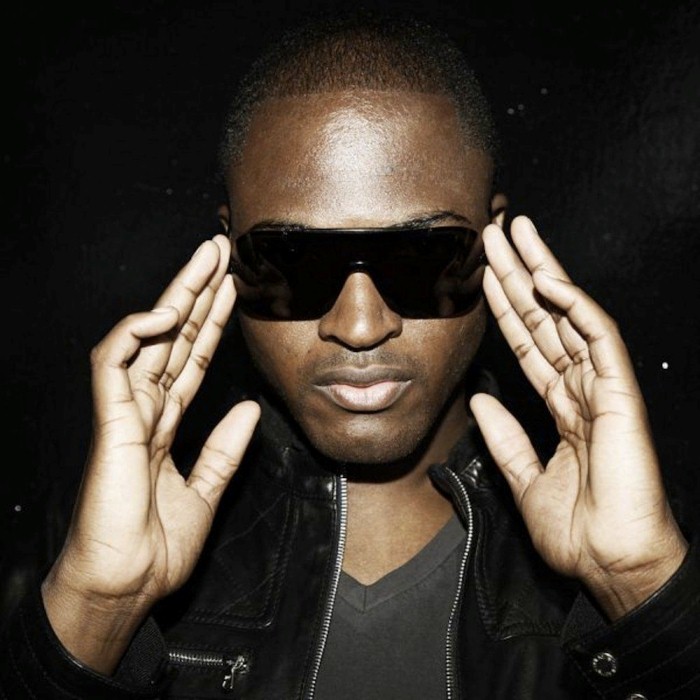
About Taio Cruz
Taio Cruz (pronounced Tie-oh Cruise) (born 23 April 1980 as Adetayo Ayowale Onile-Ere) is a Brit Award winning and MOBO-nominated English singer-songwriter, occasional rapper, and music producer. In 2008 he released his debut album Departure which he arranged and produced himself. In October 2009, he released his follow up album Rokstarr which includes his number one single "Break Your Heart". In between the two albums and at present, Cruz has been working on productions and writing songs for Cheryl Cole, Brandy and the Sugababes.
TAIO CRUZ: THE PRODUCER-ARTIST WHO MAPPED A FLEETING PEAK WITH UNCOMMON PRECISION
Taio Cruz, the London-born singer, songwriter, and self-producing architect behind “Break Your Heart” and “Dynamite,” built one of the most commercially concentrated catalogs in early-2010s pop-R&B from an almost entirely self-directed creative position — a rare condition at that level of chart dominance.
Born on April 23, 1980, in London, England, to a Nigerian father and a Brazilian mother,
Cruz (born Adetayo Ayowale Onile-Ere, pronounced Tie-oh Cruise) operated simultaneously as label founder, lead artist, and primary producer through the span of his most commercially significant years, a structural independence that shaped both the character of his recordings and, ultimately, the ceiling of his catalog longevity.
Artist Profile
| Full Name | Adetayo Ayowale Onile-Ere (Jacob Taio Cruz) |
| Origin | London, England, UK |
| Years Active | 2000s – 2020s |
| Genre | R&B, Dance-Pop, Electropop |
| Labels | Rokstarr Music London / R.E.D Inc., Island Records, Republic Records, Mercury / Island Def Jam, Universal Island Records |
| Notable Collaborators | Ludacris, Kesha, Kylie Minogue, David Guetta, Flo Rida, Pitbull, Travie McCoy, Fraser T. Smith, Dr. Luke, Benny Blanco, Sandy Vee, Max Martin, Steve Angello |
| RIAA Certifications | “Break Your Heart” — 3× Platinum (RIAA); “Dynamite” — 8× Platinum (RIAA) |
| Notable Awards | Brit Award (co-writing Will Young’s “Your Game,” 2005); MOBO nomination (2008, 2009); Billboard Music Awards (2011) |
| Studio Albums | 3 (Departure, 2008; Rokstarr, 2009; TY.O, 2011) |
Performance Snapshot
| Total Listeners (Get Music Catalog) | 1,215 |
| Countries Reached | 7 |
| Albums in Catalog | 1 |
| Catalog Entry | The Fast Hits (2012) |
From Rokstarr Music London to the Billboard Hot 100: The Career Arc
Cruz’s origins as a commercial force predate his own recording career by several years.
He began writing songs at age twelve, and his professional songwriting career began at nineteen as part of Tricky Stewart’s RedZone Entertainment collective. He achieved early industry recognition in 2005 when he was awarded a Brit Award for co-writing Will Young’s 2004 single “Your Game.”
That credit — not a performance, but a behind-the-board compositional win — is the clearest early signal that Cruz’s strength was always structural: song architecture before stage presence.
He is the founder and CEO of Rokstarr Music London, which in 2006 released his debut single “I Just Wanna Know,” and also in 2006 he signed a joint-venture partnership deal with Republic Records and Island Records.
That positioning — retaining his own imprint while accessing major-label distribution — gave Cruz an unusual degree of creative autonomy at the outset, particularly for an unsigned R&B artist from London without an established US footprint.
His debut studio album, Departure, was released on 17 March 2008 on Island/Republic, entirely produced by Cruz himself, and entered the UK Albums Chart at number 17.
The album contained five singles, all of which reached the top 30 of the UK Singles Chart; “Come On Girl,” which peaked at number five, was the most commercially successful of them.
Crucially,
Departure received gold certification by the British Phonographic Industry (BPI) and earned a nomination at the 2009 MOBO Awards.
The transition from British album-maker to transatlantic phenomenon came through Rokstarr.
Released on 12 October 2009 in the United Kingdom on Island Records, with producers including Fraser T. Smith, Dr. Luke, Benny Blanco, and Sandy Vee alongside Cruz himself, a revised version of the album was released in Europe and the United States on 11 June 2010, appearing as Cruz’s debut album in those markets.
The revision was not cosmetic — it recontextualized Cruz for a global dance-pop market that was, by mid-2010, operating under very different frequency conditions than the UK R&B scene he had emerged from.
Rokstarr found Cruz adopting an EDM-pop sound, entering 13 international music charts and peaking within the top ten of the Billboard 200.
Following the success of “Break Your Heart” in the United Kingdom, Cruz signed with Mercury/Island Def Jam to launch the single in the United States.
The label move was deliberate and managerial:
the attention of David Massey and Daniel Werner from Mercury/Island Def Jam, who were aggressive about releasing “Break Your Heart” in the US, prompted Cruz’s manager Jamie Binns to engineer a move from Universal Republic to Mercury/Island Def Jam in pursuit of the label most enthusiastic about the project.
Discography Highlights: Three Albums, One Compressed Window of Peak Production
Cruz’s studio catalog spans three albums across a four-year window. The formal arc — Departure (2008), Rokstarr (2009), TY.O (2011) — traces a clear production trajectory: from fully self-produced neo-soul R&B to internationally co-produced dance-pop operating at chart scale, and then toward electropop territory that ultimately encountered difficult market conditions at release.
Rokstarr is the weight-bearing album in this catalog. Its production roll call alone charts the commercial logic of the era:
producers including Benny Blanco, Dr. Luke, Fraser T. Smith, Alan Nglish, and Sandy Vee
contributed alongside Cruz — a configuration that combined the American post-Katy Perry maximalism of the Luke/Blanco axis with the melodic R&B intelligence that had defined Cruz’s earlier UK work. The results were commercially decisive.
“Break Your Heart” peaked atop both the UK Singles Chart and the Billboard Hot 100, and “Dynamite” likewise topped the UK chart and peaked at number two on the Hot 100.
In pure certification terms, those two singles represent extraordinary demand:
“Break Your Heart” topped the Billboard Hot 100 and the US Mainstream Top 40, and was certified 3× Platinum by the RIAA.
“Dynamite” reached 8× Platinum RIAA certification,
and
by January 2012 had sold more than 5.7 million copies in the US and Canada, becoming the second best-selling song by a British artist in the digital era there, behind Adele’s “Rolling in the Deep.”
These are not incidental commercial outcomes — they represent the kind of demand density that defines a catalog’s long-term sync potential and licensing value.
TY.O, released in December 2011, took a more electronic music approach and featured guest appearances from Flo Rida, Pitbull, David Guetta, and Ludacris, but for reasons unknown to Cruz, its British and American release was held off.
Instead, a year after its original release, an EP version of the album titled The Fast Hits was released in the UK on 16 December 2012.
That EP — the one entry currently in the Get Music catalog — can be found at The Fast Hits (2012). Production on TY.O brought in an even wider European network:
producers included Steve Angello, Rami Yacoub, Carl Falk, RedOne, Klas Åhlund, Sebastian Ingrosso, Rob Swire, and Max Martin
— a Scandinavian electropop coalition that placed the album closer to the sound of Swedish House Mafia than to the Caribbean-tinged inflections of Rokstarr.
The writer-for-hire dimension of Cruz’s discography is equally significant.
In the UK, Cruz worked with artists including Omar, Nitin Sawhney, and Will Young, and following the success of his own singles, Simon Cowell approached Cruz to write and produce tracks for Alexandra Burke, Leona Lewis, and Shayne Ward.
He also contributed writing to Cheryl Cole, Brandy, and the Sugababes — a production portfolio that runs parallel to his own recording output and complicates any reading of Cruz as simply a pop performer. His commercial instinct operated equally well on both sides of the glass.
The IP core of the Taio Cruz catalog rests on two extraordinarily well-certified masters. “Dynamite” at 8× Platinum RIAA and “Break Your Heart” at 3× Platinum represent the kind of gross demand figures that sustain passive streaming revenue across long catalog cycles and attract placement interest in advertising, sports broadcast, and film. Both tracks operate at a tonal register — major-key, mid-tempo, sidechain-compressed four-on-the-floor with clean melodic hooks — that makes them broadly usable in sync contexts without editorial adaptation.
The production lineage running through Fraser T. Smith, Dr. Luke, and Sandy Vee gives these masters technical clarity that ages better than many contemporaneous hyper-produced records.
Cruz also earned three Billboard Music Awards and a pair of ASCAP awards
during his peak period — industry recognition that adds formal legitimacy to a catalog whose commercial metrics already speak clearly. The relatively narrow streaming footprint currently recorded on Get Music (1,215 listeners across 7 countries) reflects catalog depth, not catalog quality: these are benchmark titles of their era.
Geographic Reception: A British Artist Who Conquered the US Before the Algorithm Did It for Anyone
What makes Cruz’s transatlantic breakthrough structurally interesting is the moment in which it occurred. The 2009–2010 window preceded streaming’s dominance of chart construction, meaning “Break Your Heart” and “Dynamite” climbed to the top of the Billboard Hot 100 primarily through physical and digital download sales — demand driven by radio rotation and MTV placement rather than playlist algorithmic nudging.
“Break Your Heart” was re-released internationally and hit number one in several different countries, including the United States, where it achieved a record-breaking jump on the Billboard chart from number 53 to the top spot in a single week.
That trajectory — 53 to 1 in one chart cycle — is a marker of aggressive radio saturation. It indicates the kind of programmable, format-agnostic appeal that sits across pop, rhythmic, and mainstream top-40 simultaneously; a quality that requires both melodic simplicity and production polish in specific balance.
“Dynamite” became Cruz’s second number-one single on the UK Singles Chart and the Canadian Hot 100, and also topped charts in Belgium, Luxembourg, Ireland, Australia, and New Zealand.
The song became the best-selling single in Canada during 2010 with sales of 319,000 copies.
The geographic distribution of that commercial footprint — UK, North America, Australia, Northern and Western Europe — corresponds precisely to the markets where post-Sugababes British R&B crossed cleanly into mainstream pop radio, and where Cruz’s lighter, more dancefloor-directed register found the least friction.
In contrast, Cruz’s producer-for-hire credits — Cheryl Cole, Leona Lewis, Alexandra Burke — were more specifically rooted in UK market infrastructure.
In the UK, Cruz worked with artists including Omar, Nitin Sawhney, Wookie, and Will Young,
a roster that reflects a specifically British metropolitan R&B scene, one that operated in conversation with jazz, neo-soul, and black British pop traditions. That dual identity — London R&B architect domestically, global dance-pop export internationally — is what makes Cruz a more layered figure than his compilation-era visibility might initially suggest.
In June 2011, Cruz released the collaborative single “Little Bad Girl” with French DJ David Guetta and American rapper Ludacris, a worldwide smash that topped singles charts across multiple territories.
The Guetta alignment was strategically coherent: by 2011, Guetta’s production was the dominant structural template for cross-Atlantic dance-pop, and Cruz’s vocal timbre — light, rhythmically precise, lacking the grit that required listener acclimatization — fit that context without adjustment.
Critical Legacy: The Gap Between Chart Data and Received Narrative
Taio Cruz occupies an uncomfortable position in the critical record — one that is more the product of institutional inattention than of genuine aesthetic failure. His peak commercial output arrived at a moment when music criticism was still rebuilding its frameworks for assessing dance-pop sincerity: the post-Pitchfork consensus that had elevated LCD Soundsystem and Robyn had not yet fully extended its vocabulary to the mainstream R&B-pop crossover zone that Cruz inhabited.
Though Rokstarr was met with mixed critical response, its commercial results — entering 13 international charts, peaking within the top ten of the Billboard 200, generating two top-two US Hot 100 singles — were unambiguous.
The critical-commercial disconnect is partly structural: albums that arrive in multiple regional editions, with production credits distributed across six or more producers, resist the kind of unified auteur reading that criticism tends to reward. Rokstarr‘s US edition was a curated market document, not a singular artistic statement — and it was assessed accordingly.
What has been underweighted in the received narrative is Cruz’s production coherence across both his own recordings and his writing-for-hire work. The fact that he wrote, arranged, and produced
his debut album Departure
in its entirety, that
it reached number 17 on the UK Albums Chart and was BPI-certified gold, yielding five singles all within the top 30 of the UK Singles Chart,
suggests a level of compositional discipline and market calibration that pure performers rarely achieve. Cruz understood song architecture — the ratio of verse compression to chorus release, the placement of melodic resolution — with the specificity of someone who built those structures from first principles rather than assembled them from session-submitted parts.
The TY.O period is the most critically neglected chapter of his output, partly because its release was operationally disrupted.
Though released in December 2011 by Universal Island Records, TY.O’s British and American release was held off for reasons unknown to Cruz himself,
a market-strategy decision that effectively severed the promotional momentum a third album typically requires.
“Troublemaker,” written with Steve Angello, Rami Yacoub, and Carl Falk,
and “Hangover,” produced by Dr. Luke and Cirkut with Flo Rida, were both structurally accomplished electropop records — competitive in their format — but they arrived without the full infrastructure that had driven Rokstarr‘s singles cycle.
The honest critical verdict: Taio Cruz produced two of the highest-certified British singles of the digital download era with unusual structural clarity, maintained a production career that operated at a higher level of compositional intentionality than his pop-chart framing suggested, and released a third album whose commercial underperformance was more a function of label logistics than creative diminishment. His catalog does not need reappraisal so much as it needs appraisal — most criticism simply moved on too quickly to perform one.
Frequently Asked Questions
Where should I start with Taio Cruz’s catalog?
Rokstarr (2009/2010) is the logical entry point — it carries the two definitive Cruz singles (“Break Your Heart” and “Dynamite”) and demonstrates both his melodic economy and his ability to work across production registers, from Fraser T. Smith’s UK R&B sensibility to Dr. Luke’s maximalist US pop construction. If you want the pure hits distilled, The Fast Hits (2012) — available in the Get Music catalog — offers the concentrated commercial arc in compact form. For his pre-fame production voice, Departure (2008) is the more revealing document.
Is Taio Cruz still active?
Cruz has remained active across the 2000s through the 2020s.
His recording output slowed significantly after TY.O and the EP The Fast Hits in 2012, and no fourth studio album has materialized to date. He has continued to release occasional singles — Apple Music lists a 2018 single, “Me on You,” in his discography — but his primary commercial activity since the early 2010s has been more concentrated in the songwriting and production space than in frontline artist releases.
Who has Taio Cruz collaborated with?
The collaborator list is genuinely broad in both direction and genre. As a featured or co-billed artist: Ludacris (on the “Break Your Heart” remix and “Little Bad Girl” with David Guetta), Kesha (“Dirty Picture”), Kylie Minogue and Travie McCoy (“Higher”), Flo Rida (“Hangover”), and Pitbull (“There She Goes”).
“Troublemaker” was co-written with Steve Angello, Rami Yacoub, and Carl Falk.
“Fast Car” was co-written with Max Martin, Klas Åhlund, and Usher.
On the writing-for-hire side, he contributed to recordings by Cheryl Cole, Brandy, the Sugababes, Alexandra Burke, Leona Lewis, and Shayne Ward.
Which artists sound similar to Taio Cruz?
Within the 2009–2012 British R&B-into-dance-pop axis, the closest sonic neighbors are Jason Derulo (melodic precision, US-format pop-R&B, four-on-the-floor production chassis), Tinie Tempah (London crossover with US feature economy), and Chipmunk during his commercial peak. For the production-auteur dimension — the artist who co-writes and co-produces while performing — Ne-Yo is the most apt reference, sharing Cruz’s Tin Pan Alley approach to melody construction dressed in contemporary club production. Explore related catalog on Get Music at the Taio Cruz artist page.
Written by Setenay Mira KAYA — Girls Choice Music, Get Music
Published: October 8, 2026
Follow new releases and editorial drops: t.me/ViralSubmissions
1 album in our catalog
All releases
Complete release history from MusicBrainz — albums, EPs, singles, live, and more.
Album (3)
- 2011TY.O
- 2009Rokstarr
- 2008Departure
EP (3)
- 2012The Fast Hits
- 2011iTunes Session
- 2011Higher / I'm Telling the World / Believe in Me Now / I'm Into You
Single (16)
- 2011Troublemaker
- 2010Imagine
- 2010Shine a Light
- 2010Higher
- 2010Dirty Picture (Jason Nevins radio edit)
- 2010Best Girl
- 2010Dynamite
- 2010Dirty Picture
- 2009Break Your Heart
- 2009No Other One
- 2008She's Like a Star
- 2008I Can Be
- 2008Come On Girl
- 2008Take Me Back
- 2007Moving On
- 2006I Just Wanna Know
EP (Live) (1)
- 2018NapsterLive Session
Album (Compilation) (1)
- 2010The Rokstarr Collection
EP (Remix) (1)
- 2018Signs (The Remixes)