Listen / Follow
Tags
About SWV
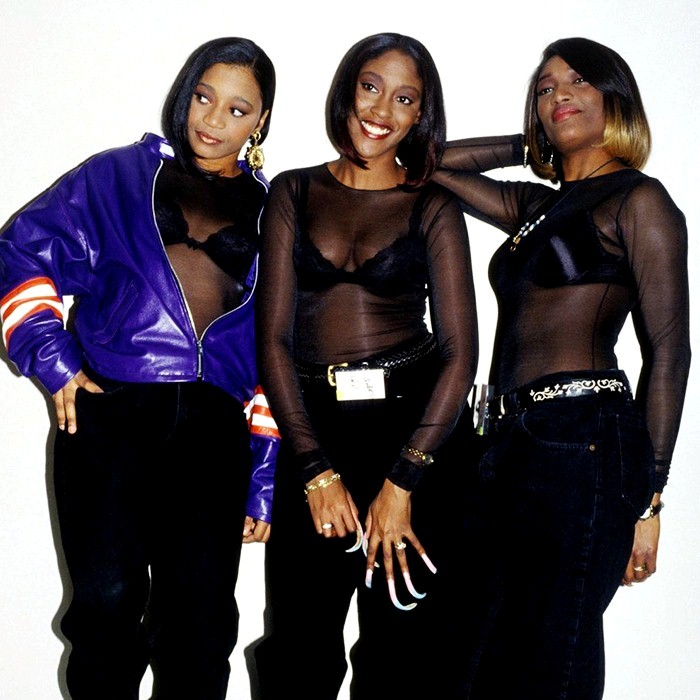
SWV (Sistas with Voices) is an American R&B vocal trio from New York City, New York whose members are Cheryl (Coko) Gamble, Tamara (Taj) Johnson and Leanne (Lelee) Lyons. Formed in 1988 as a gospel group, SWV became one of the most successful R&B groups of the 1990s. The group disbanded in 1998 to pursue solo projects and reunited in 2005. SWV has sold more than 25 million records worldwide, making them one of the best-selling girl groups of all time.
SWV: How Three Voices From New York Redrew the Boundaries of 1990s R&B
SWV — Sisters With Voices — are the New York City R&B trio whose catalog of studio albums and signature singles defined an era of American vocal pop.
Formed in New York in 1990 by Cheryl “Coko” Gamble-Clemons, Tamara “Taj” Johnson-George, and Leanne “Lelee” Lyons
, SWV built their reputation on close-knit harmonics, new jack swing production, and a commercial instinct that kept them competitive across three distinct industry cycles — the gold rush of the early ’90s, the neo-soul transition of the late ’90s, and the nostalgia-fueled streaming era of the 2010s. Their story is one of longevity earned, not merely granted.
Artist Profile
| Origin | New York City, NY, United States |
| Years Active | 1988 (gospel formation) / 1990 (R&B group) — present |
| Genre | R&B, New Jack Swing, Contemporary R&B |
| Labels | RCA Records (1991–1999); Mass Appeal / E1 Music (2012–2016) |
| Notable Collaborators | Brian Alexander Morgan, Teddy Riley, The Neptunes, Puff Daddy |
| RIAA Certifications | It’s About Time — 3× Platinum; New Beginning — Platinum; Release Some Tension — Gold; The Remixes EP — Gold |
| Albums in Catalog | 5 studio albums, 1 EP, 5 compilation albums |
| Members |
Cheryl “Coko” Gamble-Clemons, Tamara “Taj” Johnson-George, Leanne “Lelee” Lyons |
Performance Snapshot — Get Music Catalog
From the Church Pew to the Billboard Hot 100: The Making of a Trio
All three members began singing in church at a young age
, and that foundational training — the breath control, the ensemble sensitivity, the comfort with long sustained phrases — would become SWV’s most durable competitive advantage. When they crossed over from gospel into secular R&B around 1988 and formally constituted themselves as a group by 1990, they carried that choral discipline into a genre that was quickly reorganizing itself around drum machine patterns and sample-driven production.
In 1991, after being invited to sing live in front of RCA executives, SWV was signed to an eight-album record deal.
The A&R instinct that brought them in belongs in part to Kenny Ortiz, whose ear for vocal-first R&B acts gave SWV the runway they needed. The label then paired them with
Brian Alexander Morgan, a young producer and songwriter from Wichita
, whose approach fused two seemingly incompatible sensibilities.
As a producer, Morgan was influenced by the funky, sample-heavy style of rap producers like EPMD’s Erick Sermon, but he was also rooted deep in ’80s R&B.
The result was a sound that sat in the exact center of new jack swing’s commercial sweet spot without sounding formulaic.
What distinguished SWV within that genre space was the relationship between production and voice. Where many new jack swing acts foregrounded the beatwork and let vocals function decoratively, SWV consistently subordinated the rhythm to the ensemble. Coko’s alto — wide, slightly rough at the edges, almost spoken in its lowest register — set the tonal center, while Taj and Lelee constructed the upper harmonics with a precision that owed more to gospel part-writing than to R&B convention. The trio’s blend was dense without being cluttered, emotive without collapsing into melodrama.
Their debut earned SWV a nomination for Best New Artist at the 36th Grammy Awards
, a signal of industry recognition that was also, in retrospect, a slight understatement of what they had achieved. Their commercial trajectory in those early years was not that of a new artist but of a fully formed act that had simply been waiting for the right recording context.
Catalog Deep Cut: Three Albums That Tell the Full Story
It’s About Time is the debut studio album by American female R&B trio SWV, released by RCA Records on October 27, 1992
, and it remains one of the most efficient debut records in the genre’s history. Nearly every track on the album serves a specific commercial function without feeling engineered — a balance that is far harder to achieve than it appears.
It earned 11 Billboard Music Award nominations and became the 16th best-selling album of 1993 in the United States.
In 1996, It’s About Time was certified 3× platinum for shipping over 3,000,000 albums in the US alone.
The singles sequencing on that album deserves particular attention.
“Right Here” was released in the fall of 1992, reaching No. 13 on the R&B charts.
Their second single, “I’m So Into You,” peaked at No. 2 on R&B and reached No. 6 on the Billboard Hot 100.
Then came “Weak” —
written and produced by Brian Alexander Morgan, who composed the lyrics based on a young person falling in love for the first time.
“Weak” became their only single to reach No. 1 on the Billboard Hot 100 singles chart, where it stayed for two weeks, while “Right Here (Human Nature)” peaked at No. 2.
The “Human Nature” remix, which grafted Michael Jackson’s 1982 harmonic framework onto SWV’s vocal arrangement, was itself a production concept of some sophistication —
produced by Teddy Riley, it was released as a double A-side with “Downtown” in the United States and New Zealand.
New Beginning (1996) marked a deliberate pivot toward mid-tempo sophistication.
The first single, “You’re the One,” became one of their signature songs, peaking at number five on the Billboard Hot 100 and topping the Hot R&B/Hip-Hop Singles chart.
The album’s production credits contained a then-obscure but historically significant name:
the second single, “Use Your Heart,” saw the debut of the super producers The Neptunes, peaking at twenty-two on the Hot 100 and number six on the R&B chart.
That single predates The Neptunes’ widely recognized breakthrough, placing SWV in a small group of artists who identified that production team’s potential before the broader industry caught on.
The album was certified Platinum by the RIAA.
Their most recent studio album, Still (2016), was released on Mass Appeal / E1 Music and
reached No. 80 on the Billboard 200 and No. 11 on the US R&B chart.
Produced in part by the group’s own members serving as executive producers, the record demonstrated a late-career instinct for self-determination that speaks to the group’s evolved relationship with the industry. The album’s title was not accidental: it was a declaration of continuity addressed directly to an audience that had never fully moved on.
Market Note
SWV’s IP is anchored in a handful of singles — “Weak,” “Right Here/Human Nature,” “I’m So Into You,” “You’re the One” — that have maintained consistent playlist and sync placement across three decades. The catalog’s sync potential is strongest in period drama, nostalgia-format television, and advertising aimed at Gen X and elder Millennial demographics, where the group’s peak-period sound functions as an efficient cultural shorthand for early-’90s urban Americana. The RIAA’s 3× Platinum certification on It’s About Time alone, combined with the Platinum certification on New Beginning, suggests a catalog floor that remains commercially robust even in the absence of new releases. Fan base demography skews heavily Black American, 35–55 years, with strong secondary engagement from younger listeners discovering the catalog via sample culture and streaming editorial.
Geographic Reach and the Long Life of a Domestic Phenomenon
SWV’s commercial geography tells an interesting story. Their strongest numbers were, and remain, domestic — the US R&B chart was essentially their home court for the entirety of the 1990s, and the Billboard Hot 100 crossovers on “Weak” and “Right Here/Human Nature” confirmed that their appeal extended well beyond the format’s traditional boundaries. But the group also charted internationally with notable consistency.
It’s About Time reached No. 7 in New Zealand, No. 17 in the UK, and No. 19 in Canada
, while
New Beginning reached No. 4 on the UK R&B Albums chart
, suggesting a British audience that was paying close attention.
Songs like “Weak” and “Right Here” topping the R&B charts also allowed the group to perform abroad in cities like London, England
, confirming that the international numbers reflected genuine touring traction rather than passive chart placement. Within the United States, the group’s New York City origins carried cultural weight — they were perceived as a product of the same urban East Coast milieu that was producing the period’s most consequential rap and R&B, even as their sound leaned more toward West Coast-influenced production courtesy of Brian Alexander Morgan’s Sacramento roots. That geographic complexity gave SWV a fluidity that many of their genre peers lacked.
Their cultural reach has demonstrated remarkable persistence.
SWV performed at the 2024 ESSENCE Festival of Culture, joining the event’s 30th birthday celebration
— a milestone that confirmed their ongoing relevance to the community that first championed them. The ESSENCE stage is not a nostalgia circuit; it is a live-music context that selects for artists with continuing cultural currency, and SWV’s inclusion there signals that their audience has not merely preserved them in amber but continues to claim them as active participants in Black American musical life.
The group’s reach through sample culture also extends their geographic footprint into territories where their original recordings may have had limited distribution. “Weak”‘s chord progression and Coko’s vocal phrasing have been referenced, interpolated, and sampled across multiple decades, and each such use introduces the source material to a new demographic cohort. This is catalog longevity operating at its most effective — not through reissues or anniversary campaigns but through the organic reactivation of foundational material within new contexts.
Legacy Assessment: Vocal Precision in a Market That Rewarded It
Any honest critical assessment of SWV’s legacy has to begin with what they actually did well and sustain that argument against the tendency to either overpraise or condescend to commercially successful R&B acts. The group was not avant-garde. They were not critics’ darlings. They operated squarely within the mainstream conventions of their era, and they executed those conventions with a degree of precision that most of their contemporaries never matched.
The vocal architecture of their best recordings is genuinely worth study. Coko’s lead voice — which occupied a lower mezzo-soprano range and pushed toward alto in its chest register — gave SWV a center of gravity that was unusual for girl groups of the period, most of whom led with lighter, higher timbres. This heavier tonal center made the group’s harmonics sound denser and more grounded, and it gave their up-tempo material a physical presence that lighter-voiced acts couldn’t replicate. The blend on “Weak” is particularly instructive: the upper harmonics support rather than ornament the lead, and the overall texture has a choral weight that explains why the track has aged better than most of its genre contemporaries.
Morgan made beats and was rooted in both funky sample-heavy rap production and ’80s R&B, and SWV knew how to sing over those beats.
That production-performer alignment is rarer than it sounds. Many vocal groups of the period were essentially placed on top of production rather than integrated into it; the sonic distance between voice and track was often perceptible. On SWV’s best work, no such distance exists. The vocals and the instrumental arrangement occupy the same acoustic space, which is in part a mixing decision but also a function of the group’s instinct for rhythmic placement.
In December 1993 the group was honored with 11 Billboard Music Award nominations
, a volume of recognition that reflects both their commercial reach and the breadth of their format presence. The Grammy nomination for Best New Artist at the 36th ceremony was the kind of institutional acknowledgment that the Recording Academy reserves for acts with demonstrable industry-wide impact, not merely strong R&B numbers.
The group’s mid-career work, particularly New Beginning (1996) and Release Some Tension (1997), has been somewhat undervalued in retrospective critical accounts, which tend to treat the debut as the definitive SWV statement and the later albums as diminishing returns. That reading is too simple. New Beginning, in particular, shows a group willing to complicate their formula — the Neptunes collaboration on “Use Your Heart” predates that production duo’s commercial ascendancy, which suggests SWV and their team were tracking developments in production at a level of attention that belies the “mainstream act on autopilot” characterization.
Their return album, Still (2016), was received with respectful attention from the R&B press without generating the kind of critical reappraisal the group might have warranted.
It reached No. 11 on the US R&B chart
, which for a reunion record from a group that had been largely inactive for over a decade represents a meaningful endorsement from a format audience that is not known for sentimentality. SWV’s critical legacy, properly understood, is not that of a group that transcended their genre but of a group that permanently raised its floor — their vocal standard, their production instincts, and their commercial consistency collectively defined what a mainstream R&B girl group could aspire to during the most competitive decade the format has ever seen.
Frequently Asked Questions
Where should I start with SWV’s catalog?
It’s About Time (1992) is the essential entry point — it contains “Weak,” “I’m So Into You,” and “Right Here/Human Nature,” and it remains one of the most coherent debut records in 1990s R&B. After that, Still (2016), available in the Get Music catalog, offers a useful portrait of the group at a later stage of their career — more deliberate in pace, more self-produced, and directly in conversation with the legacy material.
Is SWV still active?
Yes.
SWV confirmed their ongoing activity with a performance at the 2024 ESSENCE Festival of Culture
, one of the most prominent stages in Black American popular music. The group has maintained a touring and public presence well into the 2020s, and their core membership — Coko, Taj, and Lelee — has remained intact.
Who has SWV collaborated with?
Their most significant creative collaborator across the early catalog was producer-songwriter Brian Alexander Morgan, who wrote and produced the majority of It’s About Time.
The “Right Here/Human Nature” remix was produced by Teddy Riley
, one of the architects of new jack swing.
The second single from New Beginning, “Use Your Heart,” marked the recording debut of The Neptunes
as production contributors.
The album also featured a collaboration with Puff Daddy on the single “Someone.”
Which artists sound similar to SWV?
Listeners who respond to SWV’s harmonic density and production sensibility will find natural common ground with En Vogue, TLC, and Xscape — all groups that operated in the same early-’90s R&B milieu with comparable commercial ambition. For deeper harmonic textures, Boyz II Men’s vocal architecture offers useful parallels, though in a male-group context. Within the Get Music catalog, exploring SWV’s artist page will surface adjacent releases and contextually related recordings.
Written by Aylin ARMAN for Girls Choice Music — Get Music: The Atlas of Recorded Music.
Published: October 9, 2026 | Join our Telegram for new reviews → t.me/ViralSubmissions
1 album in our catalog
All releases
Complete release history from MusicBrainz — albums, EPs, singles, live, and more.
Album (6)
- 2016Still
- 2012I Missed Us
- 1997Release Some Tension
- 1997A Special Christmas
- 1996New Beginning
- 1992It’s About Time
EP (4)
- 1997Lose My Cool
- 1996You're The One (Remixes)
- 1993Weak
- 1993The Downtown
Single (10)
- 1997Hey AZ
- 1997Someone
- 1997Can We
- 1996It's All About U
- 1996You're the One
- 1996Use Your Heart
- 1994Anything
- 1993Always on My Mind
- 1993Right Here
- 1992I'm So Into You
Album (Compilation) (4)
- 2011S.O.U.L.
- 2003Platinum & Gold Collection
- 2001Best of SWV
- 1999Greatest Hits
EP (Remix) (1)
- 1994The Remixes