
Listen / Follow
Tags
About Sonic Youth
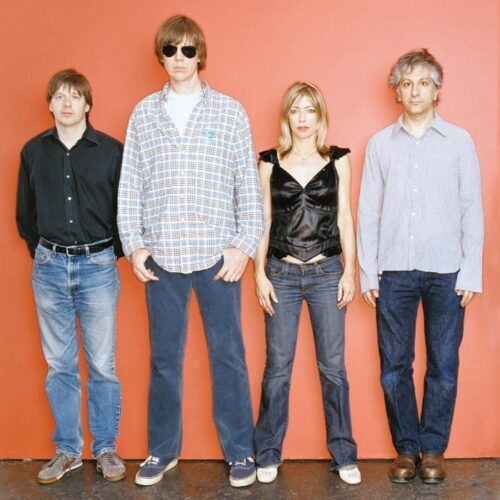
Sonic Youth was an influential American experimental rock band formed in New York City, New York, United States in 1981 and are currently on an indefinite hiatus. The last lineup consisted of Thurston Moore (vocals, guitar), Kim Gordon (vocals, bass, guitar), Lee Ranaldo (vocals and guitar), Steve Shelley (drums) and Mark Ibold (bass). In their early career, Sonic Youth was associated with the No Wave art and music scene in New York City. Part of the first wave of American noise rock groups
SONIC YOUTH: Thirty Years of Constructive Damage, Then the Door Closing Quietly in São Paulo
Sonic Youth, the New York City noise-rock group active from 1981 to 2011, rewired American guitar music so thoroughly that the aftershocks are still audible in virtually every independent rock release today. They arrived out of Manhattan’s No Wave scene — the same claustrophobic, confrontational milieu that produced Glenn Branca’s ensemble guitar experiments and Lydia Lunch’s scorched-earth minimalism — and spent three decades dismantling, then reassembling, the architecture of rock. No RIAA certification, no stadium tour, no crossover pop moment defines them. What defines them is Daydream Nation (1988), a double LP so thoroughly absorbed into the canon that younger listeners encounter it as historical fact rather than album. Thurston Moore, Kim Gordon, Lee Ranaldo, and Steve Shelley built something that couldn’t be sustained forever, and when it ended in November 2011 at a festival in São Paulo, it ended in real time, without a graceful exit.
Artist Profile
| Origin | New York City, New York, USA |
| Years Active | 1981–2011 (indefinite hiatus) |
| Genre | Noise Rock, Alternative Rock, Experimental Rock, Post-Punk, No Wave |
| Labels | Neutral, Homestead, SST, Enigma, Blast First, DGC / Geffen, Matador, SYR (own imprint) |
| Members | Thurston Moore, Kim Gordon, Lee Ranaldo, Steve Shelley, Mark Ibold (final lineup); also Jim O’Rourke (1999–2005) |
| RIAA Certifications | BPI Silver (Goo, 1990); no confirmed RIAA gold/platinum certifications |
| Albums in Catalog | 15 studio albums (1983–2009) |
| Notable Honors | Daydream Nation added to the U.S. National Recording Registry (Library of Congress, 2006); Pitchfork #1 album of the 1980s |
Performance Snapshot
| Total Listeners (Get Music) | 199,348 |
| Countries Reached | Global (multiple markets) |
| Albums in Get Music Catalog | 1 (The Eternal, 2009) |
| Top Markets | United States, United Kingdom, Germany, Australia |
From No Wave to the Major League: The Unlikely Trajectory of Sonic Youth
Sonic Youth emerged from Manhattan’s downtown avant-garde with founding members Kim Gordon (bass, vocals, guitar), Thurston Moore (guitar, vocals), and Lee Ranaldo (guitar, vocals) forming the permanent core, while drummer Steve Shelley, who joined in 1985, rounded out what became the definitive lineup.
The context matters:
the group’s debut EP was recorded between December 1981 and January 1982, released through Glenn Branca’s Neutral label
— Branca being the composer whose mass guitar orchestrations gave Moore and Ranaldo their first serious exposure to alternate tunings as structural material, not effect.
The band’s first full-length album was Confusion Is Sex, released in 1983, and that same year Kill Yr Idols appeared under the German label Zensor Records.
These are not albums you put on for comfort. They are confrontational in the most literal sense — the guitar tunings are deliberately hostile, the rhythmic grid is unstable, and Gordon’s vocal delivery operates somewhere between recitation and threat.
In 1986, Sonic Youth signed to SST Records and released Evol that same year.
The SST years — Evol (1986) and Sister (1987) — represent a crucial tightening of focus. The band was learning how to write songs from inside a noise framework rather than noise as the song itself.
The major-label moment arrived, as it so often does in American indie history, through critical mass rather than commercial strategy.
After Daydream Nation was released, it received widespread acclaim from critics and earned Sonic Youth a major label deal.
In 1990, the band signed to DGC Records and released Goo the same year.
Sonic Youth eventually signed a five-album deal with Geffen for an estimated $300,000
— a figure that seems modest by major-label standards and probably was, but it placed the band inside a distribution network that gave their work a geographic reach their SST catalogue never had. The band spent the entire 1990s on DGC/Geffen, releasing records that ranged from the relatively accessible (Dirty, 1992) to the genuinely difficult (A Thousand Leaves, 1998), without ever resolving the tension between those poles. In 1996, they formalized their experimental outlet by founding their own imprint.
Sonic Youth Recordings (SYR) was established in 1996 to allow the band to release records by themselves and their friends without the commercial pressures of a major label.
The Catalog: Landmarks, Detours, and the Long Goodbye
The Sonic Youth catalog is not a gradual upward arc. It is a series of decisive moves, each one repositioning the band’s center of gravity. Sister (1987, SST) is where the tuning experiments stop feeling like pure abstraction and start generating actual melodic tension — the relationship between dissonance and resolution becomes load-bearing rather than decorative. Then comes Daydream Nation.
Daydream Nation (1988, Enigma) pulls from pop culture sources such as William Gibson and Joni Mitchell, combining long improvisations, excursions into noise, and faster, poppier melodies, completing the band’s evolution that had begun on EVOL.
The album was ranked high in critics’ year-end lists for 1988 and was voted second on The Village Voice‘s annual Pazz & Jop poll.
Pitchfork ranked it #1 on their “100 Greatest Albums of the 1980s.”
Daydream Nation was one of 50 recordings chosen by the Library of Congress to be added to the National Recording Registry in 2006.
None of that is hyperbole. The record earns every bit of it. The “Trilogy” that closes the album — “The Sprawl,” “Cross the Breeze,” “Eric’s Trip” — is seventy-minutes of guitar architecture that still sounds like a blueprint nobody else has finished building.
The DGC era produced more commercially visible work.
Dirty (1992) reached #83 on the US Billboard 200 and #6 in the UK
, which for a band of this lineage represents genuine mainstream penetration. Producer Butch Vig brought a cleaner low-end and a more muscular drum mix — some found it too polished, others heard it as a reasonable translation. The truth is somewhere in the middle. Later in the decade, the band grew more diffuse: Washing Machine (1995) and A Thousand Leaves (1998) sprawled in ways that rewarded patience but tested casual listeners.
After leaving DGC and signing with Matador, the band produced what many consider a genuine late-career resurgence. Murray Street (2002) drew comparisons back to their SST-era economy of form.
Uncut called it music that “contains some of the best Sonic Youth have recorded since the landmark Daydream Nation in 1988.”
Their final studio album, The Eternal (2009), released on Matador, closed the recorded catalog with a set of focused, guitar-forward compositions that felt less like a swan song and more like a band still mid-conversation with itself.
Market Note
Sonic Youth’s IP sits in a peculiar position: enormous critical capital, no RIAA-certified gold or platinum records in the US catalog, and a streaming footprint that skews toward album-oriented listening rather than individual track consumption. This is not a weakness — it defines the audience. Their listeners finish records. That behavioral profile is precisely what makes the catalog attractive for sync placement in prestige television, film, and documentary contexts, where a single track such as “Teen Age Riot” or “Kool Thing” carries decades of scene credibility without the licensing complexity of a more commercially mainstream back catalog. The SYR imprint retains a separate body of experimental recordings that appeals to the curator and collector market. The Daydream Nation National Recording Registry designation functions as institutional endorsement, adding a layer of academic legitimacy that most rock catalogs simply do not have. Demographically, the core audience is 35–55, North American and Western European, with above-average disposable income — a vinyl-purchasing, concert-going cohort that still drives meaningful physical revenue for a catalog this size.
Geographic Reception: Where the Frequencies Landed
The simplest version of Sonic Youth’s geographic story runs New York to the UK to the rest of the Anglophone world and stops there. The more accurate version is considerably messier. The band’s early distribution through Rough Trade in Britain gave them a UK indie credibility that their American underground peers often lacked.
Sonic Youth’s popularity rose with 1985’s Bad Moon Rising, which was distributed by Rough Trade Records.
That relationship placed them in the same retail context as the Smiths, the Fall, and Wire — which shaped how British audiences processed them: as post-punk formalists rather than purely American noise artists.
In the US, the trajectory followed underground radio — college stations, WNYC, the kind of late-night programming that was building an alternative infrastructure before “alternative” became a marketing category. When MTV emerged as a gatekeeper, Sonic Youth worked the system selectively: the “Kool Thing” video (featuring Chuck D) gained traction and introduced the band to a broader audience that had never encountered SST. The DGC deal formalized what had already happened culturally.
The deal proved that indie bands could stay indie, even on a big-business major label.
This reading matters: the Sonic Youth-to-DGC deal became a reference point for every subsequent indie-band-major-label negotiation through the 1990s.
In continental Europe — particularly Germany, France, and the Netherlands — the DGC-era records charted modestly but consistently.
Experimental Jet Set, Trash and No Star (1994) peaked at #8 in Germany
, which is a remarkable chart position for a record that opens with a nearly unaccompanied Kim Gordon murmur and never resolves into anything resembling a conventional chorus. Australian audiences tracked the band through the independent press and later through mainstream alternative radio, with Dirty reaching #22 in that market. Japan proved receptive throughout the band’s lifespan — the avant-rock tradition there created a ready context for the band’s formal experiments, and several SYR releases found collectors there first.
The band also operated as a geopolitical symbol of sorts — proof that American music could be cerebral without being academic, aggressive without being stupid, and commercially engaged without being co-opted. That reading spread into Latin America, where the São Paulo festival crowd that witnessed their final show had assembled from across the continent.
Their final shows took place in Brazil.
It is fitting that the geography of their ending was South American: the band’s music had traveled further than its chart positions ever suggested.
Critical Legacy: The Honest Accounting
The critical standing of Sonic Youth bifurcates along a single fault line: pre-DGC versus post-DGC. Among serious listeners, the SST-era trilogy of EVOL, Sister, and Daydream Nation is treated as definitive — the records on which the band’s formal ideas were both most radical and most structurally controlled. Everything after 1990 is subject to a kind of retroactive diminishment that isn’t entirely fair but isn’t entirely wrong either. The major-label recordings are better than that narrative allows, but they are working from a smaller pool of formal risk.
Daydream Nation has accumulated a critical consensus that is, by now, almost impossible to dispute on its own terms.
It received overwhelmingly positive reviews from contemporary music critics and earned a perfect 10/10 from Pitchfork.
SPIN called it “a Rosetta stone of indie rock and the apotheosis of a more cogent, focused Sonic Youth.”
Robert Christgau, writing in The Village Voice,
called their music “a philosophical triumph.”
These are not small claims. The record is genuinely that good. The question is whether the consensus has now calcified into something that prevents honest engagement with the rest of the catalog.
The band’s relationship with production is worth examining without the usual hagiography. The SST-era records are lo-fi by necessity as much as by choice — the recording budgets were minimal and the compression artifacts are real, not curated. By the time Nick Sansano co-produced Daydream Nation at Greene St. Recording in SoHo, the band had access to better tools, and the album sounds proportionally more controlled.
Sansano went on to co-produce both Daydream Nation and Goo, two critically acclaimed records that shifted the landscape of popular music.
The DGC records benefited from major-label budgets that brought in producers like Butch Vig (Dirty) and the band itself, but the sonic philosophy remained deliberate: the alternate tunings, the sidechain relationship between guitar and bass, Gordon’s spoken-word passages set against Shelley’s lockstep funk-inflected drumming.
Post-2011, the individual members have continued working.
Spinoffs include Body/Head, Chelsea Light Moving, Ciccone Youth, Dim Stars, and Free Kitten
— most of these pre-date the breakup, but Body/Head (Gordon’s noise duo) and Chelsea Light Moving (Moore’s band) represent the clearest continuation of the Sonic Youth project’s formal ambitions.
Both members have continued to make music since the band split and have been successful in doing so.
The end, when it came, was not aesthetic but personal.
In October 2011, Moore and Gordon officially announced their separation.
In 2011, they announced their split and the band’s indefinite hiatus.
The final concert was at a festival in São Paulo in November 2011.
Though his marriage was ending, Moore never claimed that Sonic Youth was finished.
Whether that distinction matters in practice is a separate question. What is clear is that thirty years of guitar-as-architecture, of modal dissonance as emotional logic, of two people making art while also making a life — ended on a stage in Brazil, without ceremony, in the middle of a set. That is, by any measure, exactly how Sonic Youth would have written it.
Frequently Asked Questions
Where should someone new to Sonic Youth begin?
Daydream Nation (1988) is the standard entry point, and the consensus is not wrong — it’s where the band’s formal ambitions and song-writing craft converge most cleanly. If that record’s 70-minute, double-LP architecture proves unwieldy, Sister (1987) is a tighter, more immediate record that covers the same formal territory in less space. For those who want to hear the DGC-era band at their most streamlined, Dirty (1992) is the least demanding place to start. Their final studio album, The Eternal (2009), is an underrated entry point for listeners who prefer a slightly drier, post-millennial guitar aesthetic.
Is Sonic Youth still active?
In 2011, Thurston Moore and Kim Gordon announced their split and the band’s indefinite hiatus.
Both members have continued to make music since the band split, though it doesn’t look like any reunion is on the cards.
The word “indefinite” has proven accurate — no reunion has materialized as of 2026. The personal circumstances that ended the band are well documented and show no signs of resolution.
Who has Sonic Youth collaborated with?
Jim O’Rourke (bass, guitar, keyboards) was a member from 1999 to 2005; Mark Ibold of Pavement (bass, guitar) joined in 2006 and remained in the band until their 2011 split.
Beyond band membership, notable collaborators include Chuck D of Public Enemy (who appeared on “Kool Thing”), Lydia Lunch, and Glenn Branca, whose tuning systems deeply informed the band’s foundational approach. Producer Nick Sansano worked on Daydream Nation and Goo, and Butch Vig produced Dirty before his work with Nirvana’s Nevermind.
Which artists sound like Sonic Youth?
The direct lineage runs through Pavement (whose Mark Ibold eventually joined Sonic Youth), Dinosaur Jr., Sebadoh, and Thurston Moore’s post-breakup project Chelsea Light Moving. Further out, you will find Unwound, Sleater-Kinney, and Deerhunter — bands that absorbed the modal dissonance and two-guitar conversation without directly imitating it. In terms of catalog philosophy and independent infrastructure, Yo La Tengo is the closest surviving parallel: a band that maintained artistic control across decades, released work on their own terms, and built an audience through attention rather than marketing. You can explore related album contexts on the full Sonic Youth artist page at Get Music.
Written by Ceren YALIN — cerenyalin.com.tr
Girls Choice Music | Get Music — The Atlas of Recorded Music
Published: October 7, 2026
Have a release you want on our radar? Submit via Telegram: t.me/ViralSubmissions
1 album in our catalog
All releases
Complete release history from MusicBrainz — albums, EPs, singles, live, and more.
Album (17)
- 2009The Eternal
- 2006Rather Ripped
- 2004Sonic Nurse
- 2004Hidros 3
- 2002Terrastock 5
- 2002Murray Street
- 2000NYC Ghosts & Flowers
- 1998A Thousand Leaves
- 1995Washing Machine
- 1994Experimental Jet Set, Trash and No Star
- 1992Dirty
- 1990Goo
- 1988Daydream Nation
- 1987Sister
- 1986EVOL
- 1985Bad Moon Rising
- 1983Confusion Is Sex
Album (Compilation) (8)
- 2020Rarities 1
- 200914 Tracks: The Other Side of Sonic Youth
- 2008Hits Are for Squares
- 2007Mix Tape #6
- 2006The Destroyed Room: B-Sides and Rarities
- 2005Mix Tape #4
- 2004Mix Tape #1
- 1994Screaming Fields of Sonic Love