
Listen / Follow
Tags
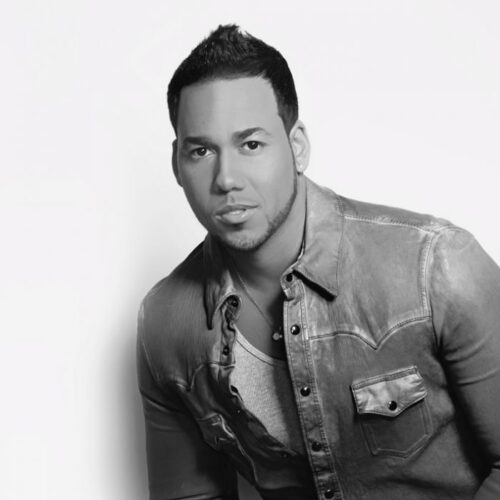
About Romeo Santos
Anthony "Romeo" Santos (born July 21, 1981) is an American singer, featured composer and lead singer of the Bachata group Aventura. As a member of Aventura, Santos has been a key figure in popularizing Bachata, with hits reaching near the top of the Billboard Latin charts and the top of charts in Europe. In 2002, the band's song "Obsesión" was number one in Italy for sixteen consecutive weeks. Santos was born in The Bronx, New York, United States to a Dominican father and a Puerto Rican mother.
ROMEO SANTOS: From the Bronx Barrio to Bachata’s Global Reckoning
Romeo Santos, the Bronx-born singer and composer who redefined bachata for a global generation, stands as one of the most commercially durable Latin artists of the past two decades. Born Anthony Santos on July 21, 1981, to a Dominican father and a Puerto Rican mother, he grew up in the South Bronx at the precise intersection where Caribbean rhythm and New York street culture compress into something neither origin point could produce alone. His trajectory — from youth-choir singer to lead vocalist of Aventura, then to bachata‘s most decorated solo act — is a study in how genre-specific music can outgrow its regional frame when handled with compositional intelligence and strategic patience.
Known widely as the King of Bachata, Santos is the Latin artist with the most Billboard Latin number-one hits of the past decade — a total of 20.
Artist Profile
| Full Name | Anthony Romeo Santos |
| Born | July 21, 1981 |
| Origin | The Bronx, New York, U.S. |
| Genre | Bachata, Latin Pop, R&B |
| Label | Sony Music Latin / I Love Amiguita Inc. |
| Years Active | 1995 – present |
| Notable Collaborators | Prince Royce, Usher, Drake, Nicki Minaj, Marc Anthony, Rosalía, Justin Timberlake, Carlos Santana |
| RIAA Certifications (select) | Formula Vol. 1: 24× Platinum (Latin); Formula Vol. 2: 43× Platinum (Latin); Golden: 22× Platinum (Latin); Utopía: 11× Platinum (Latin); Formula Vol. 3: 9× Platinum (Latin) |
| Solo Studio Albums | 6 studio albums, 2 live albums |
Performance Snapshot — Get Music Catalog
| Total Listeners | 73,624 |
| Countries Reached | 6 |
| Albums in Catalog | 1 |
| Artist Page | getmusic.com.tr/artist/romeo-santos/ |
The Architecture of a Career: Aventura, the Bronx, and Bachata’s New Grammar
Romeo Santos did not arrive at bachata through formal conservatory training or a label’s A&R pipeline. He arrived through a church choir in the South Bronx and then through Aventura, the group he co-founded in the mid-1990s alongside Henry Santos, Lenny Santos, and Max Santos. What Aventura built was structurally specific: they took the Dominican guitar-driven bachata form — historically coded as rural, working-class, and sentimental — and cross-wired it with R&B vocal production, hip-hop rhythmic sensibility, and the bi-cultural affect of New York Latino youth. Santos’s role as lead vocalist and primary composer was central to this recalibration. His melodic writing favors stepwise motion in the vocal line over dramatic leaps, which gives his phrasing an intimate, conversational quality even when the harmonic language underneath turns chromatic.
The group’s 2005 album, distributed by Sony Music Latin, carried the duet “Ella y Yo” with Don Omar, which pulled a reggaetón audience directly into bachata’s orbit.
That genre-bridging instinct — never replacing bachata’s identity but enlarging its demographic reach — would remain Santos’s signature compositional strategy throughout his solo years.
In 2007, Aventura became the first bachata act to sell out Madison Square Garden.
That booking was not a marketing stunt; it was market confirmation. A genre once restricted to Dominican community radio had found an audience scaled for major venue infrastructure.
The band’s European penetration was even more striking for its specificity. In 2002,
Aventura was the pivot point at which bachata stopped being a Dominican genre exported abroad and became one written abroad and sold back home.
“Obsesión” spent sixteen consecutive weeks at number one in Italy — an achievement that had no obvious precedent in the bachata tradition and signaled that the genre’s emotional register (longing, repetition, the slow burn of unresolved desire) translated across Romance-language cultural contexts with almost no friction.
By 2011, Aventura had sold more than 1.7 million records in the United States on five studio albums, and Santos held twelve ASCAP awards for songs he had written for it.
The group separated that year, and Santos signed with Sony Music Latin, releasing his debut solo project that November.
The transition from group vocalist to solo artist is a structural risk that many genre-defining singers fail — the ensemble absorbs responsibility that a solo performer must now carry alone in terms of arrangement, production tone, and audience expectation management. Santos navigated it cleanly, largely because he had already been the compositional center of Aventura. The move to solo status was less a reinvention than a shift in credit allocation.
Discography Highlights: The Fórmula Trilogy, Golden, and the Collaborative Turn
Fórmula, Vol. 1 was released November 8, 2011 on Sony Latin, debuting at number nine on the Billboard 200 and reaching number one on the US Latin and Tropical Albums charts.
The album spent 17 weeks at number one on the Billboard Latin sales chart and spun off five number-one singles.
Production-wise, the record is notable for the restraint Santos applies to its low end: the traditional requinto guitar sits in a deliberately dry room, refusing the kind of reverb wash that would soften its attack. This keeps the rhythm section percussive and present, making the sidechain relationship between the bongo and bass guitar feel almost conversational.
The album is certified 24× Platinum in the Latin field by the RIAA and 4× Platinum by Mexico’s AMPROFON.
Fórmula, Vol. 2, released February 25, 2014, reached number five on the Billboard 200 and number one on US Latin Albums, selling 245,000 copies in the United States and one million worldwide.
It is the record that demonstrates Santos’s clearest instinct for cross-genre negotiation.
The single “Odio” — “Hate” — is a collaboration with Drake and showcases his melodic style and storytelling.
The Drake pairing is not purely cosmetic: it positions Santos within a pop-rap aesthetic ecosystem that then routes his music toward streaming audiences who would not have encountered bachata through Latin radio.
Vol. 2 is certified 43× Platinum (Latin) by the RIAA, with additional gold certifications in Italy and Spain.
Golden, released July 21, 2017, debuted at number 10 on the Billboard 200 and at number one on Billboard Top Latin Albums, staying there for four consecutive weeks.
It won Tropical Album of the Year at the 2018 Billboard Latin Music Awards
and
was the best-selling tropical album in the United States in both 2017 and 2018.
The production palette on Golden marks a meaningful shift: Santos introduces fuller orchestral string arrangements, using them not as romantic ornamentation but as timbral contrast to the guitar’s midrange presence. The parallel processing on his vocal chain — dry lead center-panned against a lightly saturated double — creates depth without the slick compression artifacts common in contemporaneous Latin pop.
Fórmula, Vol. 3, released September 1, 2022, reached number one on the Tropical Albums chart and is certified 9× Platinum (Latin) by the RIAA.
The most recent entry in the catalog represented on Get Music is the 2025 collaborative project Better Late Than Never, recorded with Prince Royce.
Released November 28, 2025 on Sony Latin and I Love Amiguita Inc., the album runs 50 minutes and moves entirely within bachata’s formal grammar across its tracklist.
The 13-track project was composed by Santos, with Prince Royce contributing to four tracks; Santos handled the entire production, combining traditional bachata arrangements with contemporary R&B and urban influences.
It debuted at number one on US Tropical Albums and reached number two on Top Latin Albums, earning RIAA certification at 2× Platinum (Latin).
Market Note — IP Strength & Catalog Positioning
Romeo Santos operates one of the most resilient IP portfolios in Latin music. His back-catalog RIAA certifications — cumulative Latin Platinum certifications running into the hundreds across five solo albums — speak to sustained streaming velocity rather than front-loaded release spikes. His compositional credits on Aventura-era material give him a publishing asset base independent of any label agreement, which provides long-term leverage uncommon in this genre tier.
He is a five-time ASCAP Composer of the Year winner
, a metric that reflects not chart performance but the actual performance royalty generation of his catalog across radio, television, and sync placements.
Santos has sold more than 24 million albums worldwide
, a figure that positions him within the top tier of Latin artists by total units, where sync placement value is high and brand partnership demand is consistent. His fanbase demography — bilingual, 18-45, concentrated in the U.S. Northeast, Spain, Mexico, and Italy — is precisely the segment most aggressively targeted by premium apparel, spirits, and travel brands seeking Spanish-language cultural credibility. The touring IP alone, currently in active exercise through a 70-date global arena run, demonstrates that his demand holds at large-format venue scale.
Geographic Reception: Where Bachata Lands and Why
Santos’s audience is geographically instructive. The density of his listener base in the U.S. Northeast — New York, New Jersey, Massachusetts, Connecticut — maps almost exactly onto the Dominican and Puerto Rican diaspora concentrations of those states. This is not incidental. His music functions as a form of cultural maintenance for communities navigating the tonal dissonance between American urban life and Caribbean domestic memory. The emotional themes in his writing — betrayal, romantic obsession, the ambivalence of desire — resonate most acutely in social contexts where personal relationships carry the extra weight of displacement.
But what is analytically interesting is that his reach extends well beyond diaspora geography.
Fórmula, Vol. 2 reached number four on the Spain albums chart and number 61 in the Netherlands.
Italy has been a persistent market: Aventura’s “Obsesión” built a foundation there that Santos’s solo work has maintained, with
Golden charting at number 68 on the Italian FIMI chart.
Spain’s PROMUSICAE certifications on multiple releases confirm that the Iberian market treats his catalog as a domestic-adjacent property rather than an import novelty. The linguistic familiarity of Spanish helps, but it alone does not explain sustained European chart presence — plenty of Spanish-language artists fail to replicate the pattern.
Mexico deserves separate treatment.
Fórmula, Vol. 2 reached number one in Mexico
, and
Golden also debuted at number one in Mexico and Argentina, reaching the Top 10 in Chile and Spain and across South America.
Mexico’s regional genres — norteño, banda, ranchera — have historically resisted bachata’s penetration, yet Santos navigated that market through consistent presence on Latin Airplay and a compositional approach that emphasizes melodic clarity over rhythmic complexity. The bachata guitar pattern is syncopated but never opaque; it produces groove without demanding genre literacy from the listener.
The 2026 Mejor Tarde Que Nunca tour, the live extension of the Prince Royce collaboration, extends this geographic logic into arena-scale confirmation.
The tour spans three legs and 70 shows, co-headlined by Romeo Santos and Prince Royce, in support of Better Late Than Never.
Stops include TD Garden in Boston, Prudential Center in Newark, Capital One Arena in Washington, D.C., State Farm Arena in Atlanta, Toyota Center in Houston, and Crypto.com Arena in Los Angeles.
The London date at The O2 in July 2026 extends the European leg into the UK market, where Latin music’s streaming growth has been consistent since 2018. These are not secondary rooms — they are tier-one venues that reflect demand at a scale most Latin artists never reach.
Critical Legacy: The King Label and What It Obscures
The “King of Bachata” designation that follows Santos everywhere is both accurate and limiting. It is accurate in the sense that no other artist in the genre’s modern commercial history has produced his volume of number-one records, his level of RIAA certification, or his consistency of arena-scale demand across a fifteen-year solo run.
The Billboard Latin Music Awards named him Artist of the Year for two consecutive years, while the Billboard Music Awards named him Latin Artist of the Year for two consecutive years as well.
He holds a Latin Grammy, three Billboard Music Awards, and nineteen Premios Lo Nuestro, which gave him its excellence award in 2017.
ACROARTE named him El Gran Soberano in 2021 — its highest distinction for a Dominican career, awarded to a man born in New York.
That last detail carries cultural weight: the award recognizes that Santos’s Bronx origin is not a disqualification from Dominican cultural leadership but is itself the story of how Dominican music travels and what happens to it when it does.
The limiting dimension of the King label is that it can domesticate the strangeness of what he actually does compositionally. Santos writes from a fundamentally melancholic tonal center — a lot of his most celebrated material sits in minor-key territory with modal inflections that avoid resolution in a way that feels less like bachata’s traditional verse-chorus pull and more like a sustained harmonic suspension. His use of the fifth-relation to modulate between sections is quieter and more deliberate than the dramatic key changes common in Latin pop balladry. He is also a more careful arranger than his commercial profile suggests: the production decisions across his Fórmula trilogy are internally consistent in ways that reward close listening, not just passive streaming.
Fórmula, Vol. 3 includes “Sin Fin” alongside Justin Timberlake, “El Pañuelo” with Rosalía, and “15,500 Noches,” a merengue recorded with Fernando Villalona, Rubby Pérez, Toño Rosario, and Ramón Orlando.
The album won the 2023 Latin Grammy for Best Merengue and/or Bachata Album, in a tie with A Mi Manera by Sergio Vargas.
The Rosalía pairing is particularly notable: it brought his sound into proximity with an artist whose flamenco-pop synthesis had considerable critical traction in non-Latin markets, and the cross-pollination worked because Santos’s guitar-forward production shared structural DNA with flamenco’s percussive string aesthetic even while operating in a completely different geographic and harmonic tradition.
What remains genuinely underexamined in critical discourse around Santos is his role as a composer for other artists — a function that the ASCAP recognition makes visible but that album-centric coverage tends to obscure.
His five ASCAP Composer of the Year awards
indicate a publishing operation that generates royalties across multiple performers and formats, not just his own recordings. His legacy, properly assessed, is not just as a vocalist or performer but as a structural architect of the modern bachata song, whose formal decisions — the way he handles pre-chorus tension, the way he extends instrumental breaks, the way he deploys harmony to signal emotional shift — have shaped how the genre sounds when written by younger composers who grew up listening to Aventura.
The recent collaboration with Prince Royce on Better Late Than Never is, in this context, less a late-career pairing of established names and more a strategic restatement of what bachata sounds like when two of its most technically fluent practitioners work within the genre’s boundaries without reaching outward for pop crossover scaffolding.
The album’s lead single “Lokita Por Mí” became Santos’s 23rd number-one on Billboard’s Latin Airplay chart in 2025.
That number — 23 — is the most direct measure of his durability: not critical reassessment, not nostalgia, but active radio dominance across a span of time that would constitute multiple careers for most artists in any genre.
Frequently Asked Questions
Where should a new listener start with Romeo Santos’s catalog?
Fórmula, Vol. 2 (2014) is the most representative entry point: it balances the traditional bachata guitar texture of his Aventura roots with the contemporary production choices that expanded his audience. From there, Golden (2017) is the natural progression, and the 2025 collaborative project Better Late Than Never with Prince Royce offers the most current statement of where that sound sits in 2025.
Is Romeo Santos still active?
Yes.
Santos and Prince Royce are currently co-headlining the Mejor Tarde Que Nunca arena tour across North America through 2026
, with
dates extending into Mexico City at the Palacio de los Deportes in October 2026.
He remains one of the most actively touring Latin artists at arena scale.
Who has Romeo Santos collaborated with?
Santos has collaborated with Usher, Lil Wayne, Pitbull, Drake, Nicki Minaj, Marc Anthony, and Carlos Santana
, among others. More recently,
Fórmula, Vol. 3 features Justin Timberlake and Rosalía
, and his current project pairs him with Prince Royce across a full album and tour. The collaborator range — from hip-hop to flamenco-pop to traditional Dominican merengue — reflects a deliberate strategy of genre adjacency rather than a single crossover lane.
Which artists are stylistically similar to Romeo Santos?
Within the bachata-adjacent space, Prince Royce is the most immediate reference — the two artists share a Bronx-born bilingual aesthetic and a preference for production that keeps the traditional guitar front and center. Juan Luis Guerra operates in the compositionally sophisticated register of Dominican popular music that Santos occupies at the pop end. For listeners drawn to Santos’s R&B crossover sensibility, Marc Anthony’s salsa ballad work offers a structural parallel. Browse the full Romeo Santos artist page on Get Music for catalog context and related releases.
Setenay Mira KAYA — Girls Choice Music, Get Music: The Atlas of Recorded Music
setenaymirakaya.com.tr | October 8, 2026
Follow editorial submissions and new reviews via Telegram: t.me/ViralSubmissions
1 album in our catalog
All releases
Complete release history from MusicBrainz — albums, EPs, singles, live, and more.
Album (6)
- 2025Better Late Than Never
- 2022Fórmula, vol. 3
- 2019Utopía
- 2017Golden
- 2014Fórmula, vol. 2
- 2011Fórmula, vol. 1
Single (17)
- 2022Sin fin
- 2022El pañuelo
- 2022Sus huellas
- 2021Fan de tus fotos
- 2020Nuestro amor
- 2017Héroe favorito
- 2017Bella y sensual
- 2017Imitadora
- 2015Masoquismo
- 2014Odio
- 2014Cancioncitas de amor
- 2013Propuesta indecente
- 2013Loco
- 2012Rival
- 2012Mi santa
- 2011Promise
- 2011You
Album (Live) (2)
- 2021Utopía Live From MetLife Stadium
- 2012The King Stays King: Sold Out at Madison Square Garden