Listen / Follow
Tags
About Rise Against
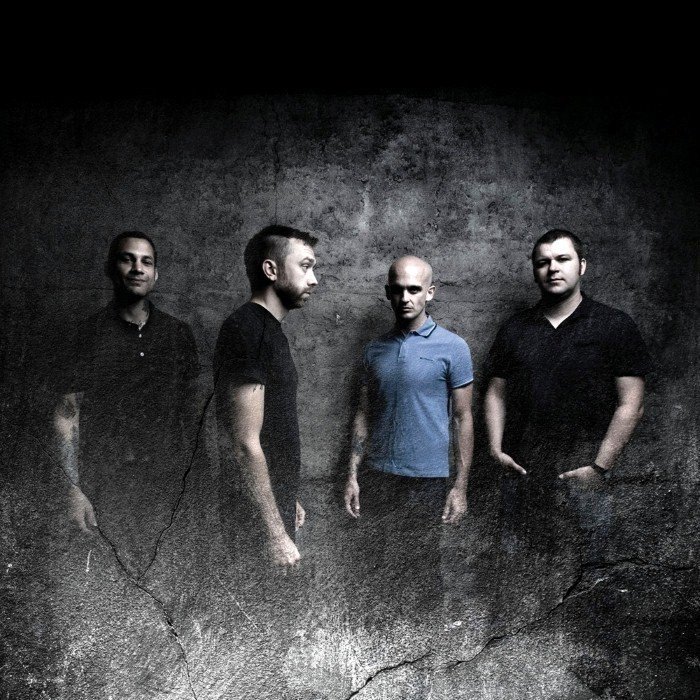
Rise Against is an American punk rock band from Chicago, formed in 1999. The group's current line-up comprises vocalist/rhythm guitarist Tim McIlrath, lead guitarist Zach Blair, bassist Joe Principe and drummer Brandon Barnes. Rooted in hardcore punk, Rise Against's music emphasizes melody, catchy hooks, an aggressive sound and playstyle, and rapid tempos. Lyrically, the band is known for their outspoken social commentary, covering a wide range of topics such as political injustice, animal rights, humanitarianism, and environmentalism.
Rise Against: Twenty-Five Years of Structured Dissent from Chicago’s Hardcore Underground
Rise Against, Chicago’s most durably politicized punk rock band, have built a catalog defined by melodic precision, ideological consistency, and an aggressive push-pull between hardcore velocity and mainstream legibility that few of their peers have managed to sustain across a decade-spanning arc.
Formed in 1999, Rise Against emerged from Chicago’s working-class punk milieu
and grew — over ten studio albums and more than two decades — from a Fat Wreck Chords underground act into one of the most globally distributed voices in post-2000 melodic hardcore. Their trajectory is neither accidental nor simply market-driven; it reflects a band that has consistently treated its formal craft and social convictions as inseparable.
Artist Profile
| Origin | Chicago, Illinois, USA |
| Years Active | 1999–present |
| Genre | Punk Rock / Melodic Hardcore / Hardcore Punk |
| Labels | Fat Wreck Chords, Geffen / DGC, Interscope, Virgin, Loma Vista Recordings |
| Current Members | Tim McIlrath (vocals/guitar), Zach Blair (lead guitar), Joe Principe (bass), Brandon Barnes (drums) |
| Notable Collaborators | Bill Stevenson, Jason Livermore (The Blasting Room), Catherine Marks, Alan Moulder |
| RIAA Certifications | The Sufferer & the Witness (Platinum), Appeal to Reason (Platinum), Siren Song of the Counter Culture (Gold); singles: “Savior” (Platinum), “Prayer of the Refugee” (Platinum), “Swing Life Away” (Gold) |
| Albums in Catalog | 10 studio albums (2001–2025) |
Performance Snapshot
| Total Listeners (Get Music) | 30,661 |
| Countries Reached | 4 |
| Albums in Catalog | 1 (currently indexed) |
| Top Format | Digital streaming / LP (neon orange variant, limited edition) |
From Transistor Revolt to the Major-Label Mainstream: A Career Arc Built on Controlled Velocity
Rise Against was first assembled under the name Transistor Revolt in 1999
— a project seeded in the wreckage of
the Chicago punk band 88 Fingers Louie, when guitarist Dan Wleklinski and bassist Joe Principe decided to form something new after that group disbanded.
Principe’s connection to vocalist Tim McIlrath came through the city’s overlapping hardcore circuits:
Principe met McIlrath in Indianapolis while attending a Sick of It All concert, recalling him from his previous band Baxter.
That network of mutual scenes — straight-edge hardcore, Midwestern melodic punk, Fat Wreck Chords-adjacent communities — would define the band’s foundational ethos as much as any producer or A&R intervention.
The band spent its first four years signed to the independent record label Fat Wreck Chords, releasing two studio albums: The Unraveling (2001) and Revolutions per Minute (2003).
The latter is the record that established their signature production relationship:
they chose Bill Stevenson — the former drummer of Descendents — and Jason Livermore to produce, recording at the Blasting Room in Fort Collins, Colorado, from November to December 2002.
That pairing proved generative.
The band developed a strong rapport with Stevenson and Livermore, and the two parties would eventually collaborate on four of the next five Rise Against albums.
Stevenson and Livermore’s production grammar suited Rise Against precisely: tight sub-two-minute verses, guitars tracked for harmonic clarity rather than sludge, and McIlrath’s mid-register vocal kept dry and upfront — a technique that made the band’s melodic hooks legible at arena scale without sacrificing the immediacy of a basement show.
In 2003 the band signed with DreamWorks, which was subsequently absorbed by Geffen Records,
and the Blasting Room’s approach followed them into the major-label system without audible concession.
Their major-label debut, Siren Song of the Counter Culture, became the band’s first album to reach the Billboard 200, peaking at number 136,
with singles “Give It All” and “Swing Life Away” widening their reach far beyond the punk underground.
Discography Highlights: Charting a Decade of Commercial Ascent and Ideological Discipline
The band’s upward chart trajectory through the Geffen and Interscope years remains one of the more striking case studies in punk rock’s mainstream negotiation.
The Sufferer & the Witness (2006) reached number 10 on the Billboard 200 and number 5 in Canada, earning RIAA Platinum certification and a BPI Silver award in the UK.
Its follow-up,
Appeal to Reason (2008), climbed to number 3 in the US and number 1 in Canada, achieving RIAA Platinum status and a BVMI Platinum certification in Germany.
These weren’t flukes of radio placement — they reflected a band that had engineered each album cycle with escalating precision, building from a loyal concert base rather than a streaming-first audience. The catalog’s RIAA singles certifications reinforce the point:
“Savior” and “Prayer of the Refugee” both reached Platinum level, while “Swing Life Away” achieved Gold
— three different melodic registers, three different pathways to mainstream retention.
Endgame (2011) represented the commercial peak:
it reached number 2 in the US and number 1 in both Germany and Canada, with a BVMI Platinum certification and an ARIA Gold in Australia.
By this point the band had effectively transcended the melodic hardcore niche to occupy a space adjacent to mainstream hard rock without formally crossing into it — a positioning that preserved their credibility with a politically active fan base while sustaining chart momentum.
The more recent phase of the catalog — from The Black Market (2014) through Wolves (2017, Virgin Records) and Nowhere Generation (2021, Loma Vista) — shows a band navigating label transitions with their core identity intact.
Nowhere Generation was recorded at the Blasting Room and produced once again by Stevenson, Livermore, Andrew Berlin, and Chris Beeble,
returning to familiar collaborative infrastructure before the major pivot that would come with their tenth record. The latest album in our catalog, Ricochet (2025), marks both the formal close of the Stevenson era and an intentional recalibration of production sensibility.
Following the end of support for Nowhere Generation, Rise Against elected to work with a new production team — choosing Australian producer Catherine Marks, known for her work with Manchester Orchestra and Boygenius, and veteran mixing engineer Alan Moulder.
Moulder’s resume includes Nine Inch Nails, Smashing Pumpkins, and My Bloody Valentine,
a lineage that brings a different set of spatial processing instincts to a band previously defined by the Blasting Room’s clean, punchy analog approach.
Released on August 15, 2025, via Loma Vista Recordings,
the collaboration prompted the band to write songs that moved somewhat from their established formal conventions.
Market Note
Rise Against’s IP strength rests on a rare tripartite foundation: consistent live-draw across three continents, a catalog of politically themed material that ages into documentary weight rather than dated nostalgia, and a straight-edge, activist-aligned brand identity that generates organic community cohesion without requiring constant reinvention cycles. Their RIAA-certified singles (“Savior,” “Prayer of the Refugee,” “Swing Life Away”) function as perennial rock-radio anchors with strong sync potential in documentary, sports, and social cause contexts — precisely the placements that sustain catalog revenue between album cycles. Demographically, their core audience skews 25–40 in the US, Canada, Germany, and Australia: listeners with disposable income, high concert-attendance propensity, and a preference for vinyl formats, making the band’s limited-edition LP releases (such as the Ricochet neon orange pressing) a reliable direct-to-consumer revenue stream. Catalog longevity here is not speculative — it is structurally embedded in the material itself.
Geographic Reception and Cultural Reach: Where the Audience Lives and Why
The band’s international chart performance has been notably stronger in German-speaking Europe, Canada, and Australia than it has been proportionally in the UK — an asymmetry that reflects both radio format differences and the specific cultural resonance of politicized melodic hardcore in markets where that genre’s community infrastructure runs deep.
Endgame reached number 1 in Germany, while The Black Market also topped the German chart and peaked at number 5 in Australia.
This is not incidental. Germany’s alternative rock radio ecosystem, combined with its festival circuit — which regularly draws melodic hardcore acts to headline slots — created ideal conditions for Rise Against’s mid-career expansion.
Canada has been among their most consistent territories:
Appeal to Reason reached number 1 on the Canadian album chart, followed by Endgame and The Black Market also hitting number 1 in Canada.
That sustained dominance speaks to a fanbase that followed the band through multiple label transitions and multiple stylistic inflections without attrition — the mark of a community-rooted audience rather than a trend-dependent one.
Rise Against is known for their advocacy of progressivism, supporting organizations such as Amnesty International and the It Gets Better Project.
The band actively promotes animal rights, and most members are straight edge, PETA supporters, and vegans.
This activist positioning is not peripheral to their geographic spread — it is central to it. In markets where issue-based concert culture is strong (Germany, Canada, Australia, parts of Scandinavia), Rise Against’s value proposition as a live act extends beyond musical performance into communal ritual. Their shows function as spaces for political identification, which amplifies audience retention across demographic cycles. Young listeners who discovered the band through Endgame in 2011 have aged into their thirties while maintaining active engagement — a pattern visible in the continuing vitality of their presale figures and festival bookings well into the 2020s.
The band’s relatively modest streaming-era chart numbers for Nowhere Generation —
number 39 in the US, but number 2 in Germany and number 3 in Switzerland
— illustrate a band whose European audience remained more structurally robust than its domestic one in the algorithm-driven consumption era. The release of Ricochet in 2025, with its explicitly anti-algorithmic thematic frame, positions the record as both a formal statement and a market-aware address to that same audience.
Critical Legacy: Melodic Hardcore’s Most Consistent Operator, Assessed Without Sentiment
Rise Against’s critical standing has always been complicated by the same thing that defines their commercial appeal: their refusal to make difficulty a priority. In an era of post-hardcore that prized formal opacity and genre-bending as marks of seriousness, Rise Against chose legibility — clean verse-chorus structures, tempos that sit just below what would register as noise, McIlrath’s vocals placed to maximize hook retention rather than tonal texture. Critics working within a framework that equates accessibility with compromise have frequently underweighted the band accordingly.
That framing misses what is genuinely sophisticated about the band’s craft. The production architecture of their Blasting Room albums — particularly The Sufferer & the Witness and Appeal to Reason — shows a group with a precise understanding of how compression and arrangement interact in punk contexts. Stevenson and Livermore’s approach to these records prioritizes transient clarity: the snare hits with a mid-forward crack that cuts through distorted guitar without either element overwhelming the other, a mix decision that matters enormously at the live decibel levels where Rise Against’s music primarily lives. McIlrath’s rhythm guitar work operates in a narrow frequency band that leaves space for Blair’s lead lines to register as melodic events rather than texture — a division of labor that requires real arrangement discipline to execute consistently across twelve tracks.
Lyrically, the band has occasionally been criticized for rhetoric that resolves into slogan rather than specificity — a fair charge against some of their more didactic moments. But the body of work holds more nuance than that critique allows. “Hero of War,” from Appeal to Reason, uses narrative restraint rather than declarative statement to build its argument; “Swing Life Away” strips the band to an acoustic register that reveals McIlrath as a writer with genuine tonal range. The ideological consistency that some read as rigidity is, from another angle, a statement of intent that has proven durable:
a quarter of a century in, they still fight specific wrongs and construct formally deliberate songs.
The pivot on Ricochet (2025) is the most significant formal experiment in the band’s catalog.
Produced by GRAMMY winner Catherine Marks — whose credits include Boygenius, Foals, Manchester Orchestra, and St. Vincent — and mixed by Alan Moulder, whose work spans Nine Inch Nails, Paramore, Queens of the Stone Age, and The Killers,
the album introduces production sensibilities — broader spatial imaging, more deliberate use of dynamic contrast — that sit outside the Blasting Room’s house style.
With this new production team, the band began writing songs that departed somewhat from their established formal conventions,
which is either the most interesting development in their late career or a risk that their core audience will adjudicate on their own terms. Either outcome is worth paying attention to.
Rise Against’s discography now comprises ten studio albums, eleven EPs, two compilation albums, and twenty singles — alongside twenty-five music videos
— a body of work that constitutes one of the more complete formal arguments any melodic hardcore band has made in the genre’s post-2000 phase. Their legacy is not the product of a single canonical record or a viral moment; it is the accumulated weight of a band that has remained structurally recognizable across label changes, lineup adjustments, and two decades of genre climate shifts. That coherence, in an industry that rewards novelty above most other things, is its own form of achievement.
Frequently Asked Questions
Where should I start with Rise Against’s catalog?
Appeal to Reason (2008) and The Sufferer & the Witness (2006) are the two records that best represent the band at full operational capacity — peak melodic precision, production clarity from the Stevenson/Livermore partnership at the Blasting Room, and a lyrical range that spans the political to the personal. Listeners already familiar with those should move immediately to Ricochet (2025), the tenth studio album and the band’s most significant production departure to date.
Is Rise Against still active?
Yes. The band’s tenth studio album, Ricochet, was released on August 15, 2025.
Following 2021’s Nowhere Generation, they released Ricochet via Loma Vista Recordings,
with an accompanying tour that included European festival dates and North American headlining shows throughout 2025.
Who has Rise Against collaborated with in the studio?
Bill Stevenson of the Descendents and engineer Jason Livermore at the Blasting Room in Fort Collins were the band’s primary production collaborators across four of five mid-career albums.
For Ricochet (2025), the band brought in Australian producer Catherine Marks — known for her work with Manchester Orchestra and Boygenius — alongside mixing engineer Alan Moulder.
The band has also maintained long-standing organizational ties with
Amnesty International and the It Gets Better Project.
Which artists are similar to Rise Against?
Listeners who find Rise Against’s melodic hardcore register compelling will likely respond to Anti-Flag (politicized punk with comparable lyrical directness), Bad Religion (the ideological and melodic lineage Rise Against explicitly draws from), Alkaline Trio (emotionally direct Chicago-adjacent punk with strong hook architecture), and Thrice (post-hardcore with a similar appetite for production evolution across their later catalog). For additional catalog recommendations, explore the Rise Against artist page on Get Music.
Setenay Mira KAYA — Girls Choice Music / Get Music
October 9, 2026
Want early access to new editorial drops? Join the Girls Choice Music channel on Telegram: t.me/ViralSubmissions
1 album in our catalog

All releases
Complete release history from MusicBrainz — albums, EPs, singles, live, and more.
Album (10)
- 2025Ricochet
- 2021Nowhere Generation
- 2017Wolves
- 2014The Black Market
- 2011Endgame
- 2008Appeal to Reason
- 2006The Sufferer & The Witness
- 2004Siren Song of the Counter Culture
- 2003Revolutions Per Minute
- 2001The Unraveling
EP (4)
- 2022Nowhere Generation II
- 2015The Eco-Terrorist in Me
- 2011Make It Stop (September's Children)
- 2007This Is Noise
Single (5)
- 2009Audience of One
- 2008Re-Education (Through Labor)
- 2006Ready to Fall
- 2005Swing Life Away
- 2004Give It All
EP (Live) (2)
- 2021Nowhere Sessions
- 2007AOL Music Sessions: Undercover
Album (Compilation) (4)
- 2018The Ghost Note Symphonies, Vol. 1
- 2018Career Vinyl Box Set (2001-2017)
- 2014The Collection
- 2013Long Forgotten Songs: B-Sides & Covers 2000-2013