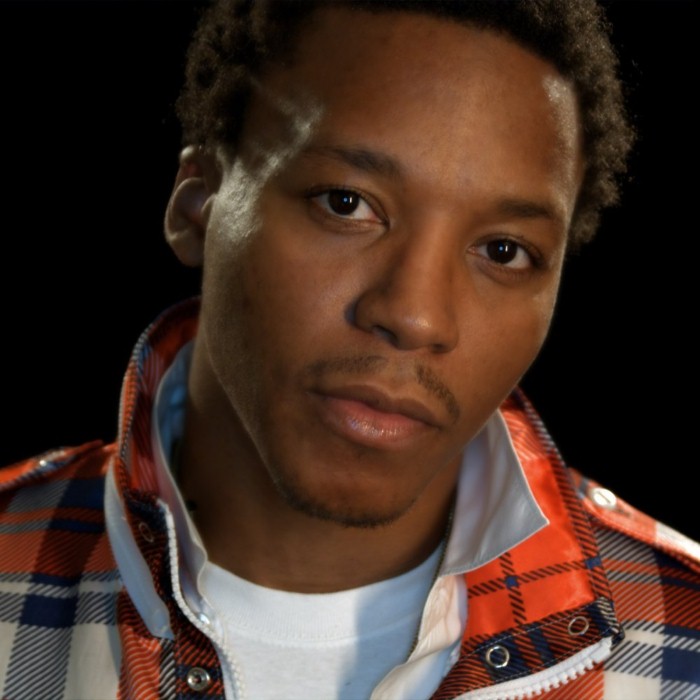
Listen / Follow
Tags
About Lupe Fiasco
Wasalu Muhammad Jaco (born February 16, 1982 in Chicago, Illinois), better known by his stage name Lupe Fiasco, is a Grammy Award-winning American hip-hop artist and producer. He first became known to the mainstream hip-hop community in 2005 when he appeared on Kanye West's album Late Registration on the track "Touch the Sky." In 2006 Lupe released his debut album, Lupe Fiasco's Food & Liquor on Atlantic Records, and in December 2007 he released his second full length album, Lupe Fiasco's The Cool .
Lupe Fiasco: Twenty Years of Precision at the Margins of the Mainstream
Lupe Fiasco, the Chicago hip-hop artist born Wasalu Muhammad Jaco, has spent two decades building one of rap’s most lyrically demanding and conceptually rigorous catalogs — nine studio albums deep and still accelerating. Where the genre’s commercial center has pulled toward maximalism and spectacle, Fiasco has moved in the opposite direction: tighter structures, denser wordplay, and production relationships built on restraint. His trajectory from a Kanye West feature to an MIT professorship is not incidental; it reflects a consistent, almost programmatic commitment to rap as an intellectual discipline rather than a market product.
Artist Profile
| Full Name | Wasalu Muhammad Jaco |
| Origin | Chicago, Illinois, USA |
| Years Active | 2000 – present |
| Genre | Midwestern Hip-Hop, Conscious Hip-Hop, Jazz Rap |
| Labels | 1st & 15th Entertainment, Atlantic Records, The Orchard, Thirty Tigers |
| Notable Collaborators | Soundtrakk, Kanye West, Jill Scott, Jay-Z, Pharrell Williams, Guy-Manuel de Homem-Christo |
| Grammy Awards | 1 Win (Best Urban/Alternative Performance, 2008 — “Daydreamin'”), 12 Nominations |
| RIAA Certifications | 20 Million certified units (as of February 2025); Platinum: The Cool, Lasers; Gold: Food & Liquor, Food & Liquor II |
| Studio Albums | 9 |
| Website | lupefiasco.com |
Performance Snapshot — Get Music Catalog
| Total Listeners | 264,709 |
| Countries Reached | 3 |
| Albums in Catalog | 1 (Samurai, 2024) |
| Top Markets | United States, United Kingdom, Europe |
From Da Pak to Atlantic: The Architecture of a Singular Voice
Fiasco began his music career in the early 2000s, briefly signing with Epic Records and joining the hip-hop group Da Pak.
After their split, he and Charles “Chilly” Patton created the record label 1st & 15th Entertainment, and around 2002 he signed as a solo artist to Arista Records.
Neither arrangement produced a debut album — but they produced something more durable: an independent infrastructure and a managerial relationship that would define his entire career arc.
During his tenures at two major labels, Fiasco met Jay-Z, who led him to sign with Atlantic Records.
The Atlantic deal unlocked the first phase of Fiasco’s public identity.
His feature on Kanye West’s 2006 single “Touch the Sky” peaked at number 42 on the Billboard Hot 100 and has since been certified Platinum by the RIAA, BPI, and ARIA.
That placement alone — tucked inside one of the decade’s most consequential rap albums — was a precise piece of career positioning. It announced a voice that could hold its own beside West’s maximalist production without being swallowed by it.
Atlantic released Fiasco’s debut studio album, Lupe Fiasco’s Food & Liquor (2006), which peaked within the top ten of the Billboard 200 and was nominated for four Grammy Awards.
The record established the formal qualities that would follow him across every subsequent release: multi-syllabic internal rhyme schemes, narrative construction borrowed more from short fiction than from freestyle tradition, and a willingness to critique the genre from inside it. Thematically, skateboarding, Islamic practice, geopolitical anxiety, and street-level Chicago sociology occupied the same verse without friction. Lyrically, the compression was ferocious.
In 2008, he won his first Grammy for Best Urban/Alternative Performance with “Daydreamin’,” featuring Jill Scott, though was unable to attend the ceremony due to contracting pneumonia.
The win confirmed institutional recognition, but Fiasco’s public image was already being shaped less by awards and more by the intensity of his critical following — a constituency that valued specificity, density, and resistance to formula.
With his first four albums, Fiasco was consecutively nominated for Best Rap Album at the Grammy Awards.
That run — across Food & Liquor, The Cool, Lasers, and Food & Liquor II — represents a consistency of recognition unusual even for artists with larger commercial footprints. It also marks a period in which his relationship with Atlantic grew increasingly strained, ultimately producing the contested Lasers (2011) under label pressure, before the partnership dissolved after Tetsuo & Youth in 2015.
The Catalog: Nine Albums Across Three Distinct Modes
Lupe Fiasco’s The Cool (2007) remains his critical high-water mark.
It surpassed its predecessor with twenty-eight weeks on the Billboard 200 and first-week sales of 143,407 copies.
It earned a Metacritic score of 77, with outlets including NME (9/10) and Pitchfork (8.1/10) among its reviewers.
The album’s conceptual architecture — a single narrative following a character called “The Cool” through cycles of death, seduction, and street mythology — showed a writer who understood long-form structure, not just bar-level craft.
Both of his first two albums were met with positive feedback, with several critics labeling his debut a masterpiece, while some stated The Cool was an even greater follow-up.
Lasers (2011) represents the most complicated entry in the catalog.
It debuted at number one on the US Billboard 200, making it his first number-one album on the chart, with over 200,000 albums sold the first week.
“The Show Goes On” became his greatest solo hit commercially, peaking at number nine on the Billboard Hot 100 and was certified 3× Platinum by the RIAA in 2014.
Yet
Lasers was met with mixed reviews from music critics,
a tension Fiasco has spoken about publicly — the record was shaped significantly by label intervention, and its pop-forward sonics sat uneasily against his established register. It is the clearest case in his catalog of commercial pressure distorting creative intent, and he has not repeated the arrangement since.
The post-Atlantic phase — beginning with Tetsuo & Youth (2015) and continuing through Drogas Light (2017), Drogas Wave (2018), Tape Tape (2019), House (2020), and into the Soundtrakk-produced pair of the 2020s — trades chart ambition for something more structurally interesting.
Drill Music in Zion (2022) was released through 1st & 15th and Thirty Tigers; Fiasco recorded the album in August 2021, intending to complete the entire project in 24 hours, a process that ultimately took three days.
That compression — conceptual, temporal, logistical — produced one of the tightest sequenced records of his career. You can explore his most recent entry in the Get Music catalog, Samurai (2024), for the full expression of this late-career mode.
On February 26, 2025, the RIAA awarded Fiasco a plaque for selling 20 million certified units.
The milestone is a useful corrective to any reading of his career as commercially marginal. The audience has always been there — it has simply been built through repetition of quality rather than through format-radio rotation.
Market Note — Catalog Positioning
Lupe Fiasco’s IP profile is unusual in hip-hop: a catalog with strong critical certification across multiple eras, a Grammy-winning discography, and 20 million RIAA-certified units, all maintained without significant radio dependency post-2015. His sync potential is high — lyrically complex material with clear narrative architecture travels well into prestige television and documentary contexts, a dynamic already indicated by “Daydreamin'” appearing in Mr. Robot. The fan base skews toward listeners who reward density and longevity, making catalog streaming velocity notably durable. His independent structure via 1st & 15th and Thirty Tigers means IP ownership has consolidated on his side of the ledger — a long-term asset that increases in value as streaming catalogs become acquisition targets. For A&R purposes, his collaboration pattern with Soundtrakk offers a clean entry point: two consecutive full-album productions representing a defined aesthetic period with identifiable sonic coordinates.
Geographic Reception: Chicago as Tonal Center, the Internet as Distribution Infrastructure
Lupe Fiasco’s audience is, in geographic terms, disproportionately concentrated in the United States — but the composition of that domestic audience is worth disaggregating. His core listeners are not concentrated in a single metropolitan region; they cluster instead around university towns, literary hip-hop communities, and the broader ecosystem of listeners who came of age during the mid-2000s critical rap revival that included Kanye West’s Late Registration, Common’s Be, and Talib Kweli’s The Beautiful Struggle. Fiasco was positioned precisely within that cohort.
Chicago itself functions less as a geographic market and more as a tonal center for his work — the city’s architecture, social tensions, and cultural politics appear as recurring compositional material.
The music video for the Samurai title track, directed by Chris & Blaq, spotlights Fiasco performing in his hometown of Chicago, with the city’s skyline in the distance
— a deliberately grounding image for an artist who could easily be read as placeless. His Chicago identity has never been performed in the mode of drill geography or gang-narrative signposting; it has always been more oblique, more architectural.
International reception has been consistent in the United Kingdom, where NME’s 9/10 review of The Cool reflected a broader British press investment in lyricist-centered American rap during the late 2000s. Food & Liquor also received BPI Silver certification, and The Cool followed with BPI Silver as well — modest figures, but consistent with an audience that tracks catalog rather than singles.
The more recent chapter of Fiasco’s geographic reach is effectively internet-mediated. His presence at MIT —
he has taught at MIT
— and his frequent engagement with complex social and political ideas on social media have built a secondary audience among listeners who discovered him through intellectual rather than strictly musical contexts. That crossover between rap and academic community has expanded his addressable market without requiring him to alter his output. It is an unusual demand driver: the artist as public intellectual drawing listeners who would not have found him through traditional discovery paths.
Critical Legacy: The Cost and Reward of Refusing the Middle Ground
Few American rappers of his generation have accumulated a critical record as internally contradictory as Lupe Fiasco’s — and that contradiction is itself the most honest account of what he represents. At his formal peak, between 2006 and 2012, he produced work that critics across publication tiers treated with the kind of seriousness usually reserved for jazz or literary fiction. The Cool‘s Pitchfork score of 8.1 and NME’s 9/10 were not outliers; they reflected a genuine consensus that Fiasco was doing something formally advanced within the genre.
Lasers (2011) fractured that consensus. The record’s commercial success —
debuting at number one on the Billboard 200 with over 200,000 first-week sales
— arrived at the cost of critical unity.
Despite the commercial success, Lasers was met with mixed reviews from music critics.
The division was not about quality in isolation but about context: listeners and critics who had followed Fiasco precisely because of his resistance to commercial convention felt the compromise acutely. It is worth noting, however, that the album’s biggest single — “The Show Goes On” — holds up as a formally tight piece of sample-based production with characteristically layered writing beneath its accessible surface.
The post-Atlantic period produced a quieter but more internally consistent body of work. Tetsuo & Youth (2015), his fifth studio album, was received by listeners who had stayed close to his catalog as a return to form — long, dense, and structured around seasonal movements rather than traditional tracklist logic. The Drogas trilogy (2017–2019) pushed further toward formal experimentation, with Drogas Wave clocking in at over an hour and forty minutes of material that rewarded close listening in a streaming environment hostile to exactly that requirement.
The Soundtrakk era, inaugurated by Drill Music in Zion (2022) and continued with Samurai (2024), represents his clearest statement of late-career intent.
Samurai was released by 1st & 15th Entertainment and Thirty Tigers, and is entirely produced by Soundtrakk — inspired by Amy Winehouse, who transforms into a battle rapper.
The album marks his first to contain no guest features and is his shortest studio album to date, containing eight tracks.
The economy is deliberate: where earlier albums sometimes struggled under the weight of their own ambitions, Samurai imposes constraint as a compositional principle.
Samurai earned widespread critical acclaim, with praise from Pitchfork, Rolling Stone, Billboard, and more, and earned year-end accolades from The Needle Drop, Okayplayer, and FLOOD for its ambitious concept and razor-sharp lyricism.
Sputnikmusic named it “Lupe Fiasco’s best collection of work in nearly a decade, independent of its rhetorical aims.”
He also embarked on the promotional Samurai Tour from October to December 2024,
marking a return to live performance as a curatorial act. The critical legacy that emerges from the full arc is one of an artist who has consistently prioritized craft longevity over market optimization — and whose catalog rewards that bet, whether the listener enters through the Grammy-nominated debut or the eight-track conceptual statement of his ninth album. The work does not simplify in retrospect; it compounds.
Frequently Asked Questions
Where should I start with Lupe Fiasco’s catalog?
Lupe Fiasco’s The Cool (2007) is the strongest single-entry point: it is self-contained as a conceptual narrative, formally rigorous, and represents the peak of his Atlantic-era production relationships. Listeners who want to understand the later, more compressed work should follow it with Samurai (2024) — which functions as a kind of structural negative of The Cool‘s expansiveness. Food & Liquor (2006) is the necessary biographical context for both.
Is Lupe Fiasco still active?
Yes, and with considerable momentum.
His ninth studio album, Samurai, was released in June 2024.
A deluxe edition, Samurai DX, followed on August 22, 2025, including two bonus tracks, three remixes, and five instrumentals — the latter exclusive to vinyl copies.
He continues to teach, tour, and record, with no indication of a slowdown in creative output.
Who has Lupe Fiasco collaborated with?
His most structurally significant collaboration is with producer
Soundtrakk, a close friend and frequent collaborator recognized for his work on Fiasco’s hits like “Superstar,” “Kick, Push,” and “Hip-Hop Saved My Life.”
Vocally,
his Grammy-winning “Daydreamin'” featured Jill Scott.
Early in his career, a Kanye West feature established his mainstream visibility, and
Jay-Z played a direct role in leading him to sign with Atlantic Records.
He is also a member of the supergroup Child Rebel Soldier alongside Kanye West and Pharrell Williams.
Which artists are sonically or conceptually similar to Lupe Fiasco?
Listeners drawn to Fiasco’s density and narrative ambition typically find common ground with Kendrick Lamar, Nas, Talib Kweli, Common, and — in terms of the jazz-rap tonal palette of his recent work — Oddisee and billy woods. His Samurai era, with its soprano sax timbre and Soundtrakk’s warm low-end, shares production sensibility with the broader jazz-rap current that has produced artists like Armand Hammer and Freddie Gibbs. Explore the Get Music hip-hop catalog at Lupe Fiasco’s artist page for curated entry points.
Written by Setenay Mira KAYA — setenaymirakaya.com.tr
Girls Choice Music — Get Music Editorial | October 7, 2026
Follow new releases and editorial picks on Telegram: t.me/ViralSubmissions
1 album in our catalog
All releases
Complete release history from MusicBrainz — albums, EPs, singles, live, and more.
Album (16)
- 2024Samurai
- 2022Drill Music in Zion
- 2020Blackstar
- 2018DROGAS WAVE
- 2017DROGAS Light
- 2015Tetsuo & Youth
- 2012Food & Liquor II: The Great American Rap Album, Pt. 1
- 2011Lasers
- 2011Friend of the People: I Fight Evil
- 2010Abstract Artform
- 2009Enemy of the State: A Love Story
- 2007Lupe Fiasco’s The Cool
- 2006Lupe Fiasco’s Food & Liquor
- 2006Fahrenheit 1/15, Part 2: Revenge of the Nerds
- 2005Fahrenheit 1/15, Part 3: A Rhyming Ape
- 2005Fahrenheit 1/15, Part 1: The Truth Is Among Us
EP (8)
- 2023Chill's Spotlight, Vol. 6 - Underground
- 2023Chill's Spotlight, Vol. 4 - Spirit of Chicago House
- 2023Chill's Spotlight, Vol. 5 - Shayla G
- 2022Chill's Spotlight, Vol. 3 - Dak's Playlist
- 2022Chill's Spotlight, Vol. 2
- 2020HOUSE
- 2019Chill's Spotlight
- 2015Pharaoh Height
Album (Compilation) (1)
- 2007Da Exam