At a glance
Where the world is listening
RETURN OF THE DREAM CANTEEN: ABUNDANCE AS ARGUMENT
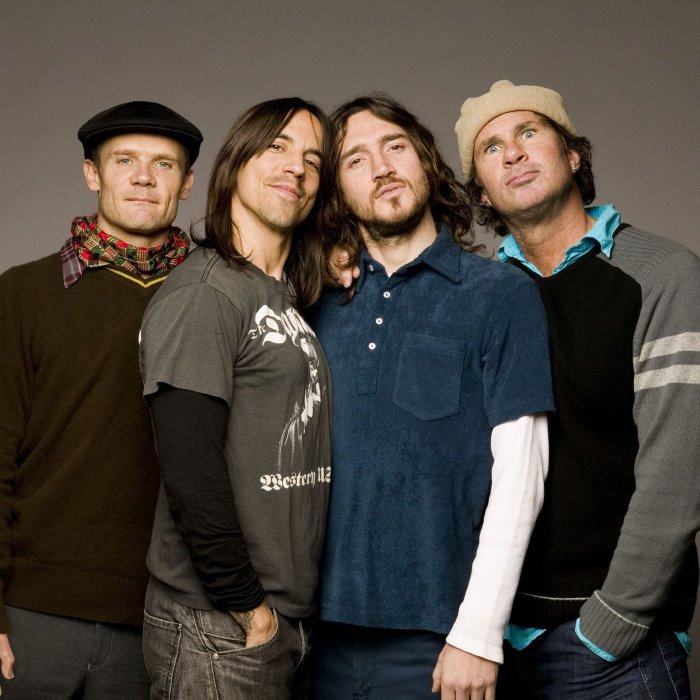
Red Hot Chili Peppers’ Return of the Dream Canteen (2022, Warner Records) is the band’s thirteenth studio album — 17 tracks, 75 minutes, and the second full-length they released in a single calendar year.
The record was written and recorded during the same sessions as their previous studio album, Unlimited Love (2022).
The sessions marked the return of guitarist John Frusciante after a ten-year absence, and resulted in almost 50 songs being recorded with producer Rick Rubin and recording engineer Ryan Hewitt.
What you’re hearing, then, is not a stopgap. It’s what happens when a band with four decades of muscle memory and one recently returned genius locks into a room with no deadline and an actual idea of who they still are.
Album Credits
| Artist | Red Hot Chili Peppers |
| Released | October 14, 2022 |
| Genre | Alternative Rock / Funk Rock |
| Label | Warner Records |
| Producer(s) | Rick Rubin |
| Tracks | 17 |
| Runtime | 75 minutes |
| Lead Single(s) | “Tippa My Tongue” (Aug 19, 2022); “Eddie” (Sep 23, 2022); “The Drummer” (Oct 14, 2022) |
Performance Snapshot
| Global Listeners | 197,610 |
| Total Scrobbles | 4,764,728 |
| Countries Charting | 43 |
| Strongest Market | United States — 96,816 listeners |
| Top 3 Markets | United States, Brazil, United Kingdom |
Production Architecture: Rubin, Hewitt, and the Analog Logic of Shangri-La
Rick Rubin is not a producer who imposes sonic grammar on a band — he creates conditions for bands to impose their own. At Shangri-La Studios in Malibu, he and Ryan Hewitt gave Red Hot Chili Peppers a room, a clock with no alarm, and whatever amount of tape it took.
Mastered by Vlado Meller, the album was recorded and mixed by Ryan Hewitt at Shangri-La, with all songs credited to Anthony Kiedis, Flea, John Frusciante, and Chad Smith.
The resulting sound sits closer to a lived-in funk-rock register than the compressed, radio-ready sheen of the band’s mid-2000s output. There is air in the mix. Instruments breathe around each other rather than stacking for effect.
Alongside performing guitar and backing vocals across the album’s seventeen tracks, Frusciante recorded multiple keyboard and synthesizer overdubs during the sessions.
You hear this most acutely on “Handful,” where his keyboard work underlines the harmonic resolution rather than fighting for space with the guitar.
During the writing process, Frusciante and drummer Chad Smith discussed Frusciante’s love of electronic breakbeats; as a result of Frusciante playing Smith “a ton of three-to-ten second breaks in a row,” Smith incorporated these influences into his playing across both sessions.
On “Peace and Love,” that influence is audible —
the drumbeat was inspired by a breakbeat from the Isaac Hayes song “Breakthrough.”
It gives the track a low-slung, slightly off-kilter momentum that the band’s more orthodox funk-rock arrangements don’t always achieve.
The orchestration expands carefully beyond the core four.
Josh Johnson contributes saxophone on five tracks, Vikram Devasthali trombone on three, and Nathaniel Walcott trumpet on the same three.
These brass arrangements — most audible on the album’s mid-section cuts — shade the record toward a late-’60s West Coast looseness that suits its unhurried pace. Flea’s bass tone runs warm and slightly overdriven throughout; less percussive than his early-’90s slap attack, it locks with Smith’s kit in a way that reads as maturity rather than retreat. For a companion piece to what was already a long album, the production maintains enough internal variety across 75 minutes to resist the monotony that the running time invites. Compare this structural ambition to Queens of the Stone Age’s sprawling Alive in the Catacombs, another 2020s catalog entry testing the patience and rewards of patient listeners.
Songwriting and Vocal Register: What Kiedis Earns and What He Doesn’t
The album’s title represents “a well of creative prosperity” to vocalist Anthony Kiedis, who noted that the ongoing COVID-19 pandemic resulted in the band having a significant amount of time to write and record: “It was also just a stretch of weird time where everyone stayed home for two years, and time got a little bit elastic.”
Elastic time is, it turns out, exactly what RHCP need. The album’s best songwriting doesn’t announce itself. “Handful” is structured around a descending chord sequence that Frusciante can turn into something genuinely elegant, and the verse melody on “The Drummer” has a coiled, understated confidence that the bigger gestures on this record sometimes lack.
The record is a surprisingly introspective set filled with references to forgotten actors, classic bands, and, most tellingly, decades-old Chili Peppers songs.
The self-referentiality is a recurring feature of late-period RHCP — a band that knows its own mythology so well it can’t entirely stop quoting it back. “Eddie,” the Van Halen elegy, is a case study in this tension.
Rolling Stone gave particular praise to Frusciante’s performance on the album, listing his parts on “Eddie” and “Handful” as highlights.
And yet the guitar is doing work the lyric sheet cannot always keep up with.
The song pays tribute to late guitar god Eddie Van Halen with hastily assembled lines
that read more like a first draft. It’s a recurring problem: when the band reaches for explicit emotion — grief, admiration, nostalgia — the words tend to flatten what the instrumental arrangement elevates.
Kiedis’s vocal range has narrowed over decades of documented wear, and the album’s producers are smart enough not to paper over that. On “Fake as Fuck,” the phrasing leans on rhythm and percussive consonants rather than pitch extension — it works in the context of that track’s tight funk pocket. Where the approach fails is when melodies require genuine tonal reach, and the gap between written intent and delivered note becomes audible. Frusciante’s backing vocals, layered on several tracks, do quiet remediation work here — not compensating, exactly, but providing harmonic cushion that the lead vocal benefits from. The interplay between Kiedis’s rough, mid-register delivery and Frusciante’s cleaner, higher support has been an RHCP feature since Blood Sugar Sex Magik, and it remains one of the band’s most underacknowledged production assets.
Market Note: Catalog Depth and the Double-Album Demand Problem
With 197,610 global listeners and 4,764,728 total scrobbles logged, Return of the Dream Canteen demonstrates solid catalog endurance — but the performance data reveals the strategic cost of releasing two full-length albums six months apart. The scrobble-to-listener ratio sits high (roughly 24:1), suggesting a dedicated and repeat-play audience rather than broad passive discovery. The United States commands 48.9% of total listenership (96,816 listeners), which aligns with RHCP’s historically domestic-first IP strength. The Brazilian market — 41,575 listeners, second globally — reflects the band’s outsized Latin American footprint, a demand driver consistent across their catalog going back to stadium-level touring in the region. The U.K. (23,622) and Germany (7,679) represent sustained European core markets. The album’s sync potential is real: several mid-tempo tracks with clean harmonic structures (“Peace and Love,” “The Drummer”) carry strong placement value for sports broadcast and prestige TV.
The record reached number three on the Billboard 200 and number one on the Top Albums Chart, giving the band their second number-one album in 2022 and making them the first rock act to achieve that in 17 years.
The IP holds. The question is whether the simultaneous release diluted long-term streaming velocity for both albums independently.
Cultural Geography: Los Angeles, Lockdown, and the Logic of Abundance
Red Hot Chili Peppers are constitutionally a Los Angeles band, and Return of the Dream Canteen is, in its own oblique way, a Los Angeles record: sun-soaked at the surface, slightly narcoticized underneath, built on muscle memory and creative restlessness.
They are one of the last old-school alt-rock bands standing — a symbol of 1980s semi-underground energy, 1990s alt-rock superstardom and druggie struggle, and 21st century reinvention.
The album’s geographic audience reflects exactly this heritage. The United States at nearly 97,000 listeners is predictable; what’s more interesting is how the band continues to sustain its second-strongest market in Brazil (41,575 listeners), a country where the RHCP have historically performed to some of their largest live crowds on record.
The U.K. at 23,622 listeners reflects a rock-leaning audience that has remained consistent across the band’s catalog, while Poland (6,976) and the Netherlands (7,318) represent an Eastern and Northern European alternative-rock audience that, unlike in Germany (7,679), has never needed the band to be fashionable to remain engaged. These are legacy listeners — people who came in during the Californication or Stadium Arcadium era and have simply stayed. The album gives them something to stay for: it doesn’t try to update the formula, it tries to deepen it.
“Tippa My Tongue” became the band’s fourth number-one single on the Rock and Alternative Airplay chart, making them the only band with two number-one singles on that chart in 2022.
That kind of format dominance in rock radio — a format whose audience skews older, geographically concentrated, and highly loyal — maps cleanly onto the listener distribution the Performance Snapshot shows. This is not a band trying to break new demographics. They are doubling down on the ones they’ve held for thirty years, and those demographics are showing up. Mexico (6,183) and Argentina (4,837) round out a Latin American presence across the full catalog that no comparable rock act of the same generation has managed to maintain at this scale.
The keys to the album’s success include the return of guitarist John Frusciante after a decade, and the COVID lockdown, during which the band holed up and jammed out tune after tune, with no time limit and no specific goals or limitations.
That studio freedom — genuinely unusual for a band at this level of commercial infrastructure — produced something messier and more interesting than a carefully sequenced comeback would have allowed.
Critical Assessment: What This Record Gets Right, and What It Can’t Escape
Return of the Dream Canteen received generally positive reviews from critics, landing a score of 69 on Metacritic, indicating “generally favorable reviews.”
Pitchfork rated it 63, noting that
some songs feel regressive or undercooked on their own, though they’re reframed by the open-hearted sadness that takes over the album’s second half.
That observation is accurate and worth taking seriously: the record improves as it runs. The front half — “Tippa My Tongue,” “Peace and Love,” “Eddie” — is more uneven than the back nine, which carries a quieter, more inward quality.
Consequence praised much of the material but also noted that “moments that could have otherwise made a significant impact feel diluted,” due to the band’s rapid release schedule in 2022.
That’s a structural critique more than a musical one, and it’s legitimate. Two 70-plus-minute albums in six months asks a lot of a listener’s attention economy.
It’s hard not to wonder what kind of splash the album could have made had it been pared down or if there was more time between the two releases.
A single 55-minute record drawing on the strongest material from both sessions would, in all likelihood, have been the definitive late-period RHCP document. What we got instead is two documents, each carrying real strengths diluted by size.
What the record unambiguously gets right is Frusciante.
He remains one of the most creative guitarists of his generation; even the most devout Chili Peppers skeptics admit he is never not a pleasure to hear — from his sweetly blissful solo on “Eddie” to the delicacy of “Handful.”
Better are the tracks built on sturdier melodic structures — “Peace and Love,” “The Drummer” — and the group’s musical interplay, especially Frusciante’s lyrical leads.
The second half of the album, in particular, benefits from what feels like a collective decision to stop performing and start playing. “Carry Me Home” is genuinely unusual for this band — slow, minor-key, and emotionally direct without collapsing into sentiment.
The Spill Magazine summarized it well: the album “feels like a less mainstream Unlimited Love” and represents “a weirder and far more experimental record”
— which is both a compliment and a partial explanation of its ceiling. Weird and experimental don’t drive streaming velocity the way accessible singles do, and several of the album’s most interesting moments live well outside radio format.
Like its sibling Unlimited Love, the record benefits from the positive energy of these four friends having fun in the studio, and is designed for listeners to engage without any expectations of mainstream-ready fare.
That’s a reasonable artistic position. It just means the audience it most rewards is the one it already has. For a deep exploration of how legacy rock bands navigate catalog longevity in the streaming era, Creed’s Full Circle offers a useful contrast in approach, if not in execution quality. More stylistically adjacent — and worth the parallel listen — is Queens of the Stone Age’s Alive in the Catacombs, another extended 2020s rock document testing what patient audiences will accept from bands that have already earned the right to take up space.
Frequently Asked Questions
Where can I stream Return of the Dream Canteen?
The album is available on all major streaming platforms including Spotify, Apple Music, Amazon Music, Tidal, and YouTube Music. Physical formats — CD, standard vinyl, and multiple limited-edition colored vinyl pressings — were released through Warner Records. The Japanese market received an additional bonus track, “The Shape I’m Takin’.” You can find the album’s catalog page at getmusic.com.tr.
How did the album perform critically and commercially?
The album holds a Metacritic score of 69, indicating generally favorable reviews.
It debuted at number one in six countries and reached number three on the Billboard 200, while also topping the Top Albums Chart — making RHCP the first rock band with two number-one albums in the same year since System of a Down in 2005.
Lead single “Tippa My Tongue” became the band’s fourth number-one on the Rock and Alternative Airplay chart.
Which tracks are considered standouts on the album?
Critical consensus and listener data point to “Eddie,” “Handful,” “Peace and Love,” “The Drummer,” and “Carry Me Home” as the album’s strongest individual cuts.
Tracks built on sturdier melodic structures — “Peace and Love” and “The Drummer” — and the group’s musical interplay, especially Frusciante’s guitar work, draw consistent praise.
The album was also ranked the 5th best guitar album of 2022 by Guitar World readers
, a distinction driven largely by Frusciante’s work on these tracks.
What albums sound similar to Return of the Dream Canteen?
Listeners engaged with Return of the Dream Canteen should explore Queens of the Stone Age’s Alive in the Catacombs — another expansive, guitar-forward 2020s rock record from a band negotiating its own legacy in real time. For a more left-field alt-rock parallel, Wallows’ Model offers a generational contrast: younger songwriters using similar alternative-rock frameworks with entirely different relationship to irony and sincerity. The RHCP artist catalog page at getmusic.com.tr/artist/red-hot-chili-peppers/ provides a full discography context.
Girls Choice Music · Curation and Analysis
authored on May 27, 2026
Listen with 30-sec previews
Previews served by iTunes. Press play on any track.
Similar albums


Released the same week
Other albums released near this date, across years.