At a glance
Where the world is listening
NEVER ENOUGH: Daniel Caesar’s Most Ambitious Album Is Also His Most Uneasy
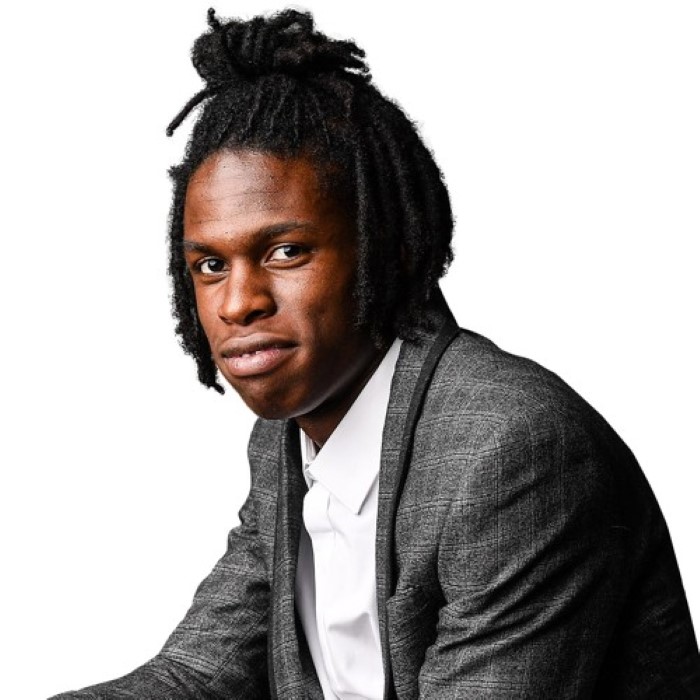
Daniel Caesar’s NEVER ENOUGH, released April 7, 2023, via Republic Records, is a 15-track statement of genre dissolution from one of modern R&B’s most technically sovereign voices.
Stylized in all caps, it is the third studio album by the Canadian singer-songwriter
, and it arrives at the most complicated inflection point of his public life.
The 15-track project, produced primarily by Caesar alongside his brother Zachary Simmonds, spans approximately 54 minutes and incorporates elements of contemporary R&B, soul, and experimental sounds.
What emerges is a record that resists easy categorization — sometimes to its credit, sometimes at the cost of cohesion — and one that confirms Caesar as a craftsman willing to spend audience goodwill on honest creative discomfort.
Album Credits
| Artist | Daniel Caesar |
| Released | April 7, 2023 |
| Genre | R&B / Soul / Experimental |
| Label | Hollace, Inc. / Republic Records |
| Producer(s) | Daniel Caesar, Zachary Simmonds, Sir Dylan (Dylan Wiggins), Sevn Thomas, Rami Yacoub, Raphael Saadiq |
| Tracks | 15 |
| Runtime | ~54 minutes |
| Lead Single(s) | “Do You Like Me?” / “Let Me Go” / “Valentina” / “Unstoppable” |
Performance Snapshot
| Global Listeners | 1,128,159 |
| Total Scrobbles | 52,483,534 |
| Countries Charting | 36 |
| Strongest Market | United States — 103,514 listeners |
| Top 3 Markets | United States · Brazil · Canada |
Production Architecture: Where the Warmth Lives and the Experiment Pushes
Production on NEVER ENOUGH was handled by Caesar himself, Zachary Simmonds (his younger brother), Sir Dylan, Sevn Thomas, Rami, and Raphael Saadiq
— a roster that reads less like a hire list and more like a deliberate congregation of tonal sensibilities. Dylan Wiggins, who also served as executive producer, brings a clarity to the mid-range that keeps even the record’s more adventurous passages from collapsing into muddiness. Raphael Saadiq’s fingerprints — evident in his work with D’Angelo, John Legend, and his own solo catalog — surface in the analog warmth threaded through the album’s more traditionally soul-aligned moments.
The opening track “Ocho Rios” sets the tonal register immediately: brushed percussion, guitar chords voiced in open position, and Caesar’s falsetto sitting just above the mix rather than riding on top of it. The arrangement breathes. There is no sidechain compression pumping underneath the vocals, no maximized low end pushing for streaming loudness — the production philosophy here is deliberate restraint, and it creates a sense of intimacy that the album sustains through its better passages. “Valentina,” the third single, is the record’s most conventionally gorgeous production: parallel-processed acoustic guitar, a gently syncopated drum figure, and a modulation in the final chorus that lifts the emotional stakes without announcing itself.
The singles “Do You Like Me?” (co-produced with Dylan Wiggins and Raphael Saadiq) and “Let Me Go” (co-produced with Rami Yacoub and Sevn Thomas)
represent the album’s two modal registers. “Do You Like Me?” leans into psychedelic looseness — a mixolydian tonal center, wandering bass, and a tempo that seems to resist locking in. “Let Me Go,” by contrast, is the tightest arrangement on the record: a breakup song built on a guitar figure that wouldn’t be out of place in folk, with a vocal performance that keeps its texture conversational rather than operatic.
In a Billboard interview, Caesar shared that the album would be less focused on R&B and include influences that he was earlier inspired by, such as folk and country music
— and the structural logic of “Let Me Go” is perhaps the clearest execution of that instinct. For a record with related emotional territory, listeners interested in that intimate acoustic R&B grain can explore UMI’s Forest in the City, which walks adjacent sonic ground from a similarly introspective angle.
Songwriting and Voice: The Confessional as Craft
The era of isolation and growth that preceded the album infused it with examinations of emotional fragility and relational dynamics. Caesar drew inspiration from folk and country music traditions for NEVER ENOUGH, representing a notable shift from the soulful R&B that defined his earlier work like Freudian and Case Study 01.
That shift is audible in the plainspokenness of his lyrical register. Caesar’s writing on this album avoids the ornate gospel metaphor that characterized Freudian and instead moves toward something more direct — almost uncomfortably so on tracks like “Shot My Baby” and “Buyer’s Remorse.”
“Always” is the album’s emotional center of gravity. The track builds from a simple two-chord guitar loop into a slow-burn declaration with an almost hymnal structural patience, and Caesar’s vocal performance sustains a deliberate tentativeness in the first two verses before opening into the chorus with a register shift that earns its release.
The song quickly became a fan favourite, reaching #1 on Genius’ Trending Lyrics Chart and No. 103 on the US Spotify top 200 chart.
The lyric’s preoccupation with inadequacy — with wanting to offer more than what one has — maps cleanly onto the album’s title thesis.
The album features guest appearances from Mustafa on “Toronto 2014,” serpentwithfeet on “Disillusioned,” Omar Apollo on “Buyer’s Remorse,” and JID on “Unstoppable.”
Each guest brings a friction that prevents the album from settling into a single emotional key. Mustafa’s spoken contribution on “Toronto 2014” is the most compositionally unusual moment on the record — the track leans into the poet’s cadence rather than conventional melodic structure, and its restraint is deliberate. serpentwithfeet on “Disillusioned” introduces a countertenor presence that briefly shifts the album’s harmonic logic, while Omar Apollo on “Buyer’s Remorse” mirrors Caesar’s confessional mode so precisely that the track functions almost as a duet in unison rather than a conventional feature.
Caesar’s own vocal instrument is deployed here with more timbral variety than on either previous album. He moves between falsetto and a lower chest register with intention, and the transition between them — particularly on “Pain Is Inevitable” — is the performance that most clearly demonstrates his growth as a singer rather than simply a songwriter. The album does not rely on virtuosic runs or extended melisma; it relies on placement and phrasing, which is a harder and less immediately legible kind of skill.
Market Note: Catalog Longevity and the IP Value of Genre Fluidity
Daniel Caesar has earned RIAA gold certification for NEVER ENOUGH, with 500,000 equivalent units sold in the U.S.
That certification — arriving well after the initial release window — signals the kind of catalog-driven streaming velocity that compounds over time rather than peaking at launch. With 52,483,534 total scrobbles across 1,128,159 global listeners in 36 charting countries, the album has demonstrated a long-tail demand pattern that is particularly valuable for sync licensing, where catalog depth and genre ambiguity both work in an IP’s favor. The album’s folk-inflected production and confessional lyrical register give it placement utility across drama, prestige television, and film contexts that a more straightforwardly urban R&B project would not reach.
The album was shortlisted for the 2023 Polaris Music Prize and won the Juno Award for Contemporary R&B/Soul Recording of the Year at the Juno Awards of 2024
— institutional recognitions that add catalog credibility without requiring streaming dominance. The U.S. remains the strongest market at 103,514 listeners, but Brazil’s 32,350 listeners and Canada’s 14,077 represent non-anglophone and home-market footholds that broaden the album’s global licensing and live performance demand drivers considerably.
Listen with 30-sec previews
Previews served by iTunes. Press play on any track.
Similar albums




Released the same week
Other albums released near this date, across years.