At a glance
Where the world is listening
96 MONTHS: EIGHT YEARS, SEVENTEEN DECISIONS, NO FILLER PRETENSE
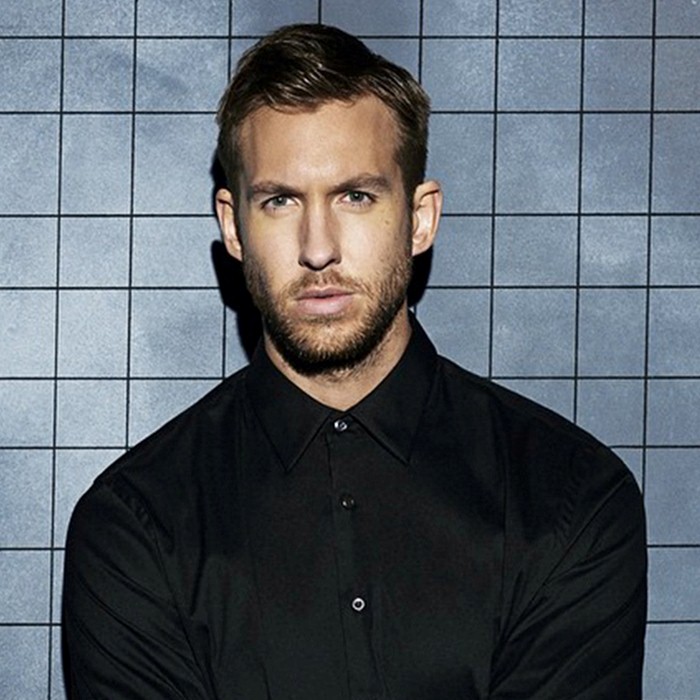
Calvin Harris’s 96 Months, released August 9, 2024 via Columbia Records, is a seventeen-track compilation that archives the Scottish producer’s most commercially precise non-album singles from 2015 through 2024. The title is arithmetic first and poetry second —
the album title equates to eight years, which is the time period the songs included on it are from.
As a structural proposition it is blunt, even defiant: this is not a retrospective softened by nostalgia but a balance sheet of output, laid out in production-era sequence, inviting you to audit the range and the gaps in equal measure.
The album is a sequel to 18 Months (2012), which was Harris’s first album to heavily feature guest vocalists.
Twelve years and three studio records separate the two volumes — and the distance is audible in every BPM shift, every shift in tonal center, every collaborator credit.
Album Credits
| Artist | Calvin Harris |
| Released | August 9, 2024 |
| Genre | Dance-Pop, House, Deep House, Disco House, Progressive House |
| Label | Columbia Records / Sony Music UK |
| Producer(s) | Calvin Harris, BURNS, Disciples, Kuk Harrell, Riva Starr |
| Tracks | 17 |
| Runtime | 55:41 |
| Lead Single(s) | “Free” (feat. Ellie Goulding) |
Performance Snapshot
| Global Listeners | 864,713 |
| Total Scrobbles | 5,822,132 |
| Countries Charting | 43 |
| Strongest Market | United States — 87,332 listeners |
| Top 3 Markets | United States · Brazil · United Kingdom |
Production Architecture: Where the Palette Lives
Since the mid-2010s, Harris has been splitting his attention between his disco-influenced Funk Wav Bounces albums and the more electronic-leaning Love Regenerator project, alongside a constant stream of the dance-pop hits he is best known for.
96 Months doesn’t try to reconcile those three registers — it places them in adjacency, letting the listener feel the seams. That editorial decision is both the record’s structural courage and its central tension.
The production across the seventeen tracks falls into roughly three tonal zones. The first is the sidechain-compressed, filtered-house register of “How Deep Is Your Love” (2015, with Disciples) and “One Kiss” (2018, with Dua Lipa): four-on-the-floor at roughly 124 BPM, the kick tuned to complement the tonal center, reverb tails kept tight so the low end can breathe. “How Deep Is Your Love” uses a looped vocal sample as both rhythmic element and melodic hook — Harris and Disciples were pulling from the UK garage lineage as much as from Ibiza house, and the production holds up on any monitoring system.
The earliest releases included here — “How Deep Is Your Love,” the ubiquitous 2015 team-up with Disciples, and 2016’s equally omnipresent “This Is What You Came For,” a Taylor Swift co-write with a lead vocal from Rihanna — still sound just as commanding and au courant as the newer material these tracks sit alongside.
The second zone is the more groove-oriented, open-textured approach Harris deployed post-2017: “Promises” (2018, with Sam Smith) leans into a wiry, clipped guitar loop and a sub bass with enough room to move, the chord progression favoring a mixolydian flavoring that keeps the track from resolving too cleanly.
Sam Smith appears on “Promises” (2018), a soulful house collaboration that topped the UK chart.
The parallel compression applied to the drum bus on “Giant” (2019, with Rag’n’Bone Man) is one of the more interesting production choices here — it gives the track a deliberate heaviness that carries Rag’n’Bone Man’s chest register without the mix ever becoming claustrophobic.
The third zone belongs to the Love Regenerator alias.
The album includes three tracks released under his Love Regenerator alias.
“Hypnagogic (I Can’t Wait)” [edit] occupies a very different sonic space from the pop-adjacent material: slower filter sweeps, a more abstract relationship with the tonal center, production that prioritizes texture over forward momentum. It’s the most structurally honest Harris gets on this record, and it functions as a deliberate break in the tracklist’s commercial flow — placed mid-album, it acts almost as a palette cleanser. For a structural ear, it’s the most rewarding track here. For fans seeking the “This Is What You Came For” energy, it reads as a detour. Both responses are valid. Compare the compression philosophy here with the more volatile low-end arrangement on Kaytranada’s TIMELESS (2024), where the kick-snare relationship is used as an expressive device rather than an anchoring one.
Collaborative Architecture: The Vocal as Instrument
Harris hasn’t sung on his own records in any sustained way since Ready for the Weekend (2009). That abdication — or that decision, depending on your read — freed him to treat vocalists as timbral instruments: chosen for register, grain, and cultural legibility as much as for vocal ability. 96 Months is, among other things, a study in how consistently that philosophy has paid out across eight years.
The album contains appearances from Ellie Goulding, Disciples, Rihanna, Dua Lipa, Sam Smith, Jessie Reyez, Rag’n’Bone Man, PartyNextDoor, Eliza Rose, Steve Lacy, Riva Starr, Sananda Maitreya, and Tom Grennan.
The range of registers here is not arbitrary. Rihanna’s mid-register cool on “This Is What You Came For” serves a different structural function than Rag’n’Bone Man’s chest-voice weight on “Giant” or Dua Lipa’s clean, forward-placed head voice on “One Kiss.” Harris is not simply casting for star power; he is casting for grain, for the way a particular timbre will lock against a specific low-end topology.
Lyrically, the themes across the album are neither deep nor meant to be. The writing here — much of it Harris’s own, in collaboration with the featured artists — orbits desire, loss at one remove, and euphoric stasis. “Promises” frames commitment as an absence rather than a presence, which is an interesting lyrical move that Sam Smith delivers with enough interpretive weight to make the abstraction land. “Lovers in a Past Life,” with Rag’n’Bone Man, pushes toward a more specific kind of yearning:
Rag’n’Bone Man contributes to “Giant” (2019), a UK number-one hit blending gospel influences with EDM, and “Lovers in a Past Life” (2023), highlighting Harris’s ability to pair gravelly vocals with expansive productions for enduring radio appeal.
“Nuh Ready Nuh Ready,” a pulsing, dancehall-flavored rhythm captained by Canadian R&B star PARTYNEXTDOOR, showcases Harris’s versatility, while the back-to-back knockout of “One Kiss” featuring Dua Lipa and “Promises” with Sam Smith illustrates why the biggest artists in the world turn to the Scottish hitmaker when they’re looking to make a splash.
The PARTYNEXTDOOR collaboration is worth dwelling on because it represents the moment the album most genuinely expands its harmonic vocabulary — the dancehall syncopation creates a different relationship between the downbeat and the bass movement, which disrupts the otherwise metronomic four-on-the-floor logic running through most of the tracklist. It’s a productive disruption.
Where the vocal writing is less interesting is on “Free” (with Ellie Goulding), the album’s new track and lead single. The melody is clean, the hook placement is accurate, but the lyrical content is thin — free as metaphor is too broad to generate much friction, and Goulding, who has earned her share of house-inflected productions at this point, delivers the performance efficiently without quite igniting it. It functions as a serviceable opener. It doesn’t reframe what follows.
Market Note: Catalog Reactivation as IP Strategy
The commercial logic underpinning 96 Months is worth examining with some precision.
The album has reinforced Harris’s position as one of the most streamed artists in electronic music, with its 17 tracks collectively surpassing 9 billion streams on Spotify as of August 2024.
That aggregate figure tells a specific IP story: Harris is not releasing a new album here — he is activating dormant catalog, concentrating it into a single DSP container that benefits from playlist placement, algorithmic consolidation, and a single release-cycle media moment. The demand driver is not discovery; it is re-engagement. Last.fm’s geographic data confirms the reach: 864,713 global listeners across 43 countries, with the United States at 87,332 listeners representing the strongest single market — the exact market where
the album did not enter the Billboard 200 but peaked at number 3 on the Billboard Dance/Electronic Albums chart,
indicating that core dance listeners drove the engagement rather than the mainstream pop audience. In the UK — 27,564 Last.fm listeners, the third market —
the album entered the chart at Number 11, spending a total of 56 weeks in the Top 100, and was certified Gold by the BPI on 28th February 2025.
The BPI Gold certification suggests genuine sustained unit velocity rather than a front-loaded spike. From a sync potential standpoint, the catalog is extraordinary: tracks already placed in advertising, film trailers, and sports broadcast since 2016 have their market value extended each time they reappear in a new packaging context.
Listen with 30-sec previews
Previews served by iTunes. Press play on any track.
Similar albums




Released the same week
Other albums released near this date, across years.