At a glance
Where the world is listening
GNX: COMPTON’S LEDGER, CLOSED IN GOLD
Kendrick Lamar’s GNX — his sixth studio album, surprise-dropped on November 22, 2024 — is the rare rap record that arrives already holding its verdict.
Released through PGLang and Interscope Records
, it bypassed the conventional rollout entirely: no advance singles, no press cycle, no teaser campaign. What it delivered instead was a 44-minute recalibration of West Coast hip-hop, built from the ground up with a production team that spans generations and ZIP codes. Across twelve tracks, Lamar draws on G-funk lineage, mariachi, contemporary bass-heavy Los Angeles club music, and the measured grandeur of his own catalog — arriving not as a conceptual monument but as something more deliberate and, in its own way, more revealing: an artist operating with full latitude for the first time.
Album Credits
| Artist | Kendrick Lamar |
| Released | November 22, 2024 |
| Genre | Hip-Hop / West Coast Rap |
| Label | PGLang / Interscope Records |
| Producer(s) | Sounwave, Jack Antonoff, Mustard, Kamasi Washington, Terrace Martin, Sean Momberger, DJ Dahi, M-Tech, Bridgeway, Kendrick Lamar |
| Tracks | 12 |
| Runtime | 44 minutes 20 seconds |
| Lead Single(s) | “squabble up”, “luther” (feat. SZA), “tv off” (feat. Lefty Gunplay) |
Performance Snapshot
| Global Listeners | 2,071,072 |
| Total Scrobbles | 123,707,631 |
| Countries Charting | 43 |
| Strongest Market | United States — 226,998 listeners |
| Top 3 Markets | United States, Brazil, United Kingdom |
Production Architecture: The West Coast Reassembled
Lamar produced the album primarily with Sounwave and Jack Antonoff, with additional production from Mustard, Sean Momberger, and Kamasi Washington.
The combination is, on paper, a friction point: Sounwave, Lamar’s longtime Compton collaborator and co-architect of the good kid, m.A.A.d city and To Pimp a Butterfly sessions, brought regional institutional knowledge; Antonoff arrived from a world of precision-engineered pop maximalism. In practice, the tension between these two sensibilities is less a clash than a calibrated dialogue. Sounwave’s fingerprints are on every track —
he is credited as a producer on every track of GNX
— acting as a tonal anchor against which Antonoff’s cleaner, more synthetic processing gets grounded.
GNX is a West Coast hip-hop album that draws on both classic and contemporary conventions of the genre, and according to Rolling Stone, functions as a tribute to Lamar’s native Los Angeles, prominently infusing G-funk throughout its compositions.
That infusion is most surgically executed on “peekaboo,” where
Sounwave re-engineers a Little Beaver sample into a sinister 405 joyride.
The tonal center of the track is low and menacing — an 808-adjacent sub presence that sits beneath choked guitar chords, recalling the lateral compression Dre used on early-2000s West Coast material without directly quoting it.
“tv off,” co-produced by Mustard, Sounwave, Jack Antonoff, Sean Momberger, and Kamasi Washington, is the album’s most kinetic production achievement.
Mustard’s beat feels like a futuristic L.A. drumline, powering a twitchy chorus built for physical environments.
Washington’s presence is felt in the harmonic widening of the track’s bridge — a brief but unmistakable jazz-inflected swell that prevents the track from collapsing into pure percussion. “wacced out murals,” the opener, takes a different approach:
Lamar unloads flurries of righteous indignation over a track that sounds like a dystopian prison lockdown — a searing and vengeful opener powered by both vocal performance and production design.
Mariachi singer Deyra Barrera is featured on three songs — the opening and closing tracks as well as “reincarnated” — having been discovered by Lamar when she performed at a Los Angeles Dodgers World Series game he attended in 2024.
Her presence introduces a fifth-relation modal ambiguity to the album’s harmonic structure, particularly on “gloria,” where her vocal register sits in contrast against Lamar’s lower baritone and SZA’s upper-mid timbre. It is one of the album’s most considered textural decisions — the kind that rewards headphone listening over passive streaming. Fans of SiR’s HEAVY, another 2024 release working in the space between West Coast soul and contemporary hip-hop production, will recognize the impulse toward harmonic density even within seemingly accessible structures.
Lyricism and Vocal Persona: The Concept Is the Man
There is no need for grand conceptual flourishes this time around. On GNX, Kendrick is the concept, his creative intensity manifested as weaponised normality.
This is a meaningful departure from the structural architectures of To Pimp a Butterfly (2015) or Mr. Morale & the Big Steppers (2022), albums where the lyrical content was explicitly scaffolded by thematic conceit. Here, the organizing principle is something more like accumulative authority: Lamar moving through registers — confessional, confrontational, nostalgic, celebratory — without requiring a frame to justify each shift.
On “wacced out murals,” the opening salvo addresses the wider industry with compressed disdain.
The track sees Lamar address his experiences and relationships within the music industry, mentioning artists like Snoop Dogg, Nas, and Lil Wayne.
The diction is precise and undecorated — Lamar’s syllabic compression has always been more about phonetic architecture than flourish, and here that restraint serves the material well. His cadence shifts are deliberate, not stylistic tics: the drop into a near-spoken tone on certain bars carries more rhetorical weight than any raised-register climax could.
“heart pt. 6” brings the biographical series into its most direct and warmest iteration.
The track continues Lamar’s long-running biographical series, detailing his split with Top Dawg Entertainment to form his own creative communications company, PGLang.
The delivery here is reflective rather than prosecutorial — Lamar narrating the mechanics of institutional departure with the considered tone of someone who has processed the experience thoroughly before committing it to record. It is among the album’s most quietly affecting performances.
SZA’s contributions on “luther” and “gloria” function structurally rather than decoratively. On “luther,” her upper-register phrasing acts as a harmonic counterweight to Lamar’s lower tonal center, the two voices converging at the chorus in a way that maximizes the contrast in their timbres.
Whatever its source at this point, indignation remains a valuable motivator of Lamar’s art; his writing and rapping on GNX are as razor-sharp as they were in the brutal diss tracks he released one after another.
The vocal momentum he sustains across 44 minutes without sacrificing clarity or cadence is the album’s most consistent technical achievement.
Although none of the tracks from his feud with Drake are included, the sentiment “still looms over the album,” according to Vulture.
Market Note: Catalog Positioning and Streaming Velocity Post-Surprise Release
GNX received widespread acclaim upon release, with multiple critics hailing it as a successful reimagination of West Coast hip-hop and one of the best albums of 2024; it was Lamar’s fifth number-one on the US Billboard 200 chart.
That chart performance anchors the album’s demand-driver profile: a zero-advance-marketing release hitting No. 1 is a proof-of-concept for PGLang’s catalog-first, IP-first strategy — distribution through Interscope without the traditional press infrastructure of a major rollout. With 2,071,072 global Last.fm listeners and 123,707,631 total scrobbles across 43 charting countries, GNX demonstrates the streaming velocity that comes from a pre-built audience rather than paid acquisition.
The album also topped charts in Canada, Netherlands, Sweden, Australia, Denmark, and the UK, and reached top five in Poland and Nigeria.
The sync potential of tracks like “tv off” and “squabble up” — propulsive, hook-driven, regionally legible — is high in advertising and sports broadcast contexts.
Lamar performed GNX songs during the Super Bowl LIX halftime show, which drew 133.5 million viewers, making it the most-watched halftime show in history
— a catalog activation event of singular commercial scale. PGLang’s ownership structure amplifies long-term IP strength across sync, licensing, and touring revenue streams.
Geographic Reach and Cultural Coordinates
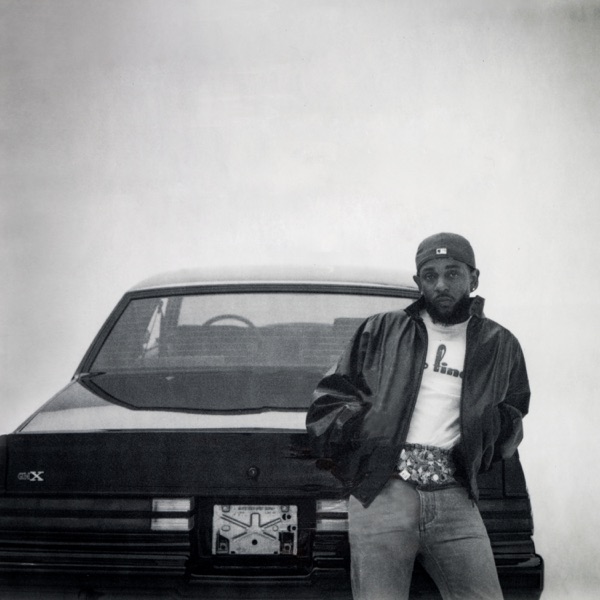
Titled after the Buick Regal model, GNX is Lamar’s first album to be released after his departure from longtime labels Top Dawg Entertainment and Aftermath Entertainment.
That institutional shift is not incidental to the album’s cultural positioning: it marks a formal transition from a Compton artist operating within a major-label ecosystem to an artist operating as a brand-owner with distribution infrastructure. The implications for how the music reaches different geographic markets are real. PGLang’s ethos — community-rooted, aesthetically specific, opaque by design — travels differently than a conventional Interscope push.
The United States dominates the listener breakdown at 226,998 — nearly four times Brazil’s 61,499 — which reflects both the domestic cultural weight of Lamar’s 2024 narrative arc and the specific Los Angeles-centricity of the album’s references. “dodger blue,” featuring Sam Dew, Siete7x, and Wallie the Sensei, is the album’s most geographically anchored track: a love letter to South Los Angeles dressed in smooth chromatic harmonies and Terrace Martin’s characteristic modal jazz warmth. For listeners in Compton or Inglewood, the specificity of the references carries an indexical charge that no amount of international streaming replicates. For listeners elsewhere, the track functions as a kind of cultural dispatch — access to a locale rather than direct participation in it.
Brazil’s 61,499 listeners and the UK’s 40,420 each represent meaningful demand drivers in their own right. Brazilian hip-hop audiences have historically oriented toward American coastal rap with strong rhythmic identities — the album’s G-funk and trap adjacencies map cleanly onto that preference. The UK’s position as third market (ahead of Canada at 25,565) reflects both the longstanding depth of British hip-hop listenership and the post-“Not Like Us” amplification of Lamar’s cultural profile in the English-speaking world. Poland’s 10,747 listeners, placing ninth globally, is a data point worth noting for touring and sync planning — Central European hip-hop markets have demonstrated consistent appetite for catalog-depth American artists, not just trend cycles.
On December 3, 2024, Lamar and SZA announced the Grand National Tour in support of the album. The tour began on April 19, 2025, in Minneapolis and concluded on December 11, 2025, in Sydney, Australia.
That routing — from the American Midwest through to Australian arenas — maps almost precisely onto the album’s geographic listener footprint, with the strongest markets each represented in the itinerary. The album’s cultural resonance, in other words, preceded and shaped the live strategy rather than following it.
Critical Assessment: What Holds, What Doesn’t
According to the review aggregator Metacritic, GNX received “universal acclaim” based on a weighted average score of 87 out of 100 from 22 critic scores.
That consensus, while broadly deserved, flattens some meaningful internal disagreements about what the record actually accomplishes relative to Lamar’s wider body of work. The honest accounting requires separating what GNX is from what critics, conditioned by the extraordinary momentum of Lamar’s 2024, may have wanted it to be.
What works, works definitively. The production on “peekaboo,” “tv off,” and “squabble up” represents Sounwave and Lamar’s most physically immediate work together — beats designed for kinetic response without sacrificing harmonic intelligence.
“squabble up” showcases Lamar’s integration of California rap styles including G-funk and hyphy, mixed with vibrant influences such as mariachi
, and it does so with a structural confidence that prevents the eclecticism from feeling arbitrary. “heart pt. 6” and “luther” demonstrate two distinct modes of Lamar’s vocal and lyrical register — retrospective and romantic, respectively — both executed with the precision that has always distinguished his studio work from his contemporaries.
In a mixed reading from Pitchfork, critic Alphonse Pierre wrote that the album’s supposed authenticity was blemished by Lamar’s “heavy-handed, brand-conscious narrative”, highlighting production that is “too clean and synthetic”, although his delivery remained stellar and the musical guests were memorable.
That critique has traction in specific places. The Jack Antonoff-heavy moments carry a polish that sits at an aesthetic remove from the album’s stated ethos — the compression and reverb treatment on certain mid-album tracks has a finish more consistent with Antonoff’s pop catalog than with the rawer G-funk energy the record otherwise invokes.
Tracks like “dodger blue” and “hey now” suffer from a lack of spark, leaving Lamar to carry their weight entirely on his own.
Rolling Stone’s Mosi Reeves felt that GNX provided more than sufficient explanations for why Lamar is the leading figure of 2024 but stopped short of answering bigger cultural questions about structural changes in hip-hop, labelling the album “yet another treatise on hip-hop corporatism.”
That reading is not uncharitable. An album this invested in its own geographic and institutional mythology — PGLang, Compton, the Dodgers, the GNX as physical artifact — does risk operating as self-mythology as much as music. The closing track “gloria” is the place where that risk is most visible:
announcing a song’s central metaphor on the literal closing track in 2024 is a less forgivable move than when Nas did it in 1996, though Lamar’s conviction and the chorus mostly carry it even if the LP could have closed on a more climactic crescendo.
None of these criticisms meaningfully undercut the album’s achievement.
In a discography as impressive as Lamar’s, GNX stands as a major highlight, sitting comfortably in the upper echelon of a rarefied body of work.
At 12 songs and a running time of 44 minutes and 20 seconds, it is the shortest studio album of Lamar’s career
— and the compression reads as editorial confidence rather than creative restraint.
Kendrick Lamar has nothing left to prove, and on GNX, he sounds like he’s finally enjoying that fact.
For a catalog this deep, that posture is its own kind of statement. Listeners exploring the wider 2024 West Coast and hip-hop landscape would also do well to consider Snoop Dogg’s Missionary, another late-2024 release that, in its own more relaxed register, engages with the question of Los Angeles hip-hop’s institutional memory.
Frequently Asked Questions
Where can I stream or purchase GNX by Kendrick Lamar?
GNX was released digitally through PGLang and Interscope Records
and is available on all major streaming platforms including Spotify, Apple Music, Amazon Music, and Tidal. The album was surprise-released with no physical edition announced at the time of launch; streaming remains the primary access point. You can find the album’s catalog page at getmusic.com.tr/album/gnx/.
How did GNX perform commercially and critically?
GNX received widespread acclaim, with multiple critics hailing it as a successful reimagination of West Coast hip-hop and one of the best albums of 2024; the album was Lamar’s fifth number one on the US Billboard 200 chart.
On Metacritic, it received “universal acclaim” with a weighted score of 87 out of 100 from 22 critic scores.
The album also topped charts in Canada, Netherlands, Sweden, Australia, Denmark, and the UK.
Which tracks stand out most on the album?
“tv off” and “peekaboo” are the album’s strongest production showcases — the former driven by Mustard’s drum programming and Kamasi Washington’s harmonic contribution, the latter by Sounwave’s sample engineering. “luther” (feat. SZA) and “heart pt. 6” represent the album’s most emotionally substantive moments, while “squabble up” and “wacced out murals” establish its confrontational register from the outset.
Several of these tracks — “luther,” “man at the garden,” “peekaboo,” “squabble up,” and “tv off” — were performed during Lamar’s Super Bowl LIX halftime show.
What albums are similar to GNX for listeners who want to explore further?
Listeners drawn to GNX’s West Coast production sensibility and its balance of regional specificity with mainstream accessibility should explore Snoop Dogg’s Missionary (2024) for another late-career statement rooted in Los Angeles tradition, and SiR’s HEAVY (2024) for a more introverted take on West Coast soul-influenced hip-hop that shares the album’s preference for harmonic density and emotional restraint over maximalist gesture. Both are available in the Get Music catalog.
Girls Choice Music · Curation and Analysis
authored on May 26, 2026
✈ Submit your release or tip via Telegram → t.me/ViralSubmissions
Listen with 30-sec previews
Previews served by iTunes. Press play on any track.
Similar albums






Released the same week
Other albums released near this date, across years.