At a glance
Where the world is listening
GLORY: THE ALBUM WHERE BRITNEY SPEARS FINALLY GOT TO CHOOSE
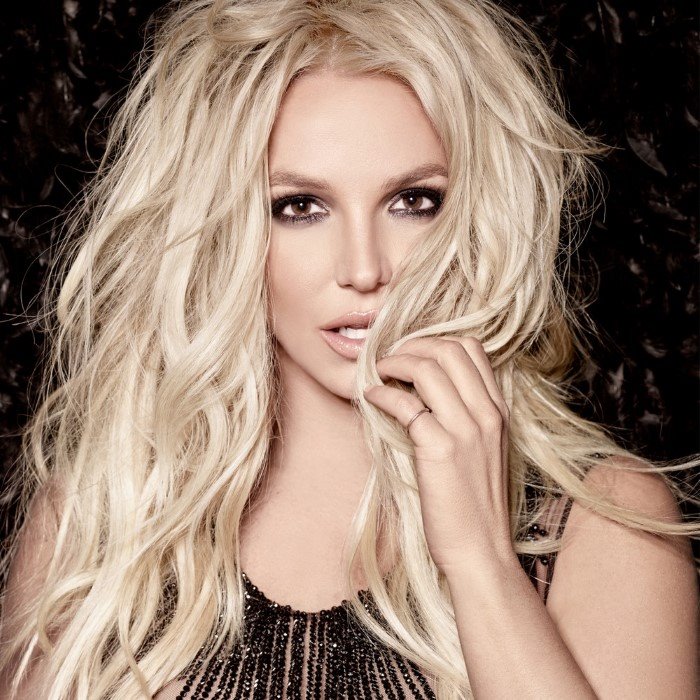
Britney Spears’ Glory, released August 26, 2016 on RCA Records, is a dance-pop album that rewrites the terms of her late-career narrative — and does so on her own terms.
It is her ninth and final studio album, released through RCA Records.
Developed over a two-and-a-half-year recording period following the release of Britney Jean (2013), the album marked a shift toward a more artist-driven process, with Spears taking a more active role in selecting material, shaping concepts, and contributing melodies.
The result is the most confident, sonically coherent record she had delivered in nearly a decade — one that rewards close listening precisely because it refuses to announce its own ambition.
Album Credits
| Artist | Britney Spears |
| Released | August 26, 2016 |
| Genre | Dance-Pop, R&B, Hip-Hop |
| Label | RCA Records |
| Producer(s) | Karen Kwak (exec.), BURNS, Mattman & Robin, Cashmere Cat, BloodPop, Oscar Görres, DJ Mustard, Ian Kirkpatrick, Andrew Goldstein, Nick Monson, Young Fyre, Jason Evigan, Warren “Oak” Felder, Robopop, Dan Book |
| Tracks | 17 (standard edition) |
| Runtime | approx. 57 minutes |
| Lead Single(s) | “Make Me…” ft. G-Eazy (July 14, 2016); “Slumber Party” ft. Tinashe |
Performance Snapshot
| Global Listeners (Last.fm) | 61,345 |
| Total Scrobbles | 3,377,964 |
| Countries Charting | 43 |
| Strongest Market | United States — 91,452 listeners |
| Top 3 Markets | United States, Brazil, United Kingdom |
Production Architecture: Lighter Frequencies, Deeper Craft
Glory is mainly rooted in modern dance-pop with prominent R&B and hip-hop influences, moving away from the overt EDM approach of her previous album; its production emphasizes lighter, nocturnal textures and places greater focus on Spears’ vocals.
This is not a minor recalibration. After two albums that leaned heavily on the blunt-force dynamics of festival-grade EDM — the kind of production that flattens a performer’s individuality rather than framing it — the pivot here is architectural. The mid-range is opened up. The low end is measured rather than maximalist. Tracks have room to breathe.
The production roster reads like a cross-section of mid-2010s pop’s most forward-thinking craftspeople: BURNS, Cashmere Cat, BloodPop, Mattman & Robin, Oscar Görres, Ian Kirkpatrick, Warren “Oak” Felder, DJ Mustard, Jason Evigan, Andrew Goldstein, Nick Monson, Young Fyre, Robopop, and Dan Book.
Karen Kwak, brought on as executive producer, helped Spears find “the most fun people to write with,” and chose producers with the explicit goal of recalling the sounds of Spears’s albums Blackout and In the Zone for Glory.
That framing matters. Mattman & Robin — the Stockholm-based duo of Mattias Larsson and Robin Fredriksson —
contributed bass, brass, drums, guitar, handclapping, kalimba, marimba, percussion, programming, synthesizer, and vocal production
across multiple tracks. Their fingerprints are audible on “Just Luv Me,” a slow-burn that works in the fifth-relation between its verses and the softly ascending pre-chorus, and on “Do You Wanna Come Over?”, where a four-on-the-floor pulse is tempered by a surprisingly warm mid-range mix. Cashmere Cat’s contribution arrives on “Better,” where his signature pitched-up vocal chops and granular textures give the track a trembling, unresolved quality. BloodPop, credited on “Change Your Mind (No Seas Cortés),” brings clean rhythmic programming and a tightly sidechained bass that gives the track its understated momentum without overwhelming Spears’ layered vocal stack. The production across the standard edition rarely overwhelms.
Songs like “Invitation” and “Just Luv Me” showcase a softer, breathy vocal style, while tracks like “Do You Wanna Come Over?” and “Slumber Party” lean into rhythmic, club-friendly production.
For a useful point of comparison in terms of how a female pop artist’s catalog can sustain streaming engagement through carefully considered production choices, P!nk’s TRUSTFALL (2023) offers an instructive parallel — a mainstream pop record that similarly drew on a large ensemble of producers to construct a record that felt personally invested rather than assembled by committee.
Songwriting and Persona: Desire as Default Register
Lyrically, the album is heavily centered on sexuality, frequently addressing the listener as “you” and depicting various scenarios across much of its tracklist.
This is not unusual for Spears — desire has been a structuring device in her songwriting since at least In the Zone (2003) — but on Glory the register shifts from performance-of-desire to something closer to pleasure-as-lived-experience. The difference is subtle but audible. “Invitation” opens the album with Spears in a lower register than she typically occupies, the vocal close-miked and barely processed, the lyric suggestive rather than declarative. It sets a tone that the record largely sustains.
Unlike previous albums, Spears had greater input in Glory, emphasizing sensuality, playfulness, and a return to the infectious hooks that defined her early career.
Key collaborators on the songwriting side include Julia Michaels and Justin Tranter — a team whose grammatically conversational lyric style, built on near-tautological repetitions and second-person address, maps well onto Spears’ vocal delivery.
The Boston Globe remarked that Spears was “throwing herself fully into her vocal performance” on the album, and The New York Times described Spears as sounding “more involved, more present, than she has in a decade.”
Rolling Stone positively compared Spears’s vocals to those on In the Zone, noting “she hasn’t played around with her vocals so cleverly since the ‘Toxic’ days.”
That observation is precise. Spears’ vocal identity has always been constructed through proximity and layering rather than range or technical exhibition, and on Glory that construction is handled with more care than it was on either Britney Jean or Femme Fatale. “Hard to Forget Ya” demonstrates this well: the lead vocal sits fractionally behind the beat, a rhythmic affectation that reads as casual confidence. “Man on the Moon” takes a different approach, using a compressed mid-register vocal over a slowly descending chord pattern that gives the track its slightly melancholic tonal center.
Entertainment Weekly described the album as “her most engaging vocally” in a decade and noted Spears as sounding “more present and enthusiastic than she has in years.”
In contrast, Nolan Feeney from Entertainment Weekly characterized the songs as sounding “like glimpses of the real Britney — her musical tastes, her voice — imperfections and all.”
In March 2016, Spears said she was being “more hands-on” with the album and that it is “the best thing I’ve done in a long time.”
Retrospectively, Spears stated in 2022 that recording Glory allowed her to “get a spark back” amidst her restrictive conservatorship.
Knowing that context does not change what the record sounds like on its own terms, but it does inflect how those small moments of lyrical lightness — the unguarded humor on “Clumsy,” the almost defiant joy of “Slumber Party” — register in hindsight.
Market Note: Catalog Longevity and the Streaming Long Tail
Glory presents an instructive case study in catalog resilience. With 3,377,964 total scrobbles across 61,345 Last.fm listeners — and active demand across 43 countries — the album’s streaming footprint has expanded well beyond its original 2016 promotional window. The United States remains the dominant demand driver at 91,452 listeners, consistent with the album’s core English-language market. What is strategically significant, however, is the depth of secondary market penetration: Brazil at 58,960 listeners and the United Kingdom at 21,767 indicate that this record sustains cross-platform consumption in markets where Spears has historically strong IP strength. Poland (7,560 listeners) and Germany (7,472 listeners) signal meaningful Central and Northern European traction, which aligns with the album’s strong chart performance in those territories upon release.
The record was reissued twice in 2020
, and those reissues — combined with the #FreeBritney cultural moment — functioned as secondary demand drivers that extended the catalog’s streaming velocity well past its initial commercial cycle. The sync potential of tracks like “Make Me…” and “Slumber Party” remains high due to their clean rhythmic construction and commercially legible tonal register. For A&R purposes, this album demonstrates that catalog longevity is built not by chart peaks alone, but by the depth and breadth of a record’s sonic range.
Listen with 30-sec previews
Previews served by iTunes. Press play on any track.
Similar albums




Released the same week
Other albums released near this date, across years.