At a glance
Where the world is listening
DID YOU KNOW THAT THERE’S A TUNNEL UNDER OCEAN BLVD: THE LONG WAY DOWN TO LANA DEL REY’S MOST UNGUARDED RECORD
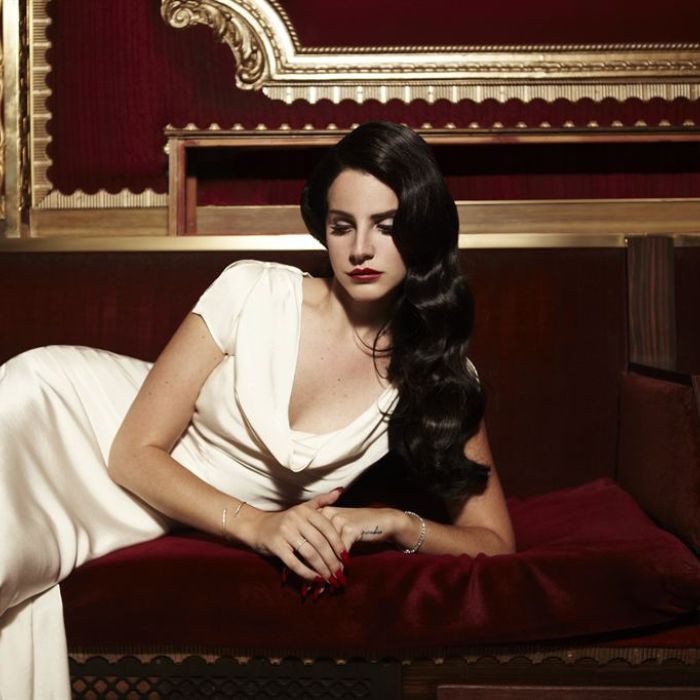
Did You Know That There’s a Tunnel Under Ocean Blvd by Lana Del Rey, released March 24, 2023, is the ninth studio album from one of pop’s most deliberate auteurs — and its most sprawling, self-exposing statement yet. Where her earlier catalog built mythology through chiaroscuro and cinematic remove, Ocean Blvd pulls the curtain back on the machinery, letting listeners sit inside the process of remembrance, inheritance, and mortality rather than simply observe the finished aesthetic object. At 77 minutes and 16 tracks, it is an album that demands patience and rewards it — sometimes exquisitely, sometimes just barely.
Album Credits
| Artist | Lana Del Rey |
| Released | March 24, 2023 |
| Genre | Art Pop / Chamber Pop / Singer-Songwriter |
| Label | Interscope Records / Polydor Records |
| Producer(s) | Lana Del Rey, Jack Antonoff, Drew Erickson, Mike Hermosa, Zach Dawes, Benji Lysaght |
| Tracks | 16 |
| Runtime | 77 minutes |
| Lead Single(s) | “Did You Know That There’s a Tunnel Under Ocean Blvd” (Dec 7, 2022); “A&W” (Feb 14, 2023) |
Performance Snapshot
| Strongest Market | United States — 157,577 listeners |
| Top 3 Markets | United States, Brazil, United Kingdom |
| Countries Charting | 43 |
| Peak — Billboard 200 | #3 (115,000 album-equivalent units, opening week) |
| Peak — UK Albums Chart | #1 (fastest-selling album of 2023 in the UK at release) |
| Other #1 Markets | Australia, Ireland, New Zealand |
| Metacritic Score | 81 / 100 |
| Grammy Nominations | Album of the Year + Best Alternative Music Album (66th Grammy Awards) |
Production Architecture: Orchestral Sprawl and the Logic of “Automatic Singing”
Released on March 24, 2023, by Interscope and Polydor Records, the album features production by Del Rey herself alongside Mike Hermosa, Jack Antonoff, Drew Erickson, Zach Dawes, and Benji Lysaght
— a production committee that is, notably, not a monolith. Each collaborator brings a distinct tonal register, and the seams between them are part of the album’s texture rather than a flaw to be smoothed over. Drew Erickson anchors the most classically oriented passages with orchestral arrangements, Hammond organ, Mellotron, and live strings. Antonoff, whose fingerprints have been on the defining pop albums of this decade, operates here with unusual restraint — his contributions feel pared back to serve the record’s confessional, chamber-scale intimacy rather than arena-sized production design.
Del Rey departed from her world-building tendencies in favor of a conversational style, relying on a process she named “automatic singing” — singing whatever came to her mind into her phone’s voice memo app, then sending those raw recordings to Drew Erickson, who would add reverb to her vocals along with orchestral instrumentation.
The result is a production philosophy that preserves the slight unfinished quality of a thought spoken aloud: vowels that trail into silence, melodic lines that refuse to resolve neatly, dynamics that shift not because of arrangement convention but because Del Rey’s vocal impulse demanded it. On “Fingertips” — at nearly ten minutes the album’s most demanding piece — this method produces something genuinely unlike most contemporary pop production: a modal, incantatory structure in which chords drift rather than progress, and Del Rey’s contralto sits low in the mix like something half-remembered.
Sonically, Ocean Blvd plays out like an elevated take on what Del Rey accomplished on Born to Die: an anachronistic fusion of Sixties beat poetry, Seventies FM piano pop, and more current rap and dance music production that only she can pull off.
“A&W” is perhaps the album’s most production-literate track — its first half operates as a slow, neo-soul confessional built around a single piano figure, then fractures into a trap-inflected second half with a completely different rhythmic grid, the two sections joined by nothing more than narrative continuity. It is a structural gamble that only works because the album has, by that point, established a logic of abrupt tonal shifts as part of its DNA. Benji Lysaght’s electric guitar contributions on “Let the Light In” and “Margaret” recall the Laurel Canyon lineage Del Rey has always cited as a spiritual home, bringing a warmth that offsets Erickson’s more austere string writing.
Writing and Voice: Inheritance, Kintsugi, and the Grammar of Self-Disclosure
The album’s lyrical mode is one of inheritance and reckoning. The opening track, “The Grants,” frames the entire record as a meditation on family lineage and the desire not to be forgotten — a prayer, essentially, delivered in Del Rey’s low chest register over a slowly building choral arrangement that gives it the weight of a Sunday processional.
The album was ranked among the best of 2023 by various publications, and was nominated for Album of the Year and Best Alternative Music Album at the 66th Annual Grammy Awards
— recognition that speaks partly to how unusual the lyrical ambitions here are relative to what pop music is expected to do in a given release cycle.
While Del Rey remains the same sepia-tinted, sun-soaked American aesthete she once was, there are real lifetime stamps all over Did You Know that conjure a biographical sincerity, instigating a personal closeness.
“Kintsugi” borrows the Japanese concept of repairing broken pottery with gold lacquer — calling attention to the crack rather than concealing it — and applies it to self-reconstruction after loss.
Track eight, “Kintsugi,” is where the record regains itself through that extended metaphor: the Japanese term for a pottery repair technique that calls attention to the crack rather than hides it.
It is one of the most concentrated instances of Del Rey’s lyrical practice at its best: a concept arrived at obliquely, deployed without over-explanation, trusted to do its work without annotation.
“Candy Necklace,” the album’s most commercially oriented moment, pairs Del Rey’s soft upper register with Jon Batiste’s baritone in a dialogue that operates less as a conventional duet and more as a counterpoint between two distinct narrative voices.
The album includes collaborations with Jon Batiste, Bleachers, Father John Misty, Tommy Genesis, SYML, and Riopy
— a guest list that suggests an artist operating with genuine curatorial intention rather than featuring collaborators for their chart adjacency. Father John Misty on “Let the Light In” is perhaps the record’s most successful pairing:
Father John Misty proves to be an exceptional bedfellow on “Let the Light In,” a track that traffics in nimble, effervescent melodies and memorable vocal passages.
“Paris, Texas,” featuring SYML, leans into a cinematic register that nods to Wim Wenders without reducing itself to pastiche — Del Rey’s phrasing on that track is deliberately unhurried, letting silence carry as much as melody.
Liam Inscoe-Jones of The Line of Best Fit opined that the songs are “easily among her most complicated, emotionally,” though he also criticized the interludes and songs toward the end of the tracklist.
That tension — between the record’s genuine emotional complexity and its occasional structural indulgence — runs throughout critical engagement with the album, and it is not a tension that resolves cleanly. The Judah Smith sermon interlude, in particular, sits uneasily regardless of one’s position on the theological content; as a sequencing decision, it disrupts tonal flow at a moment when the record had been building momentum.
Market Note: A Catalog Asset That Outperforms Its Format Complexity
Ocean Blvd presents a paradoxical commercial proposition: a 77-minute, largely mid-tempo, production-fragmented album that nonetheless moved units at a rate most contemporary pop releases do not approach.
In the United States, the album opened at number three on the Billboard 200 with 115,000 album-equivalent units, of which 87,000 were traditional sales
— a ratio that underlines the album’s remarkable physical format strength.
The album sold 215,000 vinyl copies in 2023 in the US alone
, a number that marks it as one of the strongest vinyl performers of the year and speaks directly to Del Rey’s catalog longevity: her audience buys physical product with a consistency few streaming-era artists can claim. The Last.fm listener data — with 157,577 listeners in the United States and 100,539 in Brazil, charting across 43 countries — confirms a demand driver that runs well beyond the Anglophone core. Brazil’s outsized position in the top three markets (above Canada, Australia, and the UK in raw listener count) suggests significant Portuguese-language fanbase penetration, a geographic signal with meaningful sync potential for Latin American platforms.
The album charted for 41 weeks on the Billboard 200, becoming Del Rey’s fourth-longest charting project on the chart
, confirming the IP strength of an artist whose catalog accumulates rather than depreciates. At a Metacritic score of 81, the critical floor is high enough to sustain algorithmic recommendation placement for years.
Listen with 30-sec previews
Previews served by iTunes. Press play on any track.
Similar albums




Released the same week
Other albums released near this date, across years.