At a glance
Where the world is listening
COMPLETE BY THE SMITHS: THE CATALOG AUDIT THAT WASN’T QUITE
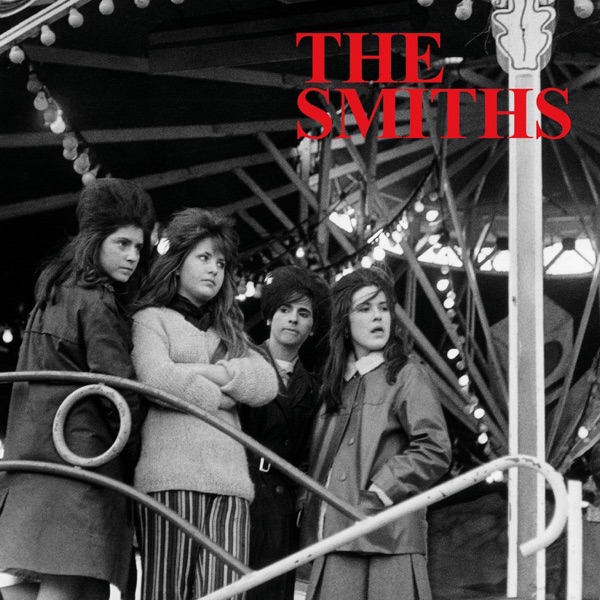
Complete by The Smiths — the 2011 Rhino box set compiling all eight canonical albums — is the most authoritative single artifact the band’s catalog has ever produced, and still somehow falls short of its own title. Released on 26 September 2011 and remastered by Frank Arkwright with Johnny Marr at Metropolis Studios in London, it packages four studio albums, three active-era compilations, and one live record into a format that demands scrutiny rather than reverence. It draws 323,633 active listeners and 7.2 million scrobbles across 43 countries on Last.fm as of this writing — numbers that say less about a release event and more about the permanent gravitational pull of one of post-punk’s most precisely engineered songwriting partnerships.
Album Credits
| Artist | The Smiths |
| Released | 26 September 2011 |
| Genre | Indie Rock / Alternative Rock / Post-Punk |
| Label | Rhino UK / Warner Music UK Ltd. |
| Remastering Engineer | Frank Arkwright (Metropolis Studios, London), overseen by Johnny Marr |
| Original Producers | John Porter (The Smiths LP); Morrissey & Marr (Meat Is Murder); Morrissey, Marr & Stephen Street (The Queen Is Dead, Strangeways) |
| Discs / Tracks | 8 CDs / 110 tracks |
| Formats | 8xCD standard; 8xLP 180g vinyl; Deluxe (CD+LP+25×7″+DVD), limited to 4,000 |
| Songwriting | All songs by Morrissey and Johnny Marr (except traditional/noted exceptions) |
Performance Snapshot
| Global Listeners | 323,633 |
| Total Scrobbles | 7,240,847 |
| Countries Charting | 43 |
| Strongest Market | United States — 132,047 listeners |
| Top 3 Markets | United States · Brazil · United Kingdom |
| Notable Markets | Canada (15,243) · Australia (11,897) · Mexico (7,980) · Poland (7,566) · Netherlands (6,841) · Germany (6,702) · Chile (5,960) |
The Architecture of a Catalog: Production and Sonic Identity
The Smiths were never a band where production was incidental. Every album in this set registers its era with the fidelity of a waveform diagram.
The debut was first recorded with producer Troy Tate but the results were shelved in favor of a version produced by John Porter
— a decision whose consequences are audible in the deliberate, slightly airless quality of the finished record.
The album pairs Johnny Marr’s bright, jangly guitar work with Morrissey’s literate and melancholic lyrics, touching on themes of unrequited love, isolation, identity, and social disaffection.
Porter’s production on that debut is stark to the point of austerity: the guitars register in the upper-midrange with minimal low-end cushion, lending “Reel Around the Fountain” and “Still Ill” an exposed, almost skeletal quality that would have sounded alien on any major label at the time.
Dissatisfied with the production of The Smiths, Morrissey and Marr undertook production duties themselves — with Stephen Street in an engineering role — on Meat Is Murder, to ensure the album sounded exactly as they intended.
The shift is immediately perceptible: the rhythm section thickens, Andy Rourke’s bass lines acquire genuine tonal weight, and Mike Joyce’s snare sits further back in the mix.
Street continued his involvement, engineering The Queen Is Dead before assuming a full producer role for Strangeways, Here We Come, their final album.
The progression across these four studio records — tracked chronologically within this box — is essentially a production master class in how a band learns to weaponize the studio rather than merely document itself in one.
The box’s liner notes confirm that each album was taken back to original tape sources and remastered by engineer Frank Arkwright, assisted by Johnny Marr at Metropolis Studios in London.
The question of whether that process improved on the originals has split listeners along predictable lines.
The 2011 box set remasters received mixed reviews — some praised clarity, others criticized loudness compression.
Audiophiles with access to original Rough Trade pressings will notice the dynamic headroom has been reduced; the remasters push harder, compress the breathable space between Marr’s arpeggios. Still, for the majority of listeners coming to these recordings on streaming or standard CD playback, the result is cleaner separation and more present stereo imaging than the patchy mid-1980s digital transfers that defined the catalog for years. The Queen Is Dead disc benefits most: “There Is a Light That Never Goes Out” and “I Know It’s Over” acquire a low-end solidity that earlier pressings couldn’t sustain. The Hatful of Hollow BBC sessions, paradoxically, may lose most — their lo-fi charm is partly a function of the original recording environment, and brightening them diminishes that particular appeal.
For listeners who want a convenient internal reference point, this catalog sits in a distinct lineage shared by post-Britpop British guitar bands. Late Developers by Belle and Sebastian (2023) offers a useful contemporary parallel — a band equally committed to literate pop without tonal excess, though operating within a considerably softer emotional register than anything the Smiths ever produced.
The Writing: Marr’s Harmonic Intelligence and Morrissey’s Lyrical Economy
The Smiths’ songwriting was, structurally, an unusually clean division of labor.
The album’s songwriting paired Johnny Marr’s bright, jangly compositions with Morrissey’s literate and melancholic lyrics.
But that clean split obscures how interdependent the two registers actually were. Marr’s guitar approach — stacked arpeggios, capo-shifted chord voicings that implied modal ambiguity, a persistent preference for the fifth-relation over conventional resolution — created harmonic environments that Morrissey’s flat, conversational vocal delivery inhabited rather than ornamented. He rarely sang to the melody in the conventional sense; he declaimed over it, which is why his phrasing survives so poorly when extracted from these specific recordings.
Across the eight albums collected here, the lyrical range is more varied than the band’s reputation for studied despair would suggest. Meat Is Murder turns explicitly political: the title track is a piece of blunt agitprop, the guitars grinding against Morrissey’s vegetarian polemic with a severity that still sounds aggressive in 2026. The Queen Is Dead broadens further — “Frankly, Mr. Shankly” is dry institutional satire, “Bigmouth Strikes Again” is self-deprecating comedy performed with total deadpan, while “I Know It’s Over” collapses into grief with a directness that most contemporary songwriters would flinch from.
With The Queen Is Dead, everything came together: all members playing at peak capacity, the album maintaining cohesion despite significant variation in style.
The three compilations — Hatful of Hollow, The World Won’t Listen, and Louder Than Bombs — are where the Smiths’ B-side culture becomes legible. “Asleep,” “Oscillate Wildly,” “Half a Person,” “Unloveable”: tracks that existed outside the formal album sequence but that, heard within this box, function as the connective tissue between the official statements. “How Soon Is Now?” is here as a Hatful track, which is historically correct —
the standard version of Meat Is Murder in this set conforms to the original UK release, which did not include “How Soon Is Now?”
— and the decision reflects a real editorial commitment to documentary accuracy. Whether it was the right editorial decision is another question entirely; most listeners know that track as an album cut, and its absence from Meat Is Murder still reads as an omission.
Morrissey’s vocal delivery, across 110 tracks, shows more range than any single-album introduction to the band reveals. The cracked falsetto in “There Is a Light,” the theatrical baritone of the Strangeways material, the almost conversational flatness on “This Night Has Opened My Eyes” — these are distinct tonal registers, and the box set is the only format that makes the full arc of his development audible in sequence.
Market Note: Catalog Longevity and the Streaming-Era Legacy Asset
The numbers embedded in this box set’s streaming profile tell an unexpectedly distributed story. The United States leads with 132,047 Last.fm listeners — roughly 40.8% of the global total — but the second-largest market is Brazil at 54,383, well ahead of the UK’s 36,251. That Brazil-ahead-of-Britain configuration is a structural feature of the Smiths’ contemporary demand profile: the IP strength of this catalog is no longer primarily anchored in its original domestic milieu. Latin American markets (Mexico at 7,980, Chile at 5,960) collectively account for a meaningful share, as do Poland and the Netherlands — markets with deep independent-guitar-music scenes that discovered British post-punk through channels entirely separate from the original NME ecosystem.
With 7,240,847 total scrobbles across 43 countries, Complete functions as the dominant catalog entry point, consolidating streaming velocity across the entire Smiths IP portfolio. The sync potential of this catalog remains exceptional — tracks like “There Is a Light That Never Goes Out” and “This Charming Man” have documented placement histories in film and television that continue to generate new listener cohorts.
Songs such as “There Is a Light That Never Goes Out” and “This Charming Man” have gone viral on TikTok and YouTube, drawing in younger audiences through nostalgic and emotionally resonant contexts.
For a catalog with no prospect of new material, that is a remarkably healthy demand driver — one that Complete is structurally positioned to harvest.
Listen with 30-sec previews
Previews served by iTunes. Press play on any track.
Similar albums






Released the same week
Other albums released near this date, across years.