At a glance
Where the world is listening
LIVE AT READING: THE NIGHT NIRVANA REFUSED TO BE WRITTEN OFF
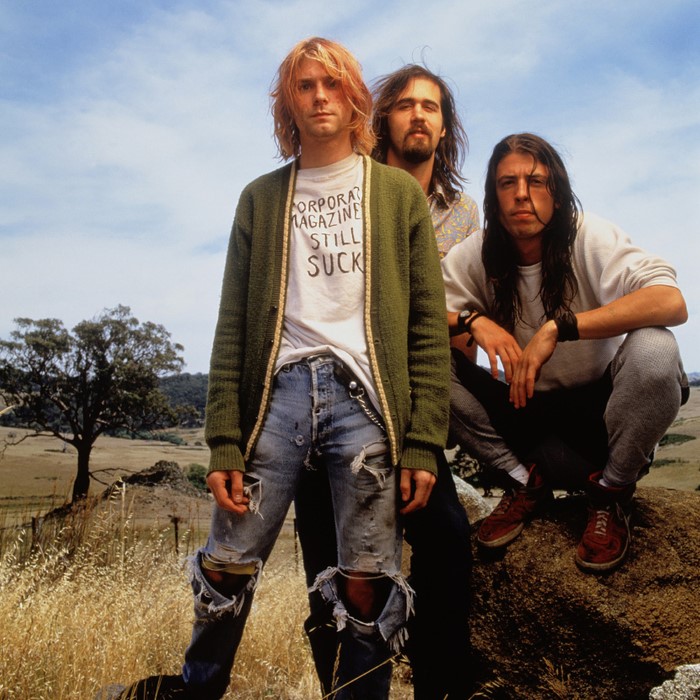
Nirvana’s Live at Reading — the official 2009 Geffen release of the band’s legendary August 30, 1992 Reading Festival set — remains the most forensically satisfying document of Kurt Cobain, Krist Novoselic, and Dave Grohl at full operational pressure.
Nirvana’s appearance at the 1992 Reading Festival was the band’s second performance at the annual music festival and their first since the success of Nevermind had elevated them to the position of what Pitchfork called the “biggest” rock band in the world.
Bootleg cassettes had circulated for nearly two decades before Geffen finally committed the performance to an authorized mastered release. What arrived was not a nostalgia product. It was a case file — 24 tracks of exhilarating, occasionally chaotic evidence that grunge’s most reluctant stars could hold 50,000 people in the palm of their hand while pretending they’d rather be somewhere else entirely.
Album Credits
| Artist | Nirvana |
| Released | November 2, 2009 |
| Recorded | August 30, 1992 — Reading Festival, Reading, England |
| Genre | Grunge / Alternative Rock |
| Label | Geffen Records (Universal Music) |
| Executive Producer | Nirvana |
| Stereo Mix | Nathaniel Kunkel |
| Mastering | Bob Ludwig at Gateway Mastering |
| Original Recording | Fujisankei International |
| Photography | Charles Peterson |
| Tracks | 24 |
| Lead Singles / Highlights | “Smells Like Teen Spirit,” “Lithium,” “Come As You Are,” “Territorial Pissings,” “All Apologies,” “Aneurysm” |
Performance Snapshot
| Global Listeners (Last.fm) | 226,513 |
| Total Scrobbles | 6,106,972 |
| Countries Charting | 43 |
| Strongest Market | United States — 115,808 listeners |
| Top 3 Markets | United States · Brazil · United Kingdom |
| Notable Markets | Canada (12,956) · Australia (9,940) · Poland (7,474) · Germany (7,201) · Mexico (6,627) |
What the Tapes Actually Caught
Live at Reading is a live CD/DVD released on November 2, 2009, featuring the band’s headlining performance at the Reading Festival in Reading, England, on August 30, 1992.
Bootlegged for years, the official release presents the performance for the first time mastered and color corrected.
The sonic upgrade is not cosmetic. Nathaniel Kunkel’s stereo mixes allow the mix to breathe where the gray-market cassettes had been a wall of undifferentiated distortion, and Bob Ludwig’s mastering at Gateway provides the punishing low-end that Novoselic’s bass lines require. The result is a document that feels both immediate and properly proportioned — which is a harder technical problem to solve with a festival recording than it sounds.
The performance included most of Nevermind — everything other than “Something in the Way” and “Endless, Nameless” — along with several songs from their 1989 debut album Bleach, the Sub Pop 200 compilation track “Spank Thru,” and set list regulars “Aneurysm,” “Been a Son,” and the 1990 single “Sliver.”
It also included a cover of the Wipers’ “D-7,” which had been released as a b-side on the “Lithium” single in July 1992, and Fang’s “The Money Will Roll Right In.”
The set, in other words, is a cross-section of where Nirvana actually came from — Sub Pop basements, Pacific Northwest hardcore, the Wipers’ Portland lineage — rather than the arena-pop context in which they were increasingly being consumed. The sequencing, opening hard with “Breed” and “Drain You” before working back through the Bleach-era material, refuses to front-load the hits in a way that would have made the night feel like a retrospective. It remains a working band playing its whole catalog, not a victory lap.
Sonically, the set lives in a register that Nevermind‘s Butch Vig production deliberately avoided: overdriven, imprecise, and physically loud. Cobain’s guitar tone on “Territorial Pissings” is closer to a Fender through a broken Orange than the compressed DI sound Vig preferred in the studio. The sidechain-free mix gives every snare hit from Grohl its full acoustic weight. For listeners accustomed to the studiofied album versions, the difference is bracing. Compare this to a contemporaneous live artifact like Northeast Corridor: Steely Dan Live! — another prestige archive release — and the production philosophies could not be more opposed: where Fagen and Becker sought compositional precision, Cobain sought controlled collapse.
Songwriting Under Festival Conditions
One persistent critical myth about Nirvana’s live performances is that the songs’ simplicity renders them static in performance — that what you get at a concert is merely a louder version of the record. Live at Reading complicates this significantly. “Drain You,” which functions on Nevermind as a relatively controlled exercises in call-and-response melody, acquires an almost abrasive urgency live, the two-note guitar figure losing its studio cleanliness and becoming something closer to a taunt. “About a Girl” — the Bleach opener that most directly telegraphs Cobain’s Lennon fixation — sounds rawer and more exposed here than in any studio rendering, the melody carrying its own weight without studio reverb to soften the edges.
A humbling moment of the performance comes during the intro to “Lithium,” where Cobain hits a wrong note and is forced to restart the tune — not the first instance during the band’s 90-minute set that Cobain flubs a song (he struggles to tune his guitar throughout “Love Buzz”), but the thousands of concertgoers who sang along in unison to “Lithium” proved that a few mistakes couldn’t spoil this historic event.
The wrongness, in context, is the point. Cobain’s vocal approach at Reading leans into the smear between pitch-perfect and deliberately wrecked: “Smells Like Teen Spirit” is sung with a controlled aggression that the studio version partially masks behind compression, while “Polly” — one of the most affecting moments on the record — is delivered with an almost clinical quietness that reframes it as a threat rather than a lament.
Live at Reading marks the first time that Chet Powers received songwriting credit on a Nirvana release, for the use of his lyrics from the song “Get Together” as the intro for “Territorial Pissings.”
The gesture — deploying a Youngbloods peace anthem as ironic prologue to one of the most aggression-forward tracks in the catalog — is vintage Cobain: the cultural reference folded inside the performance rather than explained. It is the kind of in-joke that rewards knowing listeners without alienating those who just want the noise.
Cobain himself expressed satisfaction with the performance, giving it “an eight on a scale of ten,” according to Come As You Are.
That self-assessed imperfection, characteristically modest, is part of what makes Live at Reading honest. It doesn’t pretend to be a studio album recorded in front of witnesses. It is a specific night with specific problems and specific electricity, and the songwriting — even the ostensibly simple stuff — carries both.
Market Note: Catalog Longevity and Streaming Velocity in a Post-Grunge Economy
With 226,513 Last.fm listeners and 6,106,972 total scrobbles across 43 countries, Live at Reading demonstrates the deep catalog longevity that distinguishes Nirvana’s IP from nearly every peer in the alternative rock field. The United States dominates with 115,808 listeners — over 51% of total engagement — which reflects both the domestic demand driver of classic rock radio and the ongoing educational pipeline through which younger American listeners first encounter the band. The Brazil figure (39,523 listeners) is striking: it places Brazil comfortably ahead of the United Kingdom (24,798), the country where the concert was actually performed, pointing to Nirvana’s particular resonance in South American markets where grunge maintains an active, non-nostalgia listening community rather than merely a heritage one. Poland (7,474) and Germany (7,201) flag a Northern and Central European base that indexes well against Nirvana’s broader catalog sync potential — both territories where alternative rock maintains healthy analog-soul radio infrastructure. For a live album released 17 years after the original performance with no accompanying touring cycle, these streaming velocity figures confirm the title as a catalog cornerstone rather than a limited-event release.
The Geography of Grunge’s Afterlife
The performance at the Reading Festival in Reading, England, on August 30, 1992
was, of course, a British event — but the geography of who is still listening in 2026 tells a more interesting story than its origin. The United States and Brazil together account for roughly 69% of active Last.fm listenership for this record. The UK, despite hosting the original concert and representing
Nirvana’s final concert in the United Kingdom,
sits third. This is not a corrective to the cultural history so much as evidence that the album’s function has shifted: in the UK, the concert is remembered as a cultural landmark; in the US and Brazil, it is actively listened to.
The Brazilian figure in particular merits attention. Nirvana’s catalog has maintained extraordinary reach in South America for reasons that are partly generational — the post-Nevermind wave arrived simultaneously with Brazil’s mid-1990s economic opening, and grunge became associated with a particular mode of youth disaffection that mapped locally — and partly structural, as alternative rock radio in Brazil never underwent the format collapse it experienced in Western Europe. Mexico (6,627 listeners) and Argentina (3,818) confirm that the broader Latin American engagement is not simply a Brazil anomaly.
Poland and Germany’s presence in the top ten reflects a different cultural logic.
With Nirvana closing the third and final night of the festival, Cobain had programmed the day’s bill, which featured acts like the Melvins, the Screaming Trees, Pavement, Bjorn Again, Beastie Boys, L7, Mudhoney, and Nick Cave and the Bad Seeds.
That bill — spanning American noise-rock, Australian post-punk, and genre-adjacent acts — signaled a curatorial sensibility that connected Nirvana to a broader alternative canon rather than to a single national scene. It is precisely that canon-adjacent positioning that makes the record legible in Central and Northern European markets with strong independent rock infrastructure. Reading 1992 was not merely a grunge event. It was a flag planted at the intersection of American indie, British festival culture, and the kind of raw live performance ethos that the post-punk generation in Manchester and Berlin had been championing for a decade. Poland and Germany were paying attention then, and apparently, still are.
The album’s performance across 43 countries with no promotional budget, no touring support, and no contemporary single reflects a catalog durability that most active bands would trade for without hesitation. For an estate release, that is market positioning of the highest order.
Where It Holds and Where It Strains
The critical consensus on Live at Reading is, by any reasonable measure, anomalous.
According to Metacritic, the album holds a score of 93 out of 100, indicating “universal acclaim,” and is ranked 18th on the site’s list of best-reviewed albums, and first among alternative albums.
That is not a number you can fully explain away with goodwill toward a deceased artist. The record earns most of it.
Stuart Berman of Pitchfork called Live at Reading “an indispensable document of a legendary band at their most invincible.”
AllMusic’s Stephen Thomas Erlewine praised the release as “Nirvana’s purest blast of rock and roll.”
The CD version debuted at number 37 on the Billboard 200 in the U.S., while the DVD debuted at number 1 on the magazine’s Top Music Video Chart, remaining in the top 40 for 25 weeks.
The Billboard Rock Album Chart placed it at number 13, while the UK Album Chart came in at number 32.
Where the record strains is in its relationship with completism.
Some reviews noted minor criticisms, including occasional audio glitches inherited from the original festival recording and the absence of unreleased material, which limited its novelty for die-hard fans despite the faithful reproduction of familiar songs.
This is a fair point. The tracklist, for all its quality, does not surprise anyone who knows the band’s catalog: there is no deep-cut revelation, no alternate arrangement that reframes a familiar composition, no cover version that suggests an unexplored direction. The album does what it says on the packaging — it presents the set, faithfully — and that fidelity is both its central virtue and the ceiling of its ambition.
The more interesting critical tension is with Nirvana’s other authorized live document, MTV Unplugged in New York. Where Unplugged presents Cobain as a songwriter capable of restraint and recontextualization — the acoustic setting, the covers of Bowie and Lead Belly, the deliberate slowing-down — Live at Reading presents him as a performer whose default mode was controlled aggression. Neither portrait is complete. Together, they cover more ground than either does alone. But for listeners coming to this record expecting the emotional specificity of Unplugged, the relentlessness of Reading can feel like a different kind of document: thrilling, but less intimate.
The album also works well against the broader harder-edged catalog releases of the era, and its raw fidelity places it firmly in the lineage of historically significant live recordings — closer in ethos to the Who’s Live at Leeds than to any contemporaneous polished live production. For further grounding in that tradition, the Buffalo Springfield retrospective offers a useful counterpoint in how archive catalog material can be curated for a new generation without losing its original documentary grain.
The bottom line is this: Live at Reading does not require reassessment.
It is widely regarded as a pinnacle of 1990s grunge and alternative rock, encapsulating Nirvana’s raw energy and cultural dominance at the height of their fame following Nevermind.
That consensus is, for once, accurate. What it requires is context — an understanding of what the night meant, what was at stake, and why a band that had every reason to cancel chose instead to walk onstage in a wheelchair and play for 90 minutes like the rumors of their demise were the funniest thing they’d ever heard.
Frequently Asked Questions
Where can you stream or purchase Nirvana’s Live at Reading?
Live at Reading is available on all major streaming platforms, including Spotify, Apple Music, Amazon Music, and YouTube Music. The original CD/DVD package remains in print through Universal Music / Geffen Records and is available via most physical music retailers. The accompanying DVD, which debuted at number 1 on Billboard’s Top Music Video Chart, provides the full visual document of the performance and is sold separately or as part of the combined package.
How was Live at Reading received critically and commercially?
According to Metacritic, Live at Reading holds a score of 93 out of 100, indicating “universal acclaim,” and is ranked first among alternative albums on the site’s best-reviewed list.
The CD version debuted at number 37 on the Billboard 200, while the DVD hit number 1 on the Top Music Video Chart and remained in the top 40 for 25 weeks.
The album spent 10 weeks on the Billboard 200, with a brief re-entry in 2012 coinciding with the 20th anniversary of the original performance.
Which tracks stand out on Live at Reading?
“Territorial Pissings” stands as the set’s most concentrated moment of pure forward momentum — the Get Together intro followed by two minutes of near-breakdown intensity. “Drain You” demonstrates the melodic precision underneath the band’s noise-driven surface. “About a Girl,” stripped back and exposed in the festival mix, rewards close listening. “Lithium” — including the moment where Cobain restarts after hitting a wrong note — is the most humanizing performance on the record, the imperfection only adding to the song’s authority.
What albums are similar to Live at Reading?
For listeners drawn to prestige archive live recordings with strong curatorial vision, Northeast Corridor: Steely Dan Live! offers a compelling counterpoint — a band at peak command of their craft rather than peak controlled chaos, but sharing the sense that the live document reveals something the studio record concealed. For harder-edged rock in the same decade-spanning tradition, Stone Sour’s Hydrograd covers adjacent territory in modern alternative rock’s relationship with its early-90s inheritance.
Girls Choice Music · Curation and Analysis
authored on May 27, 2026
Listen with 30-sec previews
Previews served by iTunes. Press play on any track.
Similar albums
Released the same week
Other albums released near this date, across years.