Listen / Follow
Tags
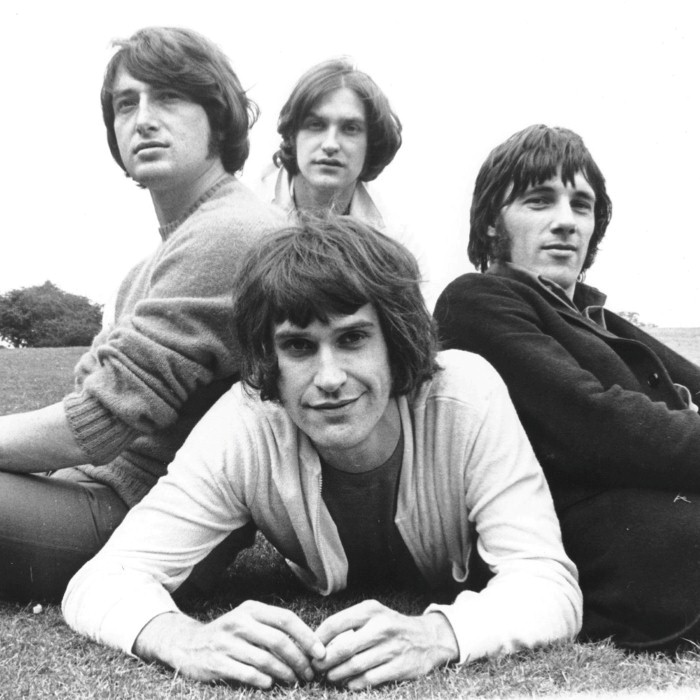
About The Kinks
The Kinks were an English rock band formed in London in 1962. The original line-up consisted of brothers Ray Davies (lead vocals, rhythm guitar) and Dave Davies (lead guitar, vocals), Pete Quaife (bass), and Mick Avory (drums, percussion). Emerging during the British rhythm and blues and Merseybeat era, they achieved their first major success with the Ray Davies-written single "You Really Got Me" in 1964. The song reached number one in the United Kingdom and entered the Top 10 in the United States.
THE KINKS: Sixty Years of English Songcraft, Brotherly Friction, and Unresolved Genius
The Kinks, the London rock band formed in 1963, built one of British music’s most consequential catalogs — and never quite received their due for it. Ray Davies wrote songs the way a sharp-eyed Muswell Hill flaneur might record field notes: closely observed, dry-witted, occasionally devastating. Dave Davies played guitar like a man with something to prove and nowhere particular to prove it. Together, they dragged British rhythm and blues into something more argumentative, more English, and — on the best days — more honest than almost anything their contemporaries managed. The results hold up. The brothers still haven’t entirely sorted things out. That tension, it turns out, was probably the point.
Artist Profile
| Origin | Muswell Hill / London, England, UK |
| Years Active | 1963–1996 (60th anniversary activity 2023–2025) |
| Genre | Rock, British Invasion, R&B, Music Hall, Hard Rock, Britpop precursor |
| Labels | Pye, Reprise, RCA Records, Arista, MCA, Columbia, Sony BMG |
| Core Members | Ray Davies (vocals, rhythm guitar), Dave Davies (lead guitar, vocals), Pete Quaife (bass), Mick Avory (drums) |
| RIAA Certifications | 4 × Gold (The Kinks Greatest Hits!, Low Budget, One for the Road, Give the People What They Want) |
| Notable Collaborators | Shel Talmy (producer, 1964–1967), The Jayhawks (Ray Davies solo work) |
| Awards | Rock and Roll Hall of Fame (1990), UK Music Hall of Fame (2005), Ivor Novello Award – Outstanding Service to British Music |
| Albums in Catalog | 19 studio albums; 100–200 compilations worldwide |
Performance Snapshot
| Total Records Sold | 50+ million worldwide |
| UK Chart Peak | 17 Top 20 singles; 5 Top 10 albums |
| US Chart Peak | 5 Billboard Top 10 singles; 9 Top 40 albums |
| Top Markets | United Kingdom, United States, Germany, Australia, Netherlands |
| Studio Albums | 19 |
From Muswell Hill to the British Invasion: Formation and Signature Sound
Formed as a rhythm-and-blues band in 1963 by brothers Ray and Dave Davies, the Kinks originated in Muswell Hill in northern London.
The original lineup — Ray on vocals and rhythm guitar, Dave on lead guitar, Pete Quaife on bass, and Mick Avory on drums — arrived at a specific and irreproducible chemistry, one that was as likely to combust as to cohere. That instability was structural. The brothers had been fighting since childhood, Dave being the youngest of eight Davies siblings, Ray the second-youngest. The band’s internal friction became its distinguishing characteristic: there’s a kinetic antagonism in The Kinks’ best recordings that no amount of studio polish could manufacture.
Their early recordings with producer Shel Talmy placed them squarely within the British R&B boom.
Built on power chords, their third single, “You Really Got Me,” provided their big break — it stands, along with the work of the early Rolling Stones, as a landmark of creative exploration of rhythm and blues by white musicians.
Dave Davies’ distorted guitar on that track — achieved, legendarily, by slashing his amplifier cone with a razor blade — predates the formal vocabulary of hard rock by several years.
The single was released in August 1964, and, boosted by a performance on the television show Ready Steady Go!, quickly reached number one in the United Kingdom. Hastily imported by the American label Reprise Records, it also made the Top 10 in the United States.
What came next was more interesting, and considerably less commercially tidy. Ray Davies began writing songs that had no obvious American antecedent: music hall-inflected character studies, pastoral English miniatures, sardonic social comedy.
The band’s music drew from a wide range of influences, including American R&B and rock and roll initially, and later adopting British music hall, folk, and country.
By 1966, the Kinks were making records that sounded like nothing else in the British Invasion — which partly explains why the American market, still expecting “You Really Got Me” energy, increasingly looked elsewhere. The band’s US touring ban between 1965 and 1969, imposed by the American Federation of Musicians after an alleged onstage altercation, compounded the problem considerably. It also freed Ray Davies to become the songwriter he actually was, rather than the one the market wanted.
The Catalog: From Village Green to Low Budget and Beyond
The Kinks’ most critically admired period runs from 1966 to 1971, a stretch of records that has aged better than almost anything produced by their British contemporaries.
The band gained a reputation for reflecting English culture and lifestyle, fueled by Ray Davies’ wittily observational writing style, made apparent in albums such as Face to Face (1966), Something Else (1967), The Village Green Preservation Society (1968), Arthur (1969), Lola Versus Powerman (1970), and Muswell Hillbillies (1971).
The Kinks Are the Village Green Preservation Society (1968) was, commercially, a disaster.
The Kinks’ prior compilation had been certified gold for sales totaling one million dollars — six days before the release of The Kinks Are the Village Green Preservation Society, which failed to chart worldwide.
The critical reassessment took decades. Today it is widely regarded as one of the finest British albums of the 1960s — a suite of songs about English nostalgia, village culture, and things disappearing faster than anyone planned. Ray Davies was 24 years old when he wrote most of it. The prescience is faintly alarming.
By the end of 1971, the Kinks had secured a five-album deal with RCA Records, which brought them a million-dollar advance. Released in late 1971, Muswell Hillbillies, the band’s first album for RCA, marked a return to the nostalgia of the Kinks’ late-’60s albums, only with more pronounced country and music hall influences.
The album barely charted. It is now, with some justification, treated as a touchstone of eccentric British rock — one of those records whose commercial failure was inversely proportional to its eventual influence. Stephen Thomas Erlewine’s assessment of the Kinks’ RCA period captures something important: the band was making their best American-facing records precisely when America had stopped listening to them closely.
During 1976, the Kinks left RCA and signed with Arista, and refashioned themselves as a hard rock band.
This earned them a second commercial life in the US stadium circuit. Low Budget (1979) and Give the People What They Want (1981) both went RIAA gold — the former their first such certification in over a decade.
“Come Dancing” (1983), inspired by Davies family history, was a hit in both the United Kingdom and the United States,
their last proper crossover moment.
You can explore the breadth of this catalog — from the Pye singles through to the Arista-era arena rock — in the Waterloo Sunset: The Very Best of The Kinks & Ray Davis (2012) compilation available on Get Music, which draws a clear line through the band’s commercial peaks without over-explaining them.
Market Note
Four Kinks albums have been certified Gold by the RIAA, and the band has sold over 50 million records worldwide.
The IP strength here is considerable: Ray Davies retains a significant portion of his publishing, and “You Really Got Me,” “Waterloo Sunset,” and “Lola” carry exceptional sync potential across advertising, film, and television. The catalog’s demographic reach is unusual — original listeners now in their 60s and 70s coexist with a younger fanbase that discovered the band through Britpop retrospectives and streaming-era reappraisals.
A trilogy of compilation albums — The Journey Parts 1, 2, and 3 — released between 2023 and 2025, with Part 1 released on 24 March 2023 and Part 2 on 17 November 2023,
marks a deliberate catalog refresh strategy under Sony BMG’s stewardship.
The third part was released as part of the Kinks’ 60th anniversary celebrations, alongside a limited edition reissue of the “You Really Got Me” single promoting its 60th anniversary.
For A&R and licensing departments, this is a catalog with decades of demonstrated demand and no signs of deterioration.
1 album in our catalog
All releases
Complete release history from MusicBrainz — albums, EPs, singles, live, and more.
Album (25)
- 1993Phobia
- 1989UK Jive
- 1986Think Visual
- 1984Word of Mouth
- 1983State of Confusion
- 1981Give the People What They Want
- 1979Low Budget
- 1978Misfits
- 1977Sleepwalker
- 1975Schoolboys in Disgrace
- 1975Soap Opera
- 1974Preservation Act 2
- 1973Preservation Act 1
- 1972Everybody’s in Show‐Biz
- 1971Muswell Hillbillies
- 1970Lola Versus Powerman and the Moneygoround, Part One
- 1969Arthur (or The Decline and Fall of the British Empire)
- 1968The Kinks Are the Village Green Preservation Society
- 1967Something Else by The Kinks
- 1966Face to Face
- 1965Kinda Kinks
- 1965Kinkdom
- 1965The Kink Kontroversy
- 1965Kinks‐Size
- 1964Kinks