Listen / Follow
Tags
About Pet Shop Boys
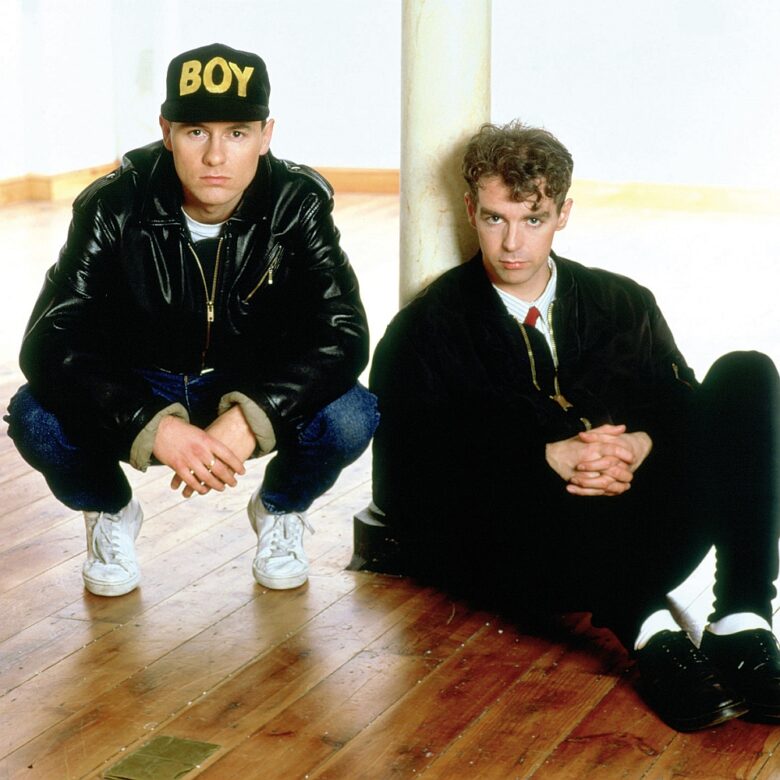
Pet Shop Boys are an English synth-pop duo formed in London in 1981. The group consists of vocalist Neil Tennant and keyboardist Chris Lowe. They are among the most commercially successful acts in British popular music, having sold more than 100 million records worldwide. In the 1999 edition of "The Guinness Book of Records", they were listed as the most successful duo in UK music history. The duo achieved 42 top-30 singles in the United Kingdom
Pet Shop Boys: The Synthpop Duo That Refused to Date
Pet Shop Boys, the British synthpop duo of Neil Tennant and Chris Lowe, have spent four decades turning irony and electronics into literate, enduring pop. Formed in Chelsea in 1981 and best known for 1985’s “West End Girls,” the pair have become the most successful duo in UK chart history, with more than 100 million records sold worldwide. Their fifteenth album, Nonetheless, arrived in 2024 to some of the strongest reviews of their career — proof that a synthpop institution can still write toward the present rather than the archive.
Artist Profile
| Genre | Synthpop, Electropop, Dance-pop, New Wave |
| Origin | Chelsea, London, United Kingdom |
| Years Active | 1981 – present |
| Labels | Parlophone, x2 (formerly EMI, Sanctuary) |
| Notable Collaborators | Dusty Springfield, Stephen Hague, Trevor Horn, Stuart Price, James Ford |
| RIAA Certifications | Please and Actually — Platinum (US); 100M+ records sold worldwide |
| Members | Neil Tennant, Chris Lowe |
| Discography | 16 studio albums |
Performance Snapshot
| Global Listeners | 30K unique users (Last.fm) |
| Total Scrobbles | 472K lifetime plays |
| Countries Charting | 13 active markets |
| Strongest Market | United Kingdom — 7.7K listeners |
| Top 3 Markets | United Kingdom, Poland, Chile |
From a Hi-Fi Shop to the Imperial Phase
The origin story is almost too neat for a synthpop act. In August 1981, Neil Tennant — then a journalist who would soon join the staff of Smash Hits — met Chris Lowe in an electronics shop on the King’s Road in Chelsea. They bonded over a shared interest in dance music and synthesizers, and began writing together almost immediately. The early years were unglamorous: demos passed around, a first version of “West End Girls” recorded in 1984 with American producer Bobby Orlando that made little impact. The breakthrough came when the duo re-recorded the track with Stephen Hague, whose cleaner, widescreen production turned a cult curio into a global number one across both the UK and the United States in early 1986. The debut album, Please, followed that year. What made Pet Shop Boys distinctive was never simply the synthesizers — plenty of acts had those in 1986 — but the voice placed on top of them. Tennant sings in a deadpan, half-spoken, conversational register, more reporter than crooner, and that detachment is the duo’s central instrument. Beneath it, Lowe builds an architecture drawn from Hi-NRG, disco, and the European electronic tradition, music engineered for the dancefloor but rarely uncomplicated in feeling. The signature sound is this collision: melodies buoyant enough for radio, lyrics ironic and literate enough to reward close reading, and an emotional undertow that keeps the irony from curdling into mere cleverness. Tennant himself coined the phrase “imperial phase” to describe the 1987–88 stretch when the duo could seemingly do no wrong commercially — a term that has since entered the wider critical vocabulary. That a band working squarely within synthpop produced a concept durable enough to outlast the genre’s every trend cycle is the first clue to their longevity.
A Catalog Without a Weak Decade
Across sixteen studio albums, Pet Shop Boys have built a discography with remarkably few genuine valleys. Please (1986) and its follow-up Actually (1987) define the imperial phase: the latter alone yielded “It’s a Sin,” the Dusty Springfield duet “What Have I Done to Deserve This?”, “Rent,” and “Heart,” a run of singles few acts match across an entire career. Introspective (1988) pushed further into extended-mix experimentation, treating the twelve-inch remix as a compositional form rather than a promotional afterthought. Then came Behaviour (1990), produced with Harold Faltermeyer — a slower, melancholic, widely admired record that proved the duo could write reflection as convincingly as euphoria. Very (1993) reversed the temperature again, an explosion of colour and camp anchored by their cover of “Go West” and standing as their commercial high-water mark. The catalog rarely coasts after that. Bilingual (1996) absorbed Latin rhythms, Nightlife (1999) leaned into contemporary club textures, and Fundamental (2006) brought in Trevor Horn for one of their most politically pointed sets. Yes (2009) paired them with the hit factory Xenomania. The most recent chapter is the trilogy produced by Stuart Price — Electric (2013), Super (2016), and Hotspot (2020) — three records released through the duo’s own label, x2, that reconnected them to the dancefloor with renewed conviction. The story continues with their James Ford-produced fifteenth album, Nonetheless (2024), a quieter, orchestral-leaning record that became their highest-charting album in nearly three decades. Few acts can point to a debut, a mid-career peak, and a late-career success separated by almost forty years — and fewer still can do it without a single full creative collapse in between.
Market Note: The Economics of a Heritage IP
Pet Shop Boys are a case study in catalog longevity as a business model. Their IP strength is unusual even among legacy acts: more than 100 million records sold, a Guinness listing as the most successful duo in UK chart history, and US RIAA Platinum certifications for Please and Actually give the brand decades of accumulated demand. The contemporary demand driver is no longer radio but catalog depth — sixteen studio albums plus a dense field of compilations and remix sets that reward subscription-era exploration. GetMusic’s Performance Snapshot logs 30,000 unique Last.fm listeners and 472,000 scrobbles across 13 markets, a concentrated rather than viral footprint, which is exactly the engagement profile that sustains heritage streaming velocity. The sync potential is considerable: songs like “It’s a Sin” and “West End Girls” carry instant period and tonal signification for film and television. For an A&R desk, the relevant angle is not breaking the act but stewarding it — reissues, anniversary editions, and the kind of physical-format strategy that turns devoted fans into repeat buyers.
Where the Synthpop Faithful Live
Pet Shop Boys’ cultural footprint is wider than their current streaming numbers suggest, because much of their influence is structural rather than measurable in plays. They effectively wrote the template for literate, ironic electronic pop — music that could occupy the dancefloor and the op-ed page at once — and that template runs through a generation of acts who treat synthpop as a vehicle for commentary. Their significance to queer cultural history is equally substantial: the duo’s work has always carried its perspective openly, and across four decades that consistency has made them an enduring point of reference rather than a period curiosity. GetMusic’s geographic data sketches where that devotion now concentrates. The United Kingdom is the strongest market at 7,700 listeners, followed by Poland and Chile, with the Netherlands, Argentina, Sweden, and Finland close behind. The presence of Poland, Chile, and Argentina near the top is not incidental — these are long-standing Pet Shop Boys territories, regions where the duo’s synthpop has held a loyal audience since the 1980s and where their touring continues to draw. The overall map runs to just 13 countries, a tight footprint that reads as concentrated loyalty rather than broad casual reach. Within the synthpop tradition, their closest peers are fellow survivors of the 1980s British electronic scene — acts like Soft Cell, whose late-career record *Happiness Not Included performs a comparable act of ageing thoughtfully inside the genre. Pet Shop Boys are not a nostalgia act so much as proof that synthpop, handled with discipline, has a long shelf life.
The Rarest Achievement: Lasting
The critical legacy of Pet Shop Boys rests on a quality that sounds modest but is genuinely scarce — sustained quality control. They hold three BRIT Awards, including Best Single for “West End Girls” in 1987, Best Group in 1988, and the Outstanding Contribution to Music award in 2009, alongside multiple Grammy nominations in the dance and electronic categories. More telling than the trophies is the critical reception of their recent work: Nonetheless landed an 81 on Metacritic in 2024, the kind of score most acts forty years into a career no longer attract. An honest assessment has to acknowledge the dips. Release (2002), with its turn toward live guitars, and Elysium (2012), a subdued Los Angeles record, are generally regarded as the catalog’s softer entries, and any synthpop act of this longevity faces the constant risk of self-pastiche — of recycling its own mannerisms until they harden into formula. What has kept Pet Shop Boys clear of that trap is a refusal to either chase youth or freeze in place. They have updated their collaborators rather than their personas, moving from Stephen Hague to Trevor Horn to Stuart Price to James Ford, each partnership nudging the sound without abandoning its identity. Their ambition has also spilled well beyond the album format: the stage musical Closer to Heaven, a score for the silent film Battleship Potemkin, and the ballet The Most Incredible Thing all reflect a duo unwilling to be defined solely as a singles act. The parallel is New Order, whose own late-period reinvention on Education, Entertainment, Recreation shows a comparable institution choosing evolution over reinvention. The final verdict is straightforward: Pet Shop Boys are among the few pop acts whose catalog can be recommended without a single decade-shaped caveat. Lasting this well, this articulately, is the achievement.
Frequently Asked Questions
Where should I start with Pet Shop Boys’ catalog?
Begin with Actually (1987), home to “It’s a Sin” and “What Have I Done to Deserve This?”, then Very (1993) for their commercial peak and Behaviour (1990) for their most reflective writing. The 2024 album Nonetheless is the best recent entry point.
Are Pet Shop Boys still active?
Yes. Neil Tennant and Chris Lowe remain active, releasing their fifteenth studio album, Nonetheless, in April 2024 to strong reviews and a number-two UK debut. They have continued to tour and record consistently since forming in 1981.
Who have Pet Shop Boys collaborated with?
Their best-known collaboration is the 1987 duet “What Have I Done to Deserve This?” with Dusty Springfield. They have also worked with producers Stephen Hague, Trevor Horn, Stuart Price, and James Ford, and produced records for artists including Liza Minnelli.
Which artists are similar to Pet Shop Boys?
Listeners drawn to their literate, ironic synthpop should explore fellow 1980s British electronic acts such as Soft Cell, whose *Happiness Not Included shares its reflective tone, and New Order’s Education, Entertainment, Recreation.
1 album in our catalog
All releases
Complete release history from MusicBrainz — albums, EPs, singles, live, and more.
Album (16)
- 2024Nonetheless
- 2020Hotspot
- 2016Super
- 2013Electric
- 2012Elysium
- 2009Yes
- 2006Fundamental
- 2002Release
- 1999Nightlife
- 1996Bilingual
- 1993Relentless
- 1993Very
- 1990Behaviour
- 1988Introspective
- 1987Actually
- 1986Please
Album (Compilation) (9)
- 2011Disco/Disco 2
- 2010Ultimate
- 2009Party: The Greatest Hits
- 2003PopArt: The Hits
- 2003PopArt: The Videos
- 1998Essential
- 1996Please + Actually
- 1995Alternative
- 1991Discography: The Complete Singles Collection