Listen / Follow
Tags
About Have a Nice Life
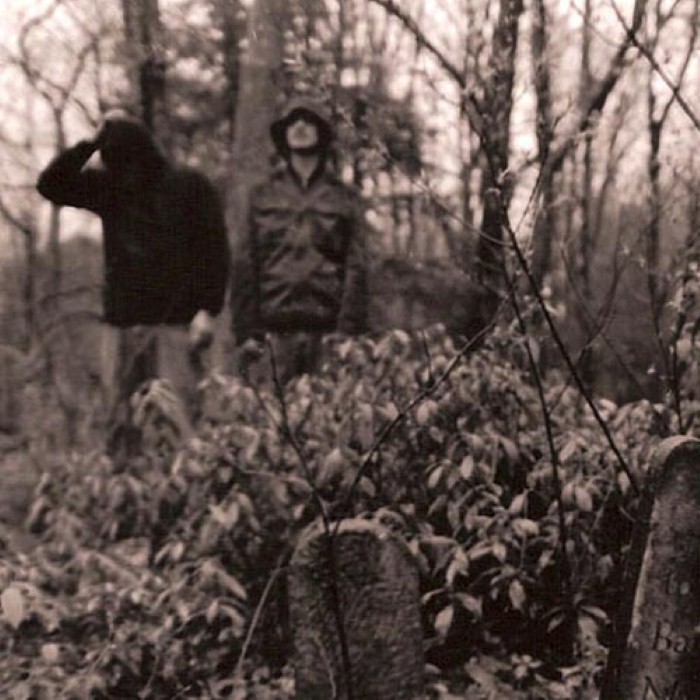
Have a Nice Life is an American post-punk / shoegaze duo from Middletown, Connecticut, formed in 2000 by Dan Barrett and Tim Macuga. The project is known for blending gothic rock, industrial, ambient, and drone elements into an atmospheric and emotionally intense sound. Barrett is also known for his solo project Giles Corey and the now-defunct band In Pieces, while Macuga has been involved with black metal project Nahvalr and Western Massachusetts hardcore band The Danger Strangers.
HAVE A NICE LIFE: How Two Connecticut Introverts Built a Cult Empire From a Budget of Under $1,000
Have a Nice Life, the Middletown, Connecticut post-punk duo, stands as one of underground music’s most improbable success stories — a band whose debut cost less than a thousand dollars to record and took years to find its audience, only to become one of the defining cult catalogs of the internet age. Dan Barrett and Tim Macuga, operating since 2000 under their own Enemies List Home Recordings imprint and later through San Francisco’s The Flenser, fused gothic rock, shoegaze, industrial drone, and black metal textures into a body of work that defies clean genre mapping. Their story is less about breakthrough moments than about slow, relentless gravity — the kind that pulls listeners in, holds them, and doesn’t let go.
Artist Profile
| Origin | Middletown, Connecticut, United States |
| Years Active | 2000 – present |
| Genre | Post-punk, shoegaze, gothic rock, experimental rock, post-rock, industrial |
| Labels | Enemies List Home Recordings; The Flenser |
| Members | Dan Barrett; Tim Macuga |
| Notable Side Projects | Giles Corey, Black Wing (Barrett); Nahvalr, The Danger Strangers (Macuga) |
| RIAA Certifications | None (independent catalog) |
| Albums in Catalog | 3 studio albums (2008–2019); 1 compilation; 2 EPs |
Performance Snapshot (Get Music Catalog)
| Total Listeners | 182,435 |
| Country Reach | 2 countries |
| Albums in Catalog | 1 |
| Top Markets | United States; United Kingdom |
Origin, Formation, and the Architecture of an Unlikely Debut
Dan Barrett and Tim Macuga first connected when their previous bands played shows together, and during a period when Barrett was studying abroad, the two began exchanging ideas via email, bonding over shared musical interests and thematic obsessions.
After Barrett returned to the United States, they formally established Have a Nice Life in Middletown, Connecticut.
The band’s earliest demos contained sounds suggestive of new wave and the gothic rock milieu of The Sisters of Mercy
— a lineage that would prove foundational but never restrictive.
Both Barrett and Macuga initially played acoustic guitar, self-distributing their home recordings via Myspace.
In 2003, Barrett founded the record label Enemies List Home Recordings
, which would become the operational spine of the project for years — a label as much about ethos as infrastructure.
Throughout the 2000s, the Middletown pair self-released and shared a number of demos and home recordings through early social media channels as well as through the in-house imprint.
What they were building, without a publicist or a booking agent, was a sonic logic peculiar enough to resist easy placement: guitars processed into walls of corroded noise, drum machines deployed with the bluntness of early industrial, and vocals so deeply buried in the mix they feel less like performances and more like transmissions from somewhere beneath the recording itself.
Recorded independently over five years on a budget of less than $1,000, the debut was released as a double album.
The structural ambition of that debut — two disc-length suites, each with its own internal logic and emotional gravity — announced a project with no interest in accessibility on anyone else’s terms.
Characterized by lo-fi production, dense layering, and lyrics exploring themes of death, depression, and existential despair
, the record put everything on the table immediately, without negotiation. That willingness to commit fully, at first release, to something so categorically difficult, is what separates Have a Nice Life from their many disciples.
Discography Highlights: Three Albums, Three Registers of Darkness
Without having any real expectations, Barrett and Macuga released their first collection, Deathconsciousness, in 2008 on their own Enemies List Home Recordings label.
The duo is best known for that debut album, which received little attention from professional music publications upon release but rose to cult classic status through its spread among online communities.
Platforms like Sputnikmusic and early 4chan music boards did the work that conventional press cycles declined to.
Retrospective acclaim has focused on the album’s emotional intensity, atmospheric cohesion, and DIY ethos, with critics later describing it as one of the most emotionally devastating records of its era.
On Album of the Year,
the record carries a user score of 91 from over 16,900 ratings
— an extraordinary number for an album with no label machinery behind it.
Deathconsciousness also arrived with a seventy-five-page zine
presenting the fabricated history of an obscure fictional religion from the 13th century called Antiocheanism — an anachronistically nihilistic belief system centered on the worship of the undoing.
This is not supplemental material; it is load-bearing. The zine recontextualizes every production choice — the drone passages that seem to have no destination, the mixolydian guitar lines dissolving under sidechain-compressed noise — as documents of a theological framework rather than genre exercises.
Six years elapsed before the follow-up.
The Unnatural World, their second studio album, was released on February 4, 2014, via The Flenser and the band’s own Enemies List Home Recordings, earning a Metacritic score of 79 and a Pitchfork rating of 7.8.
The record was
recorded between 2008 and 2012
, meaning much of it gestated in parallel with the slow-burning reputation of the debut. You can hear the catalog page for The Unnatural World on Get Music here.
A more energetic-sounding third full-length, Sea of Worry, appeared in 2019 in conjunction with The Flenser label.
It was their first album to feature a full band.
Pitchfork’s Arielle Gordon wrote that beneath the “metallic sheen of goth rock,” the album addresses the disquieting anxieties of adulthood with vengeful indignation
— a framing that positioned Sea of Worry as a middle-period pivot toward something more compositionally economical, if less formally radical than what preceded it.
The album closes with “Destinos,” a 14-minute sprawling epigraph described by some critics as a thesis statement for the current band.
Market Note
Have a Nice Life operates entirely outside the commercial music infrastructure, and yet their catalog IP is remarkably durable. The band runs on a model that precedes streaming logic: physical releases through The Flenser (vinyl, CD, cassette), direct-to-fan distribution, and community-driven word of mouth that has proven more resilient than algorithmic placement. The absence of RIAA certification is a structural fact of the independent format, not a market failure —
their user-score base of over 21,600 ratings on Album of the Year alone
signals a committed, high-engagement listener demographic rather than passive streaming traffic. The catalog’s sync potential is moderate but real: the guitar timbres and ambient-industrial passages of Deathconsciousness have obvious placement value in prestige TV and film contexts that favor emotional weight over sonic comfort. The primary demographic skews male, aged 18–30, with strong concentration in anglophone markets. Long-term catalog longevity is essentially guaranteed — this is a project with no commercial ceiling to disappoint.
Geographic Reception and the Internet as Distribution Infrastructure
Have a Nice Life is, structurally, a phenomenon of the early social web.
A sprawling double album that careened between ethereal opiate textures, dark-hued post-rock, shoegaze, and melancholic post-punk, Deathconsciousness had no publicity campaign to speak of, but thanks to online communities like Sputnikmusic and 4chan’s music board, it found its audience.
That path — community-first, press-second, geography-irrelevant — predicts exactly the kind of audience topology the band now holds: diffuse, self-organizing, and predominantly English-speaking, with particularly strong footing in the United States and the United Kingdom.
The American reception is rooted in a specific subcultural moment — the post-MySpace, pre-Spotify window when underground music moved through forums and file-sharing rather than curated playlists. Connecticut, as a state, carries almost no independent music infrastructure relative to New York or Boston, which meant that Barrett and Macuga built their listener base without the ambient support of a local scene. This outsider position became a creative asset. The sense of geographic and social remove that runs through the lyrics and production of Deathconsciousness is not artifice — it reflects the actual conditions under which the record was made.
British reception has been consistent, likely because the gothic rock and post-punk lineages that Barrett and Macuga draw from — Joy Division, The Sisters of Mercy, early Bauhaus — remain culturally resonant in the UK in ways that American rock criticism often undervalues.
Reviewers noted that Have a Nice Life play dark, brooding rock with more than a passing debt to Joy Division
, and UK listeners who maintain active relationships with those reference points tend to receive the project warmly.
The band performed at Roadburn Festival, including a full performance of Deathconsciousness
, which represents one of the more prestigious stages available to experimental and extreme music in Europe — further evidence that the audience extends well beyond the Connecticut basement aesthetic of the origin story.
In 2023, Have a Nice Life performed a surprise secret set at Roadburn the day before Barrett was scheduled to appear as Giles Corey, and the band also played Sick New World in Las Vegas on April 27, 2024.
These appearances — spanning the Netherlands and Las Vegas within a year — confirm that whatever geographic core their audience has, it is not locally bounded. The music moves where the forums and playlists carry it.
Critical Legacy: The Problem of Arriving After You’ve Already Mattered
The critical situation around Have a Nice Life is unusual in that their most important record was assessed almost entirely in retrospect.
In 2008, Deathconsciousness was released to near-total critical non-interest; six years later, by the time the band followed up with The Unnatural World, the debut had already become a force of underground influence and fanatic devotion.
This inversion — the audience arriving before the critics — shapes everything about how the catalog is understood. It means that critical assessments of the back catalog are always, to some degree, playing catch-up with communities that have already settled their verdicts.
The production methodology of Deathconsciousness is central to its critical identity. The lo-fi recording is not a limitation — it is load-bearing at a technical level. Barrett’s guitars are frequently processed through layers of distortion and reverb that collapse the frequency response into a mid-range murk, a texture that reads simultaneously as black metal’s wall-of-noise technique and shoegaze’s use of feedback as sustained harmonic content.
The album hybridizes black metal, drone, shoegaze, post-industrial, and post-rock characteristics into something that throws conventional genre categories aside.
What this means in production terms is that the listener never fully resolves what they are hearing — the tonal center shifts, the rhythm section is buried, and the vocals are treated as another textural layer rather than the melodic foreground. These are deliberate arrangement decisions, not home-recording accidents.
By the time The Unnatural World arrived in 2014, Pitchfork rated it 7.8 out of 10, and the record earned a Metacritic aggregate of 79.
Those are solid but not rapturous numbers, and they reflect the critical difficulty of assessing a band whose most significant work had already been retroactively canonized without institutional support.
The album doubled down on the noise and goth sides of the band’s sound and was well-received by their fervent fan base.
Sea of Worry in 2019 generated the most divided reception of the three albums.
Pitchfork covered it as a Arielle Gordon piece scoring it at 74
, while
Anthony Fantano at The Needle Drop called it HANL’s “stalest, least imaginative album yet.”
The critical divide maps neatly onto listener expectations: those who came to Have a Nice Life for extremity found Sea of Worry‘s relative accessibility anticlimactic. Those who came for compositional integrity and lyrical honesty found it a measured and mature progression.
Treble Zine argued that the album displays a growth and maturity that is equally startling and profound.
What the full arc confirms is that Have a Nice Life’s critical legacy rests primarily on a debut that professional music journalism largely ignored in real time. That debut’s reputation was built by listeners, through communities, across platforms that traditional critics did not frequent. The institutional belated recognition that followed — the Pitchfork reviews, the Roadburn invitations, the reissues through The Flenser — is important but secondary.
The band seamlessly blended shoegaze, post-punk, new wave, industrial, and noise with what listeners described as unparalleled depth and weight
, and that assessment originated not in editorial offices but in bedroom listening sessions and forum threads. It is a form of critical authority that the industry has spent the past fifteen years trying, and largely failing, to replicate algorithmically.
Frequently Asked Questions
Where should I start with Have a Nice Life’s catalog?
Deathconsciousness (2008) is the essential entry point — it is the record that defines the project’s ambition and the one that generated the cult following. It rewards patient, attentive listening; the double-album format is deliberate, and the payoff is proportional to the investment. For listeners who want a more direct route in, The Unnatural World (2014) offers a somewhat denser and more compressed statement — still difficult, but more structurally legible on a first pass.
Is Have a Nice Life still active?
Have a Nice Life has been active since 2000 and has not disbanded.
The duo began regularly performing with a full band in 2017
, and
as recently as April 2024, they played Sick New World in Las Vegas
, confirming ongoing live activity. No new studio album has been announced as of October 2026, but the band’s recording pace has always operated on a timeline independent of industry expectations.
Who has Have a Nice Life collaborated with, and what are the members’ other projects?
Dan Barrett has released solo work primarily under the aliases Giles Corey and Black Wing, and has been a member of several other bands including Gate, Nahvalr, In Pieces, and The Cappuccino Jellybeans.
Macuga has been involved with the black metal project Nahvalr and the Western Massachusetts hardcore band The Danger Strangers.
The band also continued to manage their Enemies List label, releasing like-minded albums from other artists that catered to their brand of doom rock.
Collaboration in the traditional guest-feature sense is not part of their working method; their creative energy channels outward through label curation and solo projects rather than cross-project appearances.
Which artists are sonically similar to Have a Nice Life?
Listeners drawn to Have a Nice Life tend to move toward Planning for Burial, Grouper, and Deafheaven for different corners of the same territory —
all three share The Flenser’s roster
, which functions as a reasonable curatorial map for this aesthetic zone. Further afield, the post-punk lineage points back to Joy Division, the late-period work of The Cure, and early Swans for Barrett’s low-end brutalism. For the shoegaze dimension, My Bloody Valentine and Slowdive are the obvious coordinates. Browse the The Unnatural World page on Get Music for related catalog suggestions.
Written by Setenay Mira KAYA — setenaymirakaya.com.tr
Published: October 9, 2026 · Girls Choice Music / Get Music — The Atlas of Recorded Music
Submit your release for editorial consideration: t.me/ViralSubmissions
1 album in our catalog
All releases
Complete release history from MusicBrainz — albums, EPs, singles, live, and more.
Album (3)
- 2019Sea of Worry
- 2014The Unnatural World
- 2008Deathconsciousness
EP (1)
- 2010Time of Land
Single (2)
- 2024Basic
- 2024When I Go Deaf
Album (Live) (1)
- 2010Live at The Stone NYC
Single (Demo) (1)
- 2023Sisyphus (Demo)
Other (Compilation) (2)
- 2014Anno Domini: Collected Demos 2006–2014
- 2014Voids II
Album (Demo) (1)
- 2009Voids
EP (Demo) (1)
- 2002Have a Nice Life vs. You