
Listen / Follow
Tags
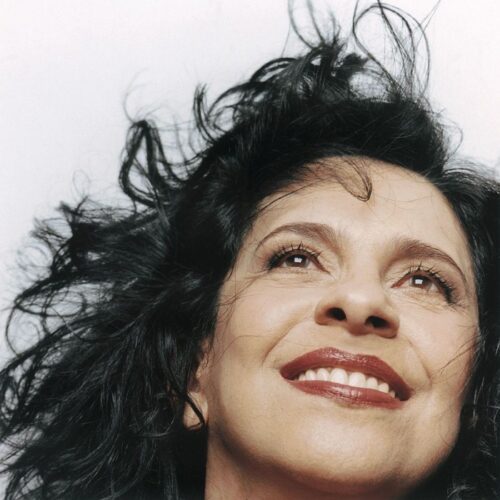
About Gal Costa
Maria da Graça Costa Penna Burgos (26 September 1945, Salvador, Brazil — 9 November 2022, São Paulo, Brazil), best known as Gal Costa, was a popular Brazilian MPB singer and musician, regarded by many as Brazil's greatest female singer of all time. Also known as "Musa da Tropicália" (Muse of Tropicália), she was one of the most diverse singers in Brazil, moving across all musical genres and being elected as the greatest voice in Brazilian music by Rolling Stone, as well as one of the 10 greatest singers in the world by Time.
Gal Costa: Five Decades of Voice, Mutation, and Irreducible Authority
Gal Costa, the Brazilian MPB and tropicália singer born in Salvador, Bahia, stands as the most critically decorated female vocalist in the history of recorded Brazilian music — a career spanning 1964 to 2022 that moved through bossa nova, psychedelic rock, samba, and avant-garde pop without ever losing tonal center.
Known as “Musa da Tropicália” (Muse of Tropicália), she was elected the greatest voice in Brazilian music by Rolling Stone magazine, as well as one of the 10 greatest singers in the world by Time magazine.
The scope of her catalog — from the raw counterculture agitation of 1968 to the pandemic-era intimacy of her final studio record in 2021 — makes her not just a defining figure of her generation but a measuring instrument for what Brazilian popular music has been capable of at its most ambitious.
Artist Profile
| Origin | Salvador, Bahia, Brazil |
| Born / Died | 26 September 1945 — 9 November 2022 |
| Years Active | 1964–2022 |
| Genres | MPB, Tropicália, Bossa Nova, Psychedelia, Samba, Rock |
| Labels | RCA; Philips; PolyGram; Universal; BMG; Trama; Biscoito Fino |
| Notable Collaborators | Caetano Veloso, Gilberto Gil, Maria Bethânia, João Gilberto, Arto Lindsay, Kassin, Moreno Veloso, Zeca Veloso, Seu Jorge, Tim Bernardes, Criolo |
| Major Awards | Latin Grammy Lifetime Achievement Award (2011); 12× Brazilian Music Awards; APCA Award; Shell Prize |
| Albums in Catalog | 35+ studio, live, and compilation releases (1967–2021) |
Performance Snapshot
| Total Listeners (Get Music) | 17,995 |
| Countries Reached | 2 |
| Albums in Catalog | 1 |
| Top Markets | Brazil, Portugal |
From Salvador to the Tropicália Vanguard: Origins and Signature Voice
Born Maria da Graça Penna Burgos Costa in 1945, Gal Costa was raised in Salvador, Bahia, where she took her first steps into music with the likes of Caetano Veloso, Gilberto Gil, and Maria Bethânia.
That early milieu — a circle of young Bahian artists who were simultaneously fluent in João Gilberto’s bossa nova minimalism and hungry for something louder, stranger, and more politically loaded — would determine the structural sensibility Costa carried through six decades of recording.
Her first recording was a duet on the debut album of Maria Bethânia in 1965, followed by her first single — including “Eu Vim da Bahia” (Gil) and “Sim, Foi Você” (Caetano) — released by RCA.
These were early dispatches from a voice still finding its proportions, closer to the cool restraint of bossa nova than to the electric confrontations that were coming.
Her first LP was released in 1967, alongside Caetano Veloso, titled Domingo, on the Philips label.
The record was bossa nova in architecture but already slightly off-angle in affect — a quality that would sharpen dramatically within a year.
In 1968, she recorded two tracks on the LP manifesto Tropicália: Ou Panis Et Circensis — “Mamãe Coragem” and “Baby” — that became her first hits.
Also in 1968, she achieved great popularity at TV Record’s IV FMPB in São Paulo when she won first place for “Divino Maravilhoso,” by Gilberto Gil and Caetano Veloso.
What those performances clarified — across the fuzz guitars, the distorted studio collaging, and the confrontational television stages of late-1960s Brazil — was that Costa’s instrument was not merely large but adaptive: a mezzo-soprano with the timbral flexibility to move from whisper-register intimacy to a full-throated projection that could cut through electric noise without losing its grain.
Her majestic mezzo-soprano vocal skills brought new approaches to the scene and inspired artists of various generations, such as Marisa Monte and Marília Mendonça.
Tropicália icons Gilberto Gil and Caetano Veloso were exiled by Brazilian leaders for their anti-authoritarianism, and Costa flouted authority by continuing to sing their songs.
The political weight of that decision — staying, performing, refusing aesthetic silence — positioned her as more than a vocalist. She was by that point a cultural statement in herself.
A Catalog Without Borders: Key Albums and Structural Evolution
The arc of Costa’s discography resists the usual logic of consolidation. Each decade brought not a refinement of an established formula but a recalibration of what her voice could carry.
Her first solo Philips album, Gal Costa, appeared in 1969.
It was produced by Manoel Barenbein and
was later ranked the 80th best Brazilian album of all time by the Brazilian Rolling Stone.
The second album released that same year — commonly referred to by its opening track “Cinema Olympia” — pushed further into psychedelic territory.
It is considered by the public and critics alike as her most psychedelic and experimental album.
Two distinct records in a single calendar year, each pulling in a different direction: that restlessness was characteristic.
The 1971 live double album Fa-Tal — Gal A Todo Vapor was ranked 20th on Rolling Stone Brasil’s list of the 100 greatest Brazilian albums of all time,
a remarkable position for a live document. It captured her stage persona at its most combustible — long before the concept of a “live album as definitive statement” was normalized in Brazilian popular music.
In 1973, she appeared at MIDEM in Cannes and recorded the LP Índia, drawn from the accompanying show,
marking an early and decisive international moment in her catalog.
She reunited with Caetano, Gil, and Bethânia for the 1976 album Os Doces Bárbaros and a series of concerts under the same name.
In 1994, Gal released the award-winning album O Sorriso do Gato de Alice, produced by Arto Lindsay, featuring the hit “Nuvem Negra” (Djavan).
The Lindsay collaboration is worth isolating: his production approach — built on tension between raw signal and high-concept arrangement — mapped directly onto Costa’s own preference for risk over comfort. Their work together represents one of the more formally interesting pairings in Brazilian pop’s 1990s period.
In 1997, she commemorated 30 years of her career with the CD and video Acústico MTV on BMG, with many special guests.
On our catalog, Costa’s 2002 album Gal Bossa Tropical — released through Abril — is available for exploration.
Costa remained a viable and active artist in the 21st century, issuing new recorded material even as repackaging of her previous work hit the market; Gal Bossa Tropical was released in 2002 by Abril.
The album triangulates between bossa nova arrangement frameworks and the warmer tonal palette of tropical pop — a late-career document that confirmed her ability to inhabit older forms without treating them as nostalgia. It was also nominated at the Latin Grammy Award for Best MPB Album in 2003, confirming its standing among her peers.
In 2011, she reunited with Caetano Veloso for an album titled Recanto, worked with his son Moreno and Kassin on 2013’s Estratosférica, duetted with fellow Brazilian legend Maria Bethânia on 2018’s A Pele do Futuro, and on 2021’s Nenhuma Dor, worked with another of Veloso’s sons, Zeca.
Recanto — with its electronic textures and processed vocal treatments — was a deliberately disruptive choice for an artist in her mid-sixties. Nenhuma Dor (No Pain), her final studio record,
brought ten duets with male voices
, including Seu Jorge, Tim Bernardes, and Criolo, and
was recorded and mastered by the artists themselves during the pandemic.
Market Note
Gal Costa’s catalog carries exceptional IP strength across Brazilian and Lusophone markets. With more than 35 studio, live, and compilation releases distributed through a succession of major-label imprints — RCA, Philips, PolyGram, Universal, BMG, and the boutique Biscoito Fino — her back catalog has been subject to multiple reissue cycles, maintaining retail visibility across format shifts. The sync potential of her 1968–1973 output is substantial: tracks from the Philips period have been licensed to international film and documentary productions seeking authentic tropicália placement. Her fan base skews toward educated, catalog-oriented listeners aged 30–65 in Brazil and Portugal, with a growing second-wave audience in Europe and Japan driven by reissue labels and streaming editorial playlisting.
Her Latin Grammy Lifetime Achievement Award in 2011
provided a formal critical seal that accelerated international streaming discovery. The Nenhuma Dor collaborations with Criolo and Tim Bernardes deliberately bridged her audience to younger Brazilian listeners — a calculated and effective generational handoff.
1 album in our catalog
All releases
Complete release history from MusicBrainz — albums, EPs, singles, live, and more.
Album (25)
- 2003Todas as coisas e eu
- 2002Gal bossa tropical
- 2001Gal de tantos amores
- 1998Aquele frevo axé
- 1995Mina d'água do meu canto
- 1993O sorriso do gato de Alice
- 1992Gal
- 1990Plural
- 1987Lua de mel como o diabo gosta
- 1985Bem bom
- 1984Profana
- 1983Baby Gal
- 1982Minha voz
- 1981Fantasia
- 1980Aquarela do Brasil
- 1979Gal tropical
- 1978Água viva
- 1977Caras & bocas
- 1976Gal canta Caymmi
- 1974Cantar
- 1973Índia
- 1970Legal
- 1969Gal
- 1969Gal Costa
- 1967Domingo