Listen / Follow
Tags
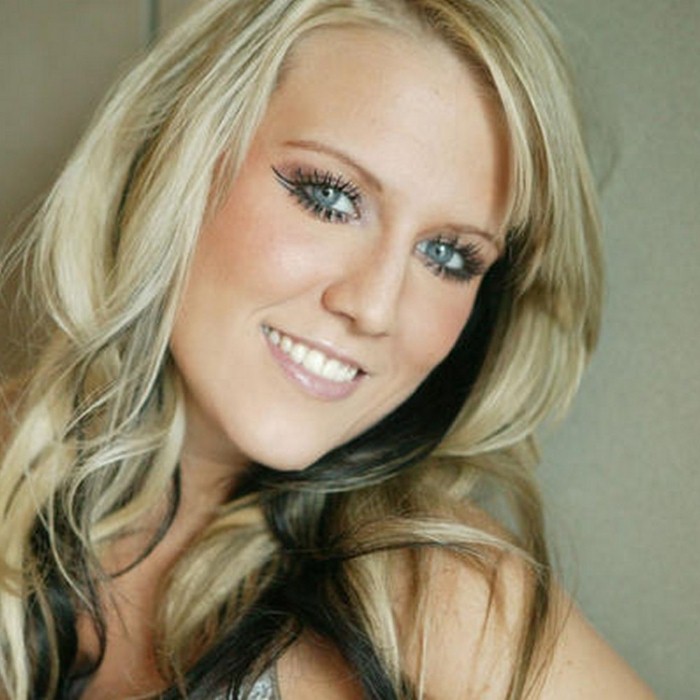
About Cascada
Cascada is comprised of singer Natalie Horler and two German DJs and producers, Yanou and DJ Manian. Natalie was born in Bonn, Germany on September 23 1981, and is of English descent. Cascada, formerly known as Cascade, is recognized around the world as the trio behind the hit single "Everytime We Touch", a cover of the Maggie Reilly song. Everytime We Touch was released in the United States by Robbins Entertainment in December 2005, and peaked at #10 on March 11
Cascada: From Bonn to the Billboard Hot 100 — Eurodance’s Most Durable Crossover Machine
Cascada, the German Eurodance trio from Bonn, built one of the 2000s’ most commercially resilient dance catalogs, charting in over 20 countries and selling approximately 30 million records worldwide across a career spanning two decades.
Founded in 2004 by singer Natalie Horler and composers and record producers DJ Manian and DJ Yanou
, the group fused the propulsive kick-snare mechanics of hands-up with melody-forward vocal hooks that translated equally well on UK Radio 1 playlists, Irish chart rundowns, and American dance radio. Their name — drawn from the Spanish word for waterfall — proved apt: momentum, once gathered, barely stopped. From the RIAA-platinum “Everytime We Touch” through the UK chart-topping “Evacuate the Dancefloor,” through Horler’s solo stewardship of the project in the 2020s, Cascada’s arc is the story of a production team with genuine pop instinct and an unexpectedly long runway.
Artist Profile
| Origin | Bonn, North Rhine-Westphalia, Germany |
| Years Active | 2004 – present |
| Genre | Eurodance, Hands Up, Dance-Pop, Electropop |
| Labels | Zooland Records, All Around the World, Robbins Entertainment, Spinnin’ Records, Kontor, Warner, Stars by Edel |
| Members | Natalie Horler (vocals); former: Manuel Reuter / DJ Manian (production), Yann Peifer / Yanou (production) |
| Notable Collaborators | Jax Jones, Timmy Trumpet |
| Certifications | RIAA: Platinum (“Everytime We Touch”); BPI: Platinum (debut LP, Evacuate the Dancefloor); SNEP: Gold; IRMA: Gold |
| Albums in Catalog | 6 studio albums, 6 compilation albums, 1 remix album, 1 acoustic album |
| Awards | World Music Award — World’s Best-Selling German Artist (2007); Napster Award — Most-Played Dance/Electronic Recording (2006) |
Performance Snapshot — Get Music Catalog
| Countries Reached | 7 |
| Albums in Catalog | 1 (Ain’t No Mountain High Enough, 2024) |
| Top Markets (career-wide) | Ireland (No. 1 LP chart), United Kingdom, Germany, France, Netherlands, Australia |
| Career Records Sold | ~30 million worldwide |
The Machine Room: How Manian, Yanou, and Horler Built a Transatlantic Formula
Natalie Horler took singing lessons from the age of 14 and began performing in cocktail bars around Bonn; by 17, she had landed her first studio work, recording tracks for various DJs — work that would eventually connect her with Manian and Yanou.
In 2004, through that studio circuit, she met Cologne-based producers Yann Peifer (Yanou) and Manuel Reuter (Manian), who invited her to front their new project.
The pairing made structural sense: Peifer and Reuter operated inside a hands-up / Eurodance production idiom that prized four-on-the-floor drive, tightly gated kick transients, and melodic vocal lines sitting above mid-heavy synth pads — a template that, in the right year, could travel.
Originally, they released music under the name Cascade, but due to Kaskade, another artist with a similar name, threatening legal action, they changed it to Cascada.
The new name — cascada, Spanish for “waterfall” — carried a momentum metaphor they would spend the next decade validating.
Simultaneously, the trio released music under the names Siria, 3XM, Phalanx, Manyou, Scarf!, and Akira, but ended those projects as the success of Cascada accelerated.
The production methodology Manian and Reuter developed for Cascada was disciplined. The tempo almost never strayed from the 138-142 BPM range that defined mid-2000s hands-up, but they layered melodic content with genuine care — suspended chord voicings in the bridge, a willingness to let Horler’s upper register sit dry and unprocessed in the verse before pulling it wide in the chorus.
Horler’s background was itself musical: her father, David Horler, is a jazz trombonist who relocated to Germany to work as a musician.
He worked with the likes of Quincy Jones, Stan Getz, and Tony Bennett
, which meant Horler grew up in a household where pitch and phrasing were taken seriously — an advantage that separates her delivery from the flat-affect vocal features common to lower-budget Eurodance product.
In 2006, Manian and Yanou added another dimension to their careers as songwriters and producers by founding the record label Zooland
, which would serve as Cascada’s primary home through the bulk of their commercial peak. The vertical integration of a production team and its own label is a recurring feature of long-lived European dance acts — it gives the principals full control over release scheduling, sync licensing, and catalog ownership, all of which Cascada would need as the streaming era reshaped demand for their material.
Discography Highlights: Platinum, Number Ones, and a Late-Career Reinvention
The debut album, Everytime We Touch (March 2006, Zooland / Robbins), established the template for everything that followed.
It peaked at number 2 in the UK, number 3 on the US Dance Albums chart, and reached number 1 in Ireland
— a geographic spread that most Eurodance acts could not engineer.
The title single gained platinum and gold certifications across the globe, including platinum certification by the RIAA.
The album remained in the UK Top 40 for 24 weeks.
It also earned two World Music Award nominations, with the group winning the World’s Best-Selling German Artist award.
The record’s engineering choices hold up to scrutiny: Manian and Yanou kept the low-end clean, avoided the muddy sidechain compression that dated many contemporaries, and gave Horler enough headroom in the mix that her phrasing — particularly on the chorus’s interval leaps — could register as a feature rather than a texture.
Perfect Day (December 2007, Zooland) followed without surrendering significant territory.
Led by the hit single “What Hurts the Most,” it continued Cascada’s profile as one of the world’s top-ten selling dance acts.
The single was a cover of the Rascal Flatts track, and Cascada’s arrangement — accelerated tempo, synthetic orchestral pads recast as pure synth leads — demonstrated the group’s preference for taking emotionally indexed source material and reframing it inside a higher-energy structural grid. The album reached number 9 in the UK and number 6 in Ireland.
The commercial apex came with Evacuate the Dancefloor (July 2009, Zooland / All Around the World).
Recorded at Plazmatek Studio in Cologne and Yanou Studio 1, it fused Eurodance, dance-pop, and electropop.
The title single entered the UK Singles Chart at number one, becoming Cascada’s first UK number one.
It sold 61,211 copies in its debut week — outselling the competition — and a second week at number one followed, with sales climbing to 64,260 copies; it finished as the 31st-highest-selling UK single of 2009.
The track also reached the top five in Australia, Canada, France, Germany, Ireland, and New Zealand.
The song was nominated for an MTV Video Music Award and became a fixture in dance-oriented video games.
The most recent studio entry, Studio 24 (October 2024, Stars by Edel), marks a structural inflection point.
Since 2021, Natalie Horler has fronted Cascada as a solo act, and Studio 24 formalizes that configuration as her fifth studio release under the name.
Horler received her first official songwriting credit on this album, contributing to three original tracks.
That detail carries weight: after nearly twenty years as a performer-for-hire within the Manian-Yanou production system, Horler is now the primary creative agent of the project, which changes both the IP structure and the artistic accountability of whatever comes next. The album is available in full at Get Music — Ain’t No Mountain High Enough (2024), Cascada’s current catalog listing on this platform.
Market Note
Cascada’s IP strength sits almost entirely in three catalog singles: “Everytime We Touch,” “Evacuate the Dancefloor,” and “What Hurts the Most.”
In both 2010 and 2014, Cascada’s music was the second-most downloaded of all time in the dance category, trailing only David Guetta.
That catalog longevity translates directly into consistent sync potential — fitness app playlists, nostalgia-format radio, and 2000s revival event bookings all generate passive licensing revenue from those three titles. The demographic skew is European-millennial (25-38), a cohort now large enough on streaming platforms to sustain mid-tier catalog performance without active promotion.
Cascada has also demonstrated collaborative flexibility, working with Jax Jones and Timmy Trumpet
— two producers with distinct generational footprints — which suggests the Horler-led version of the act understands the need to index onto younger audience graphs. The Stars by Edel deal for Studio 24 gives the project a European major-adjacent distributor for physical and digital formats, a notable upgrade from pure independent positioning.
1 album in our catalog

All releases
Complete release history from MusicBrainz — albums, EPs, singles, live, and more.
Album (6)
- 2024Studio 24
- 2012It's Christmas Time
- 2011Original Me
- 2009Evacuate the Dancefloor
- 2007Perfect Day
- 2006Everytime We Touch
EP (2)
- 2006Ready for Love E.P.
- 2006Remix E.P.
Single (3)
- 2005Everytime We Touch
- 2004Miracle
- 2004Bad Boy
Album (Compilation) (9)
- 2018Best of Cascada (Wild Nights Tour)
- 2013The Best of Cascada
- 2013Acoustic Sessions
- 2012The UK Collection
- 2012Back on the Dancefloor
- 2010Just the Hits
- 2010Cascada 3D Special Edition
- 2010Platinum
- 2007The Essential Cascada Remixed Singles
EP (Remix) (1)
- 2020Remix EP 2020
Album (Remix) (4)
- 2012Her Complete Remixes Collection
- 2006The Remix Album
- 2006Waterfall: Essential Dance Remix Collection
- 2006The Offical Remix Album