At a glance
Where the world is listening
YOU AND I: JEFF BUCKLEY’S 1993 VAULT SESSIONS, FINALLY HEARD
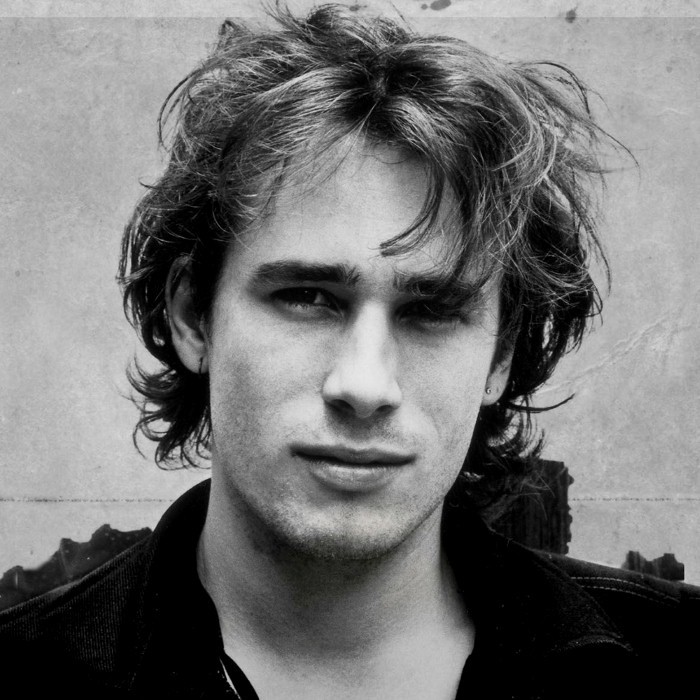
Jeff Buckley’s You and I (Legacy Recordings, 2016) delivers his earliest Columbia studio recordings — ten solo performances taped in 1993, mostly covers, finally made public.
Released on March 11, 2016, on Legacy Recordings, the songs were recorded in 1993 and represent some of his earliest recordings for Columbia.
What arrives is less a formal album than an annotated sketchbook — fascinating as document, occasionally breathtaking as music, and, like most posthumous excavations, at its best when it stops trying to be something it was never intended to become. The question isn’t whether Buckley was extraordinary. That’s been established. The question is what this particular cache of tape actually adds.
Album Credits
| Artist | Jeff Buckley |
| Released | March 11, 2016 |
| Genre | Alternative Rock / Singer-Songwriter |
| Label | Legacy Recordings / Columbia Records (Sony Music Entertainment) |
| Producer(s) | Steve Addabbo & Steve Berkowitz (tracks 2–10); Andy Wallace (track 1); Alison Raykovich, Darren Salmieri, Mary Guibert (executive) |
| Tracks | 10 |
| Runtime | approx. 47 min. |
| Lead Single(s) | “Everyday People” (Record Store Day 7″, 2016) |
Performance Snapshot
| Global Listeners | 47,413 |
| Total Scrobbles | 329,365 |
| Countries Charting | 43 |
| Strongest Market | United States — 82,219 listeners |
| Top 3 Markets | United States · Brazil · United Kingdom |
The Signal Chain: Production, Instrumentation, and Sonic Architecture
The sessions were designed to produce what A&R rep Steve Berkowitz referred to as a “Table of Contents” for the singer.
That institutional framing is worth keeping in mind when you listen. These are not recordings made for an audience. They are a formal inventory of one musician’s range at the moment he entered the professional machinery. The miracle — and the limitation — of You and I is that both of those facts are audible simultaneously.
The Shelter Island Sound sessions were recorded and mixed live, directly to a Panasonic SV-3700 DAT machine, Neumann U-47 vocal mic, Neve 1064 mic preamps, MCI 636 mixing desk, EMT 140 and EMT 250 reverbs.
That is a signal chain that belongs more to early-nineties jazz documentation than to rock production — and it shows. There is no multitrack safety net. No punch-ins.
Jeff played a Telecaster through Steve Addabbo’s Fender Super Reverb (1965) amp, Addabbo’s Guild F-50 acoustic guitar, Wurlitzer electric piano, and harmonium.
The result is a dry, intimate acoustic field with very little separation between room noise and performance. The EMT 140 plate reverb adds the only real spatial dimension; everything else is front and center, unprocessed.
The production credit for track one — “Just Like a Woman” — goes to Andy Wallace, recorded separately in November 1993 at Bearsville Studios in Woodstock, New York.
Andy Wallace produced, engineered, and mixed that track.
The Bearsville recording has a marginally fuller low-mid register than the Shelter Island material, which was captured in a single live pass. That contrast in tonal density is faint but audible on headphones, particularly in the way Buckley’s lower register sits in the mix on the Dylan cover versus the more recessed presentation on “Calling You.”
Despite the circumstances, there is little sense of pressure or supervision in these recordings. The picture that You and I paints is one of Jeff Buckley, alone with his guitar and a microphone with an engineer and the entire world separated from him by a pane of soundproof glass.
That is, in structural terms, close-microphone singer-songwriter recording at its most exposed — no effects chain doing narrative work, no arrangement offering emotional scaffolding. The Neve preamps give the vocal a clean, slightly warm head, but the dynamic range is enormous and unmanaged, which is both the record’s greatest strength and its most technically contentious feature. Listeners who came in through PJ Harvey’s I Inside the Old Year Dying — another album that prizes stripped-back timbre over production polish — will find a familiar ethos here, though Harvey’s record is, paradoxically, far more deliberately constructed.
The Interpreter’s Art: Songwriting, Covers, and Vocal Register
The album consists mainly of cover songs.
Eight of the ten tracks are interpretations. The two originals — an early version of “Grace” and the unfinished sketch “Dream of You and I” — function more as orienting documents than completed works.
The album also features two original Buckley compositions: an early demo of “Grace” which would later appear on his debut album of the same name and “Dream of You and I.” Album producer Steve Addabbo had opined that, at that stage of his career, Buckley may have been so adept at covers that he had difficulty coming up with his own material.
That is a frank production-side observation, and it is born out by the listening experience. The covers here are, with few exceptions, more fully inhabited than the originals.
The repertoire tells you something specific about Buckley’s reference points at twenty-six.
The tracklist spans Bob Dylan’s “Just Like a Woman,” Sly & The Family Stone’s “Everyday People,” “Don’t Let the Sun Catch You Cryin'” (first recorded by Louis Jordan), an original version of “Grace,” Jevetta Steele’s “Calling You,” the original “Dream of You and I,” The Smiths’ “The Boy With the Thorn in His Side,” the traditional blues “Poor Boy Long Way From Home” (Bukka White), Led Zeppelin’s “Night Flight,” and The Smiths’ “I Know It’s Over.”
That is a remarkably wide tonal bandwidth for a single sitting — pre-war blues, postwar jazz, British indie, classic rock, soul. The breadth is exactly the point. This was a young musician demonstrating, to a room of label executives, that he could navigate all of it.
Buckley’s voice in 1993 is not significantly different from what it became on Grace a year later, but the lack of arrangement strips away the drama and leaves just the instrument itself. His four-octave range is deployed with less strategic intent here than on Grace; he reaches for the upper register reflexively rather than architecturally.
The introduction to the third track, “Don’t Let the Sun Catch You Cryin’,” has Buckley delivering a barely audible a cappella verse before launching into the body of the song. This beguiling prelude packs all of the juice of the song — the charm, the life, the message — into a scant twenty seconds of music.
Moments like that one are not the product of calculation. They are the product of a singer completely unselfconscious in a recording space, and that quality — elusive in formal production contexts — is what makes You and I worth returning to even for skeptics of the posthumous release cycle.
There is a different version of The Smiths’ “I Know It’s Over,” as well as an unheard rendition of “The Boy With the Thorn in His Side,” proving that Buckley may have been one of the most capable voices to take on Morrissey’s aching and trembling vocal lines.
The fifth-relation tension in Morrissey’s vocal lines — the unresolved melodic intervals that give The Smiths their particular ache — suits Buckley’s own tendency to approach resolution obliquely, suspending in the upper register before descending.
While “The Boy With the Thorn in His Side” is a fine moment on the record, the well-placed closer “I Know It’s Over” is this collection’s crown jewel.
Market Note: Posthumous Catalog IP and the Long-Tail Demand Curve
Jeff Buckley’s You and I debuted at No. 58 on the Billboard 200 — nearly 19 years after his death, making it his highest-charting album. The from-the-vaults set bowed with 10,000 equivalent album units earned in the week ending March 17.
On the UK Official Albums Chart, You and I peaked at No. 16 in the week of March 24, 2016.
These are meaningful catalog IP metrics. The album’s streaming footprint — 329,365 total scrobbles across 43 countries, with the United States contributing 82,219 listeners — reflects a demand structure driven by completionist fandom and algorithmic discovery rather than active radio cycling. The scrobble-to-listener ratio (approximately 6.9 plays per unique listener) signals deep, repeat engagement from a narrow but committed audience. Brazil (31,363 listeners) and the UK (19,191) confirm the two markets most durably loyal to Buckley’s back catalog, a pattern consistent across his entire discography. The sync potential of this material is moderate — the stripped-back acoustic arrangements lend themselves to prestige television and film placement (documentary, coming-of-age drama), and the covers of Smiths and Dylan material carry recognizable IP anchors that increase placement probability. Catalog longevity here is not driven by this release itself, but by its function as a gateway back into Grace — the album most listeners discover first.
The recordings came to light when a research team dug into archives for the 20th anniversary edition of Grace.
Geographic Reach and Cultural Lineage
Buckley’s audience has always been disproportionately concentrated in English-language markets and, specifically, in the United States and the United Kingdom — the two countries whose respective 1990s alternative rock scenes he most directly intersected. The Performance Snapshot confirms this: the US and UK together account for roughly 215,000 of the album’s total listener count, with the US alone responsible for nearly a quarter of global engagement. That concentration is not surprising.
Buckley toured extensively to promote Grace, with concerts in the US, Europe, Japan, and Australia.
Those tour markets correspond almost precisely to the album’s current strongest listener geographies.
Brazil’s position as the second-largest market — 31,363 listeners, ahead of Canada and Australia — warrants closer attention. Brazilian affinity for Buckley is a consistent feature across his catalog and reflects a broader pattern in which American and British singer-songwriters of the 1990s alternative lineage command substantial streaming audiences in Brazil, where the emotional register of that era maps onto a domestic tradition of MPB (Música Popular Brasileira) balladeering and café-circuit guitar introspection. Buckley’s phrasing — melodically ornamented, harmonically unresolved, occupying the register between speech and song — crosses cultural context in a way that more rhythmically complex alternative rock often doesn’t.
The Netherlands (3,577 listeners) and Germany (2,840) are noteworthy as smaller but consistent European markets. Both have historically supported American singer-songwriter catalog through the continent’s vinyl collector economy and public radio infrastructure. Poland (3,234 listeners) and Chile (2,683) round out the geographic spread in ways that suggest You and I has a modest but durable reach in markets where Grace-era Buckley devotion runs deepest among younger listeners discovering the catalog retroactively.
After Buckley’s death, his critical standing grew, and he has been cited as an influence by singers such as Thom Yorke of Radiohead and Matt Bellamy of Muse.
That lineage is relevant to how You and I circulates today. Listeners who arrive via Radiohead or early-2000s British alternative often find their way to Buckley through algorithmic adjacency. You and I occupies a specific niche within that discovery path: it arrives after Grace and before the completist digs into the live archive, functioning as a transitional document — early, unguarded, free of the pressure that shaped his only completed studio record.
Honest Assessment: What Holds and What Doesn’t
These recordings came to light when a research team was digging through the archives for the 20th anniversary edition of Grace.
That origin story matters for critical context. You and I is not a record Buckley assembled or intended. It is an archival recovery presented in album format, and holding it to the same standard as a designed release would be a category error. That said, the framing as a formal album — with track sequencing, a release date, physical formats — invites exactly that scrutiny. So let’s apply it.
The record doesn’t really feel like a unified album, probably because these recordings were never meant to comprise one. As you might expect from a collection of demos assembled years after the fact, the tone shifts and the quality varies. There is a casual, off-the-cuff feel to much of the album that occasionally slips into sloppiness. At its best moments, though, You and I‘s casualness only serves to underline what an immense talent Buckley was.
The strong end of the tracklist is genuinely striking.
The guitar intro to Buckley’s cover of Bob Dylan’s “Just Like a Woman” is tender, wistful, and poignant. There is a sense of ennui that is especially touching given the circumstances of this music’s circulation.
And “I Know It’s Over” — seven minutes of solo voice and guitar working through Morrissey’s most austere lyric — is among the best things Buckley committed to any format.
It would be easy to attribute this to a connection to Buckley himself — one performer whose artistic career was all but over before it could really begin — but those overtones are not what distinguish the track. This is one moment on the record where Buckley truly and wholly loses himself in the performance.
On the weaker end:
the rollicking feel of songs like “Poor Boy Long Way from Home” and “Night Flight” isn’t Buckley’s forte.
He was a singer whose gifts were most fully expressed in slow-to-mid-tempo material built around harmonic suspension. The delta blues mode requires a different kind of physicality — guttural, rhythmically declarative — that his instrument did not naturally produce at twenty-six. These tracks aren’t failures, exactly, but they are the clearest evidence that this was a demonstration session rather than a curated statement.
You and I lacks the depths and textures of Grace — the intoxicating communion with other musicians, the wild strangeness of his own nascent songwriting and the assuredness that came with locating his place in music. Yet, even without all that, Buckley’s raw talent alone remains an astonishing thing.
That is the correct summary verdict. This is not a rival to Grace. It is not designed to be. It is a window into a moment — a young musician sitting in a New York studio, running through the songs that shaped him,
while calling his mother in the middle of the night about fears of being fired.
That context transforms the listening experience. The humanity of it, the uncalculated quality of the performances, is what keeps You and I from being merely another posthumous catalogue maneuver. It doesn’t always work as an album. It almost always works as a document. For an artist this closely observed and this thoroughly mourned, that is enough.
Frequently Asked Questions
Where can I stream or buy Jeff Buckley’s You and I?
You and I is available across all major streaming platforms including Spotify, Apple Music, Amazon Music, and YouTube Music. Physical editions — CD in jewel case with an 8-page booklet, and a 180g double-LP gatefold — were issued through Legacy Recordings / Columbia in 2016 and remain in print through standard music retail channels. The album is also available as a digital download via Apple Music and Amazon.
How was You and I received critically and commercially?
The album debuted at No. 58 on the Billboard 200 — Buckley’s highest-charting release ever — with 10,000 equivalent album units in its debut week, 9,000 of which were pure album sales.
In the UK, it peaked at No. 16 on the Official Albums Chart.
Critical reception was mixed-to-favorable: most outlets acknowledged the archival value of the release while noting its inherent limitations as a non-designed document. Metacritic’s user score sits at 7.7 out of 10, reflecting generally favorable audience sentiment.
Which tracks on You and I are most worth hearing?
The album’s most fully realised performances are bookends: “Just Like a Woman” (Bob Dylan), which opens the record with understated precision, and “I Know It’s Over” (The Smiths), the seven-minute closer where Buckley disappears most completely into the material. “Don’t Let the Sun Catch You Cryin'” is worth hearing for its a cappella opening alone. The early demo of “Grace” is essential for listeners who know the Grace album well — hearing the song in its skeletal, guitar-only form clarifies how much of the emotional weight in the finished version came from the arrangement rather than the melody.
If I enjoy You and I, which similar releases should I explore?
For listeners drawn to the stripped-back intimacy of these sessions, PJ Harvey’s I Inside the Old Year Dying offers a comparable commitment to minimal, voice-forward production with a similarly literary sensibility. For those drawn to the album’s alternative rock lineage and its moment in early-nineties American music history, New Radicals’ You Get What You Give captures a contemporaneous slice of the era’s melodic ambition. Both are in the Get Music catalog with full editorial coverage.
Girls Choice Music · Curation and Analysis
authored on May 28, 2026
Follow our editorial channel on Telegram: t.me/ViralSubmissions
Listen with 30-sec previews
Previews served by iTunes. Press play on any track.
Similar albums



Released the same week
Other albums released near this date, across years.