At a glance
Where the world is listening
Wuthering Heights: Charli XCX Trades Neon for the Moors
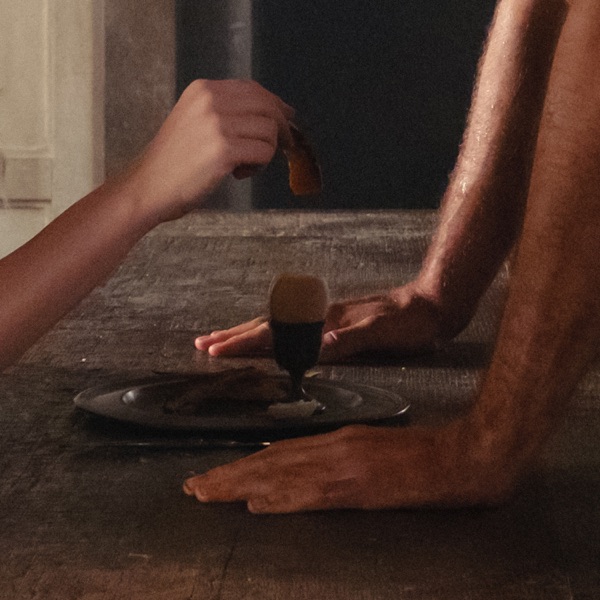
Wuthering Heights, Charli XCX’s second soundtrack album, trades the neon gloss of Brat for an elegant, brutal gothic palette built around Emily Brontë’s moors. Commissioned by director Emerald Fennell and recorded with longtime collaborator Finn Keane across the 2025 Brat Tour, the record reframes Charli not as a club provocateur but as a composer of literary scale. It debuted at number one in the United Kingdom and number eight on the Billboard 200 — her first US chart entry at that tier. For a soundtrack, its commercial reach and critical standing mark an unusually clean genre pivot.
Album Credits
| Artist | Charli XCX |
| Released | 2026-02-13 |
| Genre | Synthpop, Baroque Pop, Art Pop, Gothic |
| Label | Atlantic Records |
| Producer(s) | Finn Keane, Nathan Klein, Justin Raisen, Lewis Pesacov (Joe Keery, additional) |
| Tracks | 12 |
| Runtime | 34 min (34:34) |
| Lead Single(s) | House (ft. John Cale), Chains of Love, Wall of Sound, Always Everywhere |
Performance Snapshot
| Global Listeners | 473K unique users (Last.fm) |
| Total Scrobbles | 11.4M lifetime plays |
| Countries Charting | 43 active markets |
| Strongest Market | United States — 171K listeners |
| Top 3 Markets | United States, Brazil, United Kingdom |
An Elegant, Brutal Sound Palette
Wuthering Heights is built on a contradiction Charli XCX has named directly: an “elegant and brutal” sound palette. The production team — Finn Keane as principal architect, with Nathan Klein, Justin Raisen, and Lewis Pesacov contributing, and Joe Keery credited as an additional producer — frames every track around a live chamber string section rather than the sidechained synth grids of Brat. Gareth Murphy’s orchestration, recorded with a working ensemble of violinists, violists, cellists, and double bassists at Abbey Road and Air-Edel in London, gives the record an acoustic spine that most pop releases simulate rather than commission. The strings are not decoration; they carry harmonic weight, frequently setting the tonal center while distorted electronics fight against them. That tension is sharpest on the opener, “House,” which features a spoken-word passage from the Velvet Underground’s John Cale. Critics have variously filed it under gothic rock, industrial rock, and neoclassical dark wave, and the noisy, overdriven instrumentation justifies all three labels — it bears almost no relation to the contents of Brat. “Wall of Sound” answers with a title that openly invokes Phil Spector’s layering technique, stacking voices and reverb until the mix becomes a single saturated mass. Against these heavier moments, “Chains of Love” reintroduces recognizable synthpop architecture, its arpeggios and string counterpoint closer to Charli’s 2013 debut True Romance — a resemblance she has acknowledged outright. The mix, handled by Tom Norris with mastering by Idania Valencia, favors depth over loudness. Parallel processing keeps the distorted layers legible rather than collapsing them, and the analog soul of the string takes is preserved instead of being polished away. The result is a record that sounds composed rather than assembled. For listeners tracing the gothic-electronic lineage, the closest recent reference point in the GetMusic catalog is Grimes’ Miss Anthropocene, another album that weds orchestral menace to club-adjacent production.
Writing Toward Brontë, Not Around Her
The album began as a single commission. In December 2024, Emerald Fennell asked Charli to write one song for her film adaptation of Emily Brontë’s novel; after reading the screenplay, Charli proposed a full companion record of songs “connected to the world” Fennell was building. That origin explains the album’s structural logic. Across twelve tracks and a compact 34-minute runtime, Wuthering Heights functions as a concept album, its lyrics circling obsession, possession, and the dissolution of the self rather than narrating Brontë’s plot beat by beat. Charli has described the world she wanted the music to inhabit as “raw, wild, sexual, gothic, and British,” and the writing honors that brief. “Out of Myself” and “Seeing Things” treat identity as something porous and unstable; “Altars” and “My Reminder” frame devotion as a form of haunting. The register is literary without being costume drama — the songs read as interior monologue, not period pastiche. A University of Oxford literary scholar writing for The Conversation singled out exactly this quality, noting the album’s interrogation of selfhood as its most Brontë-faithful gesture. Vocally, this is a more controlled Charli than Brat audiences expect. She works in a lower, more measured register for much of the record, reserving full belt for structural payoffs rather than scattering it across every hook. “Eyes of the World,” the album’s tenth track, hands space to Sky Ferreira, whose smoky timbre shadows Charli’s lead in a duet that reads as two facets of one narrator rather than a feature spot. The narrative arc closes on “Funny Mouth,” a track that resolves the album’s tension without tidying it. Charli summarized the record’s lineage herself, calling Wuthering Heights “100% a sister” of True Romance — a claim that locates the album not as a detour but as a return to her earliest, most atmospheric instincts.
Market Note: Soundtrack IP as Catalog Insurance
A soundtrack album carries a different demand profile than a standalone release. The film tie-in is a built-in demand driver: theatrical release and album release fell on the same date, 13 February 2026, letting each promote the other without additional marketing spend. The IP strength here is doubled — Brontë’s novel is public-domain cultural shorthand, and Charli XCX is a post-Brat A-list name — which lowers the discovery cost for casual listeners. GetMusic’s Performance Snapshot already logs 473,000 unique Last.fm listeners and 11.4 million scrobbles across 43 charting markets, healthy streaming velocity for a release positioned outside the pop mainstream. The format breakdown reinforces the catalog-longevity case: cassette, CD, vinyl, and digital editions captured 26,000 of the 51,000 first-week US units in pure sales, a physical-media ratio most streaming-era pop cannot match. For an A&R desk, the sync potential is the quiet asset — every cue on this record is already screen-tested, which makes the album unusually durable licensing inventory long after the chart cycle ends.
Where the Moors Travel
GetMusic’s geographic data tells a clear story about where this record lands. The United States is the strongest market by a wide margin at 171,000 listeners, followed by Brazil at 77,000 and the United Kingdom at 46,000. Canada (20,000) and Australia (18,000) round out the top five, with Poland, Germany, Mexico, and the Netherlands forming a consistent European and Latin American tier beneath them. The Brazilian figure is the most telling. Charli XCX has built one of the most engaged Latin American streaming bases of any English-language pop artist, and Brazil outranking the United Kingdom on a project rooted in an English literary classic confirms that her audience follows the artist, not the source material. The UK result is its own kind of validation: a number-one debut on home turf, where Brontë is a school-syllabus fixture, shows the album reading as a credible cultural object rather than a celebrity novelty. Stylistically, Wuthering Heights places itself in a specific synthpop lineage — one that treats the genre as a vehicle for melancholy and grandeur rather than dancefloor utility. The orchestral-electronic balance recalls the late-period reinvention New Order pursued on Education, Entertainment, Recreation, while the gothic theatricality and torch-song undertow connect it to Soft Cell’s *Happiness Not Included. Charli is not borrowing from these acts so much as joining their conversation: the synthpop tradition has always made room for writers who use its gloss to stage something darker underneath. That the album charts across 43 countries while sounding this deliberately uncommercial suggests the audience for ambitious, literate pop is larger and more globally distributed than the format’s club-oriented reputation implies.
What Holds and What Frays
Critics met Wuthering Heights with broad approval. It holds an 82 on Metacritic and a 7.8 aggregate on AnyDecentMusic?, with Clash and Exclaim! at 8/10, Pitchfork at 7.4, and The Line of Best Fit at 7. The Guardian’s Alexis Petridis praised its “atonal, amorous anthems,” The Independent called it a “phantasmagorical fever dream,” and Rolling Stone, never one to resist a coinage, branded it a “Brat-Goth banger.” The consensus is not unanimous rapture, and the gaps in it are instructive. What works is the album’s commitment. “House” is the clear peak — a genuinely uncompromising lead single that stakes the project’s tonal claim before a casual listener can mistake it for a Brat sequel. “Chains of Love” is the most efficient song here, proof that Charli can fold the gothic concept into a hook without diluting either. The string arrangements are the record’s connective tissue, and they almost never feel ornamental. When the album commits fully to its premise, it is persuasive. The weak spots are structural. At 34 minutes, Wuthering Heights is slight, and a few tracks — “Open Up” and “Seeing Things” among them — function more convincingly as score cues than as standalone songs, carrying mood but not quite melody. That is a defensible choice for a soundtrack and a liability for an album asked to stand alone, which is exactly the dual role this release has taken on. There is also a real audience-management question: the Brat listener arriving for another season of hyperpop maximalism will find a deliberately difficult, string-heavy gothic record instead, and the mid-7 scores partly reflect critics registering that friction on the public’s behalf. Still, the pivot reads as conviction rather than commercial hedging. Placed against Charli’s own catalog — traceable in full on her GetMusic artist page — Wuthering Heights is the clearest evidence yet that she can operate as a composer with a brief, not only as a pop star with a brand. It does not eclipse Brat, and it does not try to. It does something rarer for an artist at her commercial altitude: it takes a genuine risk, lands most of it, and leaves a usable blueprint for whatever comes next. As a transitional record, it is unusually well-built.
Frequently Asked Questions
Where can I listen to Wuthering Heights by Charli XCX?
Wuthering Heights is available on all major streaming platforms, including Spotify, Apple Music, and Tidal, where it was released on 13 February 2026 through Atlantic Records. Physical editions — cassette, CD, and numbered collector’s vinyl — are sold through Charli XCX’s official store and general retail.
Is Wuthering Heights a Charli XCX album or a film soundtrack?
It is both. Charli XCX wrote it as the companion soundtrack to Emerald Fennell’s 2026 film adaptation of Wuthering Heights, but designed it as a standalone concept album rather than a score. The songs reflect the film’s world without narrating its plot, which is why it charts and reviews as a proper studio release.
What are the standout tracks on Wuthering Heights?
“House,” the John Cale collaboration, is the album’s defining statement and lead single. “Chains of Love” is the most immediate song, blending synthpop with live strings, while “Eyes of the World” featuring Sky Ferreira is the emotional centerpiece. “Wall of Sound” and closer “Funny Mouth” are the strongest deeper cuts.
What albums are similar to Wuthering Heights?
Listeners drawn to its blend of orchestral menace and electronic production should explore Grimes’ Miss Anthropocene. For the synthpop side, New Order’s Education, Entertainment, Recreation offers a comparable orchestral-electronic balance, while Soft Cell’s *Happiness Not Included is a third match for its torch-song darkness.
Listen with 30-sec previews
Previews served by iTunes. Press play on any track.
Similar albums




Released the same week
Other albums released near this date, across years.