At a glance
Where the world is listening
VOYAGE: FORTY YEARS, TEN SONGS, AND THE WEIGHT OF A LEGACY CARRIED LIGHTLY
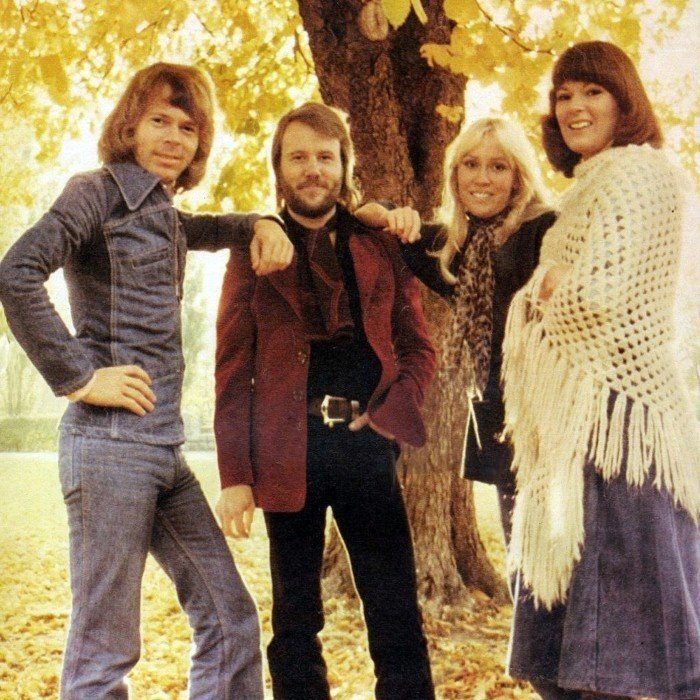
ABBA’s Voyage (Polar/Capitol, 2021) is the Swedish quartet’s ninth studio album and the most commercially consequential pop comeback of the twenty-first century so far. Released on November 5, 2021, after a forty-year silence on the studio front, the record arrived carrying an almost unreasonable freight of expectation — and, more often than not, delivered on it. Agnetha Fältskog, Björn Ulvaeus, Benny Andersson, and Anni-Frid Lyngstad reconvened not to recreate the glitter-ball euphoria of their imperial phase but to write songs that fit where they actually are: older, reflective, occasionally playful, and still in possession of melodic instincts that most working pop acts never develop in the first place. The result is uneven in the way that all ABBA albums have always been uneven, and all the more honest for it.
Album Credits
| Artist | ABBA |
| Released | November 5, 2021 |
| Genre | Pop · Europop · Adult Contemporary · Baroque Pop |
| Label | Polar / Capitol / Universal Music |
| Producer(s) | Benny Andersson (sole producer & arranger); Björn Ulvaeus (associate producer) |
| Tracks | 10 |
| Runtime | ~37 minutes |
| Lead Single(s) | “I Still Have Faith in You” / “Don’t Shut Me Down” (September 2, 2021); “Just a Notion” (October 22, 2021); “Little Things” (December 3, 2021) |
Performance Snapshot
| Global Listeners | 219,369 |
| Total Scrobbles | 2,754,014 |
| Countries Charting | 43 |
| Strongest Market | United States — 60,077 listeners |
| Top 3 Markets | United States (60,077) · Brazil (29,023) · United Kingdom (19,719) |
Production Architecture: Andersson Alone at the Console
Voyage marks a structural first in ABBA’s production history that is worth dwelling on.
While all previous ABBA albums were produced and arranged by Andersson and Ulvaeus as a duo, Voyage is the first ABBA album to be solely produced and arranged by Andersson, with Ulvaeus participating as a backing vocalist, songwriter, and associate producer.
That shift in the control room changes the album’s tonal character in ways that are subtle but audible: the harmonic language skews further toward Andersson’s affinity for classically inflected piano writing and orchestral swell, while the leaner guitar-driven rhythmic textures that characterized records like Voulez-Vous (1979) are largely absent.
The album was recorded at RMV Studios on the island of Skeppsholmen in Stockholm, the studio co-owned by Andersson and his son Ludvig, which opened in 2011.
Much of the programming and mixing was undertaken by Andersson, with the album also featuring the Stockholm Concert Orchestra.
That orchestral presence is most legible on “Ode to Freedom,” where string writing and choral mass function as load-bearing structural elements rather than decoration — a compositional choice that reads almost like a fifth-relation modulation executed in full orchestral color. “I Still Have Faith in You” opens the album with characteristic Andersson piano, moving from a spare register in the verses into a chorus that fans out into full harmonic width, Agnetha and Frida’s voices occupying separate and complementary registers above a chord progression that resolves with quiet confidence.
The production’s most interesting decisions are the ones it refuses to make.
AllMusic’s Stephen Thomas Erlewine noted that “Andersson and Ulvaeus wisely decided not to follow any stylistic trend or adopt any modern production technique,” which made the songs “recognizably ABBA music.”
There is no sidechain compression fashioned after contemporary dance-pop, no trap hi-hat patterns, no pitch correction aesthetic. The drum sounds on “Don’t Shut Me Down” could have come from the same sessions as The Album (1977); the piano on “Just a Notion” has the warm mid-range bloom of an analog recording stage.
It is also the first ABBA album to not feature longtime drummer Ola Brunkert and bassist Rutger Gunnarsson following their deaths in 2008 and 2015, and the final appearance of longtime lead guitarist Lasse Wellander before his death in 2023.
That absence of key session players is felt in the mix as a kind of lightness — some tracks sit on programmed rhythms rather than the muscular live-rhythm-section feel of the seventies catalog. For listeners exploring the catalog in sequence, a companion piece like Nancy Sinatra’s Start Walkin’ 1965–1976 offers useful context for how legacy pop arranging can frame a voice without smothering its character — a parallel challenge ABBA navigates here with varying success.
Songwriting, Vocal Performance, and the Grammar of a Return
The songwriting on Voyage operates with a maturity that is both its greatest asset and the source of its occasional dramatic flatness. Andersson and Ulvaeus have never been straightforward lyricists — their best work from the seventies and early eighties was dense with adult ambiguity and emotional precision — and the ten tracks here continue that tradition with more emotional directness than nostalgia would demand. “Keep an Eye on Dan,” which concerns a custody arrangement told from a father’s perspective, is the kind of subject that almost no mainstream pop act of any era would attempt, and the songwriters commit to it without sentimentality or easy resolution. “I Can Be That Woman” traces the arc of a relationship through the lens of personal compromise and quiet determination; lyrically, it is closer to mid-period Fleetwood Mac in emotional register than to the glam-pop hits ABBA are most associated with commercially.
Vocally, the album asks a straightforward question — can Agnetha Fältskog and Anni-Frid Lyngstad, both in their early seventies at the time of recording, still anchor ABBA material? The answer is largely yes, though with perceptible modifications in approach. Fältskog’s upper register has narrowed slightly, but her phrasing has deepened; she navigates “I Still Have Faith in You” by leaning into the mid-range and letting the orchestra carry the emotional peak rather than reaching for it herself. Lyngstad’s mezzo quality, always darker and more grounded, translates particularly well into the album’s more reflective passages.
One major critic noted the continued presence of “Agnetha and Frida’s singing — the stunning sweet-sour blend that is the single most defining trait of ABBA’s sound,” concluding that “four decades on, ABBA are more ABBA-esque than ever.”
The album’s structural curiosity is flagged by several reviewers:
most of the songs lack conventional choruses, preferring to climax on the last line of the verse, with left turns aplenty taken within ABBA’s pop universe.
“Just a Notion” is the clearest example of the older compositional model — a track whose
vocal stems date back to a 1978 demo that was partially released as part of the 1994 box set Thank You for the Music,
with its instrumentation mostly re-recorded for the 2021 release.
The result is a song that functions as a kind of living artifact: the vocal grain of 1978 pressed against a freshly built instrumental frame, the seam barely perceptible. That is genuinely interesting craftsmanship, regardless of how the finished product sits commercially.
Market Note: Catalog IP and the Mechanics of a 40-Year Comeback
Market Note: IP Longevity, Streaming Velocity, and the ABBA Voyage Flywheel
The commercial architecture around Voyage is one of the more deliberate demand-engineering exercises in recent pop history.
The album sold more than one million units worldwide in its first week of release.
It entered the UK Albums Chart at number one with 204,000 chart sales, of which 90% — 180,000 units — were physical.
That physical-to-digital ratio is a significant demand driver for catalog longevity: physical buyers are repeat consumers who index highly for streaming re-engagement over time. The Performance Snapshot confirms sustained catalog pull — 2,754,014 total scrobbles against 219,369 global listeners indicates an album-play-through ratio of over 12.5 scrobbles per listener, an index of deep, repeated engagement rather than passive discovery traffic. The United States leads with 60,077 listeners, followed by Brazil (29,023), a market whose appetite for melodic pop catalog runs deep and correlates strongly with sustained streaming velocity. The IP strength here extends well beyond the album itself:
UK consumption of the Voyage album had reached 502,443 units as of 2025 per the Official Charts Company.
The ABBA Voyage concert residency continues at the 3,000-capacity ABBA Arena with seven performances per week.
The concert residency functions as an evergreen marketing engine for the album’s sync potential and streaming recurrence — each new ticket buyer becomes a downstream catalog listener.
Listen with 30-sec previews
Previews served by iTunes. Press play on any track.
Similar albums






Released the same week
Other albums released near this date, across years.