At a glance
Where the world is listening
VIVA LAS VENGEANCE: THE CURTAIN CALL THAT ACTUALLY EARNED IT
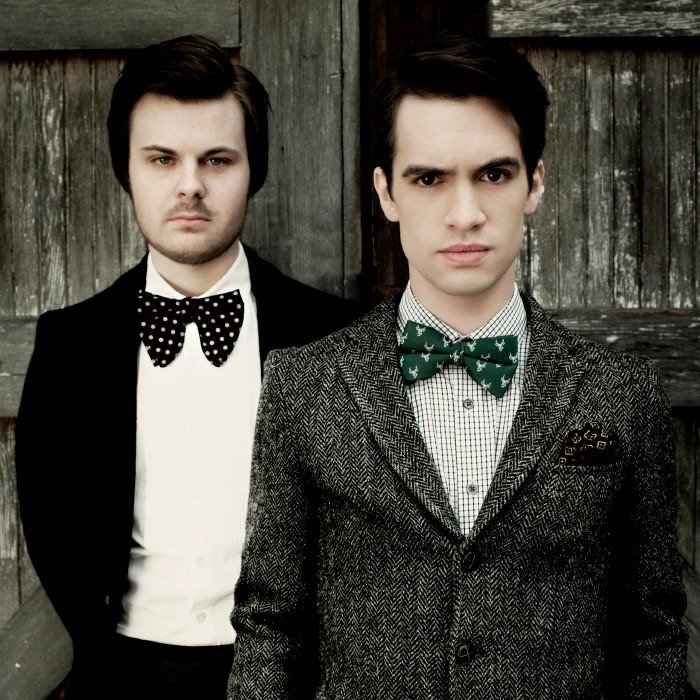
Panic! at the Disco’s Viva Las Vengeance (2022) is the seventh and final studio album from Brendon Urie’s long-running solo vehicle — and a deliberate pivot into analog rock revivalism that landed with more conviction than anyone expected.
Released on August 19, 2022, through Fueled by Ramen and DCD2 Records,
it arrived four years after the stadium-pop gloss of Pray for the Wicked and announced itself as something categorically different: a record made by someone reaching back into his own mythology rather than chasing a format. Whether that self-excavation produces insight or pageantry is the album’s central tension — and, oddly, also its most interesting quality.
Album Credits
| Artist | Panic! at the Disco |
| Released | August 19, 2022 |
| Genre | Alternative Rock / Power Pop / New Wave |
| Label | Fueled by Ramen / DCD2 Records (Warner Music Group) |
| Producer(s) | Brendon Urie, Jake Sinclair, Mike Viola (all tracks); Butch Walker (title track, co-production) |
| Tracks | 12 |
| Runtime | 43:42 |
| Lead Single(s) | “Viva Las Vengeance” (June 1, 2022); “Middle of a Breakup” (July 20, 2022); “Local God” (August 5, 2022); “Don’t Let the Light Go Out” (August 16, 2022) |
Performance Snapshot
| Global Listeners | 163,168 |
| Total Scrobbles | 3,456,388 |
| Countries Charting | 43 |
| Strongest Market | United States — 122,750 listeners |
| Top 3 Markets | United States · United Kingdom · Brazil |
Tape Machines and Theater Lights: The Production Architecture
The most decisive creative choice on Viva las Vengeance is also the most audible one:
Urie recorded the album using a tape machine in Los Angeles alongside his friends and production partners, Jake Sinclair and Mike Viola.
That physical constraint — tape saturation, the soft compression of analog signal flow, the commitment of a live performance that can’t be click-corrected afterward — gives the record its grain. Compared to the surgical loudness of Pray for the Wicked, this sounds like something found rather than constructed.
All tracks are written by Brendon Urie, Jake Sinclair, and Mike Viola, except where noted, and produced by all three, except “Viva Las Vengeance”, produced by Sinclair, Viola, and Butch Walker.
Walker’s fingerprints on the title track are worth isolating: he has long operated as a kind of power-pop archivist, and his co-production here leans into broad-stroke riffing and slapback guitar that positions the opener more squarely in 1970s FM rock than in anything post-emo.
Rolling Stone’s Jon Blistein described the track as “a stomping blast of power-pop with frontman Brendon Urie bellowing against a background of lush, Queen-esque harmonies.”
Urie contributes vocals, background vocals, drums, piano, Hammond organ, harpsichord, synthesizer, and guitar
across the record — an inventory that clarifies why the album feels dense in the mid-range. The Hammond organ on tracks like “God Killed Rock and Roll” and “Star Spangled Banger” functions as a tonal center, anchoring the harmonic movement against Sinclair’s rhythm guitar work.
Butch Walker also appears on several tracks, adding to a sound that showcases guitars and nods to the arena-rock sound of decades past, primarily the 1970s.
Rob Mathes’ orchestral arrangements — credited across several cuts — give moments like “Don’t Let the Light Go Out” a timbral density that the band’s earlier records never approached. The harpsichord deployments, meanwhile, function as retrograde signals: they’re there to mark the theatrical sensibility without quite being camp. Whether they succeed at that distinction depends on how much patience you have for Urie’s showmanship register.
Fans of idioKNOW’s adjacent approach to theatrical-pop architecture might find useful comparison in GLOOM DIVISION by I Don’t Know How But They Found Me (2024), which works a similar new-wave-meets-theatrical-rock intersection with considerably more restraint — but far less vocal ambition.
The Autobiography Problem: Songwriting and Lyrical Thematics
Brendon Urie called the album “a look back at who I was 17 years ago and who I am now with the fondness I didn’t have before. I didn’t realize I was making an album and there was something about the tape machine that kept me honest.”
That framing is important context — and also a mild liability. Albums premised on nostalgia-for-self require the songwriter to have enough critical distance to make the retrospection interesting rather than self-congratulatory. Viva las Vengeance manages this unevenly.
The title track and “Local God” occupy the record’s most successful lyrical register: they’re specific about the disorientation of growing up inside a fame apparatus before your frontal lobe has finished developing, without tipping into victimhood or false modesty. “Local God” in particular moves between grandiosity and deflation — the narrator is both the subject of adulation and aware of how provisional that adulation is. The line-level writing here is tighter than anything on the preceding album.
“Don’t Let the Light Go Out” operates in a different mode altogether: it’s a midtempo piano ballad that works in the register of domestic preservation, a departure from the album’s theatrical framework that lands because Urie’s vocal delivery is less deployed and more inhabited.
Listeners single out “Don’t Let the Light Go Out,” “Something About Maggie,” and the “old-fashionedly majestic ‘All by Yourself'” as standouts.
“Something About Maggie” is probably the most songcraft-forward moment on the record — a verse-chorus structure with enough harmonic specificity in its movement to reward repeated listening, which is rarer here than it should be.
Where the writing deflates is on tracks that exist to service the aesthetic rather than the idea. “Middle of a Breakup” announces its premise in its title and does little to develop beyond it; it’s the kind of song that could have been recorded by a dozen other acts in 2003 and no one would have noticed the difference.
While the album “does knock out some definite singalongs, sprinkling in some fun hooks and catchy structures, there is something missing beneath the veneer of theatricality. This is an album that hints at complexity, but it is inevitably overshadowed by Urie’s one-man-show.”
That critical diagnosis, from a Metacritic aggregated review, is accurate as far as it goes — the one-man-show framing is both the album’s primary claim and its central constraint.
Urie’s vocal performance across the album is, predictably, a study in upper-register tension. His tenor sits most comfortably in that pressurized zone just below full-belt, and he spends much of Viva las Vengeance there. It can exhaust. It can also, on the right track, feel exactly calibrated.
The themes of “fame, criticism, and burnout are simultaneously evergreen while also being perfect for this specific moment in our timeline, where burnout feels inevitable and omnipresent,”
as one critic noted — which gives the lyrical thread more contemporary purchase than its vintage sonic palette might imply.
Market Note: Catalog Longevity and the IP Value of a Final Album
With 3,456,388 total scrobbles across 163,168 global listeners and penetration across 43 countries, Viva las Vengeance operates as a catalog-sustaining IP rather than a streaming-velocity frontrunner. The scrobble-to-listener ratio — approximately 21.2 plays per listener — signals genuine retention rather than passive discovery, a meaningful distinction for licensing and sync scenarios. The United States accounts for 75.2% of active listeners (122,750), confirming the record’s demand is heavily domestic, which aligns with its arena-rock sensibility and American classic-rock lineage. The United Kingdom (23,021 listeners) and Brazil (21,828 listeners) form a secondary tier with real depth: the UK figure reflects the band’s long-standing Alternative Airplay presence in that market, while Brazil’s position suggests a Latin American fanbase that tracked Panic! at the Disco through their pop-crossover era on Pray for the Wicked and followed the pivot.
The album debuted at number thirteen on the US Billboard 200, selling 27,000 album-equivalent units in its first week
— modest by arena-act standards but durable as an event release. As the final entry in an 18-year catalog, its sync potential is significant: the tape-driven production and classic-rock tonal palette make it format-agnostic for film, television, and advertising contexts where Pray for the Wicked‘s digital sheen would feel period-specific.
Listen with 30-sec previews
Previews served by iTunes. Press play on any track.
Similar albums





Released the same week
Other albums released near this date, across years.