At a glance
Where the world is listening
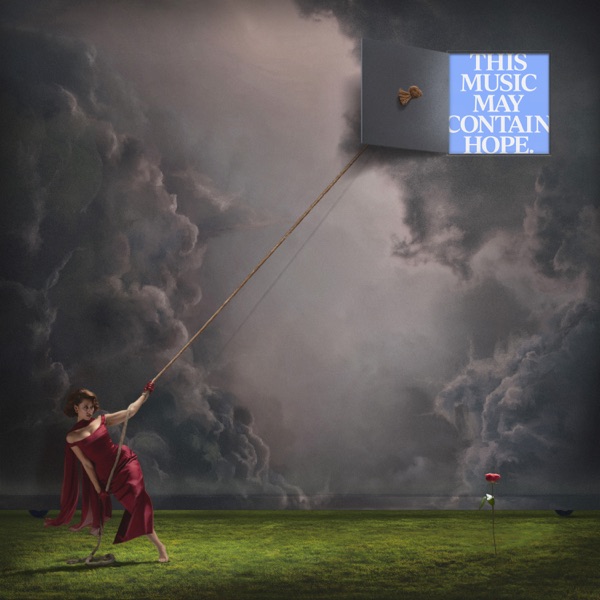
THIS MUSIC MAY CONTAIN HOPE.: RAYE BETS THE WHOLE ORCHESTRA ON HERSELF — AND WINS
RAYE’s THIS MUSIC MAY CONTAIN HOPE. (Human Re Sources, March 2026) is an audaciously maximalist sophomore album that positions the South London singer-songwriter as one of the most formally ambitious pop artists working today.
It is the second studio album by the British singer-songwriter RAYE, released independently on 27 March 2026 through Human Re Sources.
The album incorporates sounds of jazz, big band, soul, blues, and orchestral pop, and explores themes of hope and liberation, and the complexities of human emotion.
What results is a record that refuses every neat category offered to it — and, in doing so, makes a compelling case for pop music as a genuinely theatrical, even operatic, art form.
Album Credits
| Artist | RAYE |
| Released | March 27, 2026 |
| Genre | Pop / Jazz-Pop / Orchestral Soul / Big Band / Contemporary R&B |
| Label | Human Re Sources |
| Producer(s) | RAYE, Mike Sabath, Tom Richards, Chris Hill, Pete Clements, Jordan Riley, Punctual, Hans Zimmer |
| Tracks | 17 |
| Runtime | ~70 minutes |
| Lead Single(s) | “Where Is My Husband!” (Sep 2025) · “Nightingale Lane.” (Feb 2026) · “Click Clack Symphony.” (Mar 2026) |
Performance Snapshot
| Global Listeners (Last.fm) | 379,181 |
| Total Scrobbles | 7,296,583 |
| Countries Charting | 43 |
| Strongest Market | United States — 55,670 listeners |
| Top 3 Markets | United States · Brazil · United Kingdom |
| Also Strong In | Australia · Canada · Netherlands · Germany · Poland · France · Spain |
The Architecture of Excess: Production and Sonic Identity
Divided into four sections based on the seasons, the album sprawls across a surprisingly fast-moving 70 minutes, 17 songs and nearly as many styles.
That structural conceit — winter to autumn, despair toward earned optimism — isn’t merely thematic decoration; it organizes what would otherwise be an almost unnavigable range of tonal registers.
THIS MUSIC MAY CONTAIN HOPE. is RAYE’s first concept album.
The ambition was plainly telegraphed from the opening seconds:
the album opens with a spoken-word introduction setting the scene, followed by the epic and ominous “I Will Overcome,” complete with a roaring orchestra, choir and operatic backing singer, before a hard pivot into the brass-spangled, upbeat, vampy “Beware… the South London Lover Boy.”
RAYE wrote and co-produced the album with various collaborators, including Jordan Riley, Chris Hill, Mike Sabath, Tom Richards, Pete Clements and Hans Zimmer.
Like her debut album My 21st Century Blues, RAYE worked predominantly with her long-term collaborator Mike Sabath on this project — best known for his work on RAYE’s songs “WHERE IS MY HUSBAND!” and “Escapism.”
Additional contributions from Al Green, the London Symphony Orchestra (conducted by Tom Richards), Flames Collective Choir, and her sisters Amma and Absolutely are complemented by co-production from Mike Sabath, Tom Richards, Chris Hill, Pete Clements, Jordan Riley, and Punctual.
The presence of the London Symphony Orchestra isn’t a cosmetic gesture — Tom Richards’s string and brass arrangements function as genuine harmonic voices, pushing certain passages into fifth-relations and modal shifts that most pop producers wouldn’t risk. “Click Clack Symphony.,” co-produced with Hans Zimmer, is the record’s most cinematically scaled moment: Zimmer’s orchestral instincts and RAYE’s melodic compression collide in a track whose dynamic architecture owes as much to late-Romantic concerto writing as it does to contemporary R&B.
Across the record, she packs in old-school show-tune razzle-dazzle, big-band swing frills, retro Sixties R&B, the occasional club beat, and an endless supply of glamorously tragic scenarios.
The sidechain compression on “Where Is My Husband!” sits in productive tension with the track’s live-sounding bass register — the rhythm section breathes rather than thuds, which gives the production an analog looseness that the album’s more orchestral passages benefit from by contrast. Compared to a similarly genre-fluid 2025 release like Tate McRae’s So Close to What, which navigates pop and alt-leaning production in a more linear emotional arc, RAYE’s record is deliberately unwieldy — the excess is the argument.
Lyrical Density, Vocal Grammar, and the Performance of Feeling
RAYE has never been a minimal songwriter — her debut established a lyrical economy where internal rhyme schemes operated at near-spoken-word density — but on THIS MUSIC MAY CONTAIN HOPE. she pushes that instinct further than seems prudent, and mostly makes it work.
Orchestras and choirs and horns and, occasionally, driving beats surround her, but most impressive throughout is RAYE herself, as a songwriter and singer: she purrs and belts and soars; some of her melodies and lyrics are so fast and polysyllabic they’d be tongue-twisters if spoken by the average person. The album contains nearly 3,800 words of lyrics, which are essentially about overcoming obstacles, resilience and belief in oneself.
The attention to detail is striking, from the string and brass arrangements to her imagery-laden lyrics; as RAYE balances vintage styles with modern-leaning melodies and production, she strikes a sound that is unmistakably hers and totally infectious. She affirms that she is a virtuosic vocal dynamo, belting, crooning, and providing spoken exposition, and even her lowest moments of self-abasement are related with clever wordplay showcasing her flexibility.
The vocal range demanded across these 17 tracks is extraordinary — on “Nightingale Lane.,” the second single, she works in a lower mezzo register that exposes a vulnerability deliberately absent from the brasher “Where Is My Husband!,” demonstrating a theatrical understanding of how register communicates emotional state. The contrast between those two modes isn’t stylistic inconsistency; it’s characterization.
The album includes features from Hans Zimmer, Al Green, and RAYE’s sisters, Amma and Absolutely.
RAYE’s grandfather Michael also appears on “Fields.,” while her sisters Amma and Absolutely appear on “Joy.”
These family cameos are not sentimental filler — they function thematically within the album’s seasonal logic, arriving in the later chapters as figures of restoration, the living proof of what hope looks like in its most concrete, relational form.
For all the bereft emoting and chemical self-medication that occurs throughout the sequence, RAYE’s desire to soothe, heal, and instill hope in broken-hearted listeners is apparent.
Al Green’s presence on the record, meanwhile, carries genuine lineage weight — his soul phrasing and RAYE’s jazz-inflected melodic grammar occupy a shared stylistic lineage that makes the collaboration feel earned rather than strategic.
Every track, except for the album’s lead single, is stylized with a period, just like in My 21st Century Blues, as every single song acts as its own respective chapter.
That punctuation habit is a minor but telling detail: RAYE approaches her own tracklist with the editorial instinct of a fiction writer, insisting on demarcation, on individual integrity, even within an album conceived as a continuous arc.
Market Note: Independent IP, Global Demand, and the Long Catalog Play
The commercial architecture of THIS MUSIC MAY CONTAIN HOPE. deserves close attention as a case study in independent IP strategy.
Released independently through Human Re Sources
, every royalty stream — synchronization, master, neighboring rights — flows back to RAYE’s own organization, an arrangement that materially compounds as the catalog ages.
In the United Kingdom, the album debuted at number one on the UK Albums Chart, opening with 46,976 album-equivalent units, consisting of 28,701 pure album sales, 2,723 downloads, and 15,552 sales-equivalent streams.
By May 2026, the album was certified gold by the BPI for total sales of over 100,000 copies.
On the Billboard side,
the album debuted in the top 10 across four Billboard album charts, including Top Album Sales, where it entered at No. 8.
The Last.fm engagement profile — 379,181 global listeners, 7.29 million scrobbles across 43 countries — underlines exceptionally high repeat-listening velocity: an scrobble-to-listener ratio of approximately 19:1, well above typical album-cycle averages. Brazil (41,255 listeners) and the Netherlands (7,365 listeners) constitute the most commercially interesting growth markets, both territories where
“Where Is My Husband!” is certified Triple Platinum in Brazil and Platinum in The Netherlands.
Sync potential across the album’s orchestral and big-band passages is substantial; the cinematic production on “Click Clack Symphony.” in particular carries strong placement upside for prestige television and film trailers.
Listen with 30-sec previews
Previews served by iTunes. Press play on any track.
Similar albums





Released the same week
Other albums released near this date, across years.