At a glance
Where the world is listening
SONGS OF A LOST WORLD: THE CURE DELIVERS A CAREER-DEFINING RECKONING WITH MORTALITY
Songs of a Lost World by The Cure — their fourteenth studio album, released November 1, 2024 — is the most unflinching work Robert Smith has put his name to since the band’s late-’80s peak.
Released via Fiction, Lost Music, Universal, Polydor, and Capitol Records, it is the band’s first release of new material in 16 years since 4:13 Dream in 2008.
Sixteen years of silence, and what comes out the other side is not a victory lap or a nostalgia exercise — it is something more uncomfortable and more earned than either of those would be.
Album Credits
| Artist | The Cure |
| Released | November 1, 2024 |
| Genre | Alternative Rock / Gothic Rock |
| Label | Fiction / Lost Music / Polydor / Capitol Records |
| Producer(s) | Robert Smith & Paul Corkett |
| Tracks | 8 |
| Runtime | 49:13 |
| Lead Single(s) | “Alone” (Sept 26, 2024); “A Fragile Thing” (Oct 9, 2024) |
Performance Snapshot
| Global Listeners | 229,408 |
| Total Scrobbles | 3,933,871 |
| Countries Charting | 43 |
| Strongest Market | United States — 100,239 listeners |
| Top 3 Markets | United States, Brazil, United Kingdom |
Production Architecture: Patience as a Compositional Tool
The album was written and arranged by Robert Smith and produced by Smith alongside Paul Corkett.
Corkett had previously co-produced The Cure’s 2000 album Bloodflowers
— which places this record in a very specific emotional lineage, one that values weight over momentum, and atmosphere over accessibility. That is not an accident. It is a deliberate design choice, executed with the patience of people who have been living with these compositions for years.
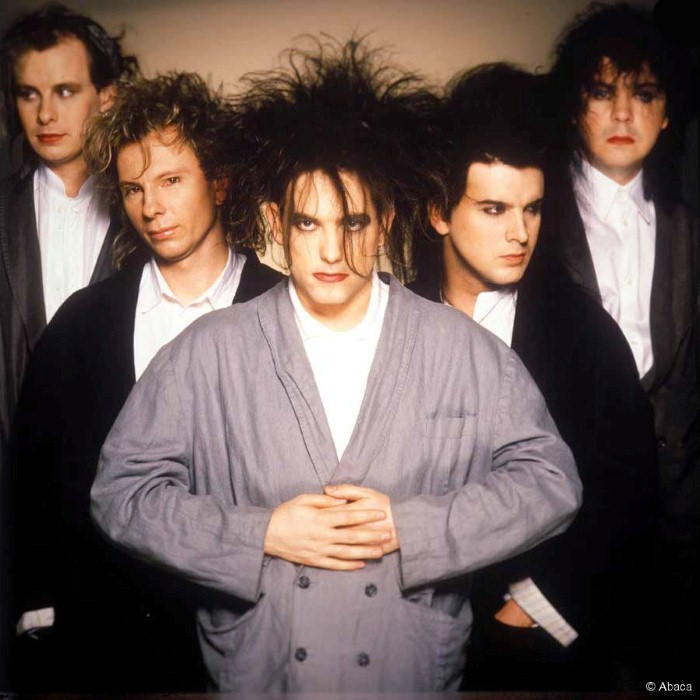
The band is Robert Smith, Simon Gallup on bass, Jason Cooper on drums, Roger O’Donnell on keyboards, and Reeves Gabrels on guitar.
It is the band’s first studio album to feature Gabrels.
It also features the studio return of O’Donnell, who rejoined the band in 2011 after a six-year hiatus.
These personnel facts are not trivial. The interplay between Gabrels’s guitar work — edged, spatially aware, never decorative — and O’Donnell’s keyboard architecture gives the album a tonal density that earlier Cure records achieved through overdubs and engineering tricks. Here it is live-band mass, meticulously marshalled.
The production throughout prioritizes negative space. “Alone” opens with nearly three minutes of instrumental build before Smith’s voice arrives — a structural decision that functions as a kind of decompression chamber, asking the listener to abandon the tempo of ordinary attention.
The music on Songs of a Lost World feels more direct and purposeful than either of its immediate predecessors; even the slowest tracks have a bruising impact, courtesy of the rhythm section.
Gallup’s bass in particular runs thick and low across the record, less melodic counterpoint than gravitational field. The sidechain work is restrained — there is no contemporary loudness-war compression flattening here. The dynamic range is wide enough to feel genuinely cinematic, especially on “Endsong,” where the outro extends into something that resembles grief’s actual shape: formless, protracted, not resolved.
Whether Songs of a Lost World sounds like wallowing distilled into rock music (like on the despondent “Warsong”) or writhes with restless aggression (like on “Drone:Nodrone,” which ironically features the hardest hitting riff of the set), The Cure prove they haven’t lost their knack for turning their turmoil into wildly expressive compositions.
For listeners who want a comparable production disposition — density, patience, emotional weight — 30 Seconds to Mars’s It’s the End of the World but It’s a Beautiful Day (2023) occupies adjacent territory, even if the emotional temperature is considerably different.
Smith’s Writing: When Grief Becomes Grammar
All the songs on the album were composed solely by Robert Smith, for the first time since the 1985 album The Head on the Door.
That solitary authorship is audible. This is not a record of democratic compromise. It has the coherence of a single sustained thought — or rather, a single sustained feeling — worked and reworked until every track functions as a different facet of the same dark object.
The lyrical architecture throughout is built on absence, finality, and the specific loneliness of outliving earlier versions of yourself. Smith has spoken about “Alone” as the track that unlocked the entire project.
Smith described how he had been struggling to find the right opening line, working with the simple idea of “being alone,” until he remembered the poem “Dregs” by the English poet Ernest Dowson — and that was the moment when he knew the song and the album were real.
Dowson, the fin-de-siècle poet famous for the phrase “gone with the wind” (though that particular line is rarely attributed to him in popular culture), wrote about beauty’s transience with a formality that Smith has absorbed and translated into post-punk vernacular. That is not a trivial literary connection.
“I Can Never Say Goodbye” is the emotional pivot of the record. Where “Alone” is conceptual grief, “I Can Never Say Goodbye” is specific and personal — Smith reportedly wrote it in response to the death of his brother. The vocal performance is restrained to the point of deliberate flatness in sections, which only amplifies the desperation when his register lifts. “And Nothing Is Forever” operates in a different tonal register, carrying something that functions almost as negation of comfort: the title offers neither consolation nor nihilism, just observation.
Critics noted this is arguably the most personal album of Smith’s career — mortality may loom, but there’s colour in the black and flowers on the grave.
That phrase captures something real about the album’s ambivalence. It is not merely dark for the sake of darkness. The mourning is earned, the imagery precise. “Endsong,” closing the record at over ten minutes, is Smith’s most explicitly eschatological lyric — cataloguing losses, cycling through regret, arriving nowhere comforting. It works because it earns its length. This is a man in his mid-sixties writing as if this is the last thing he will say. Whether it is or not, the urgency is compositionally structural, not performative.
A sombre treatise on disaffection and alienation grown old, Songs of a Lost World starkly expresses the post-punk generation’s hallmark traits of malaise and anxiety — art reflects its era, and that is exactly what this album conveys.
Market Note: Catalog Longevity and the Late-Career Premium
Songs of a Lost World is a commercially anomalous release in the best possible sense.
It was The Cure’s first album since Wish (1992) to reach number one in the UK, and was one of the fastest-selling albums of 2024, having at one point outsold the entire top 10 of the week combined.
The album moved 51,362 sales in the first week in the UK alone, spanning 19,838 CDs, 23,182 vinyl albums, 1,219 cassettes, and 4,546 digital downloads.
The format breakdown tells its own story: physical dominates, which signals a fanbase with high purchase intent and above-average willingness to pay.
The album also reached number four on the Billboard 200, their highest position since 1992’s Wish.
With 229,408 Last.fm listeners across 43 countries and 3,933,871 scrobbles, the streaming engagement rate — scrobbles-per-listener — indicates deep, repeated listening rather than casual discovery. The US leads with 100,239 listeners, confirming strong demand in the most valuable advertising and sync market.
It also reached number one in France.
The IP strength here is exceptional: this catalog commands premium sync fees, the live-album and remix-album extensions (Mixes of a Lost World, June 2025) extend the commercial tail further, and a Grammy win adds institutional validation that broadens playlist eligibility.
Geographic Reach: Who Is Actually Listening, and Why It Matters
The geographic distribution of the album’s Last.fm audience maps onto something more interesting than simple English-speaking-market dominance. The United States leads decisively at 100,239 listeners — roughly 43% of the total measured audience — which aligns with The Cure’s historically strong American college-radio and alternative-rock foothold, from their 1989 and 1992 commercial peaks through to the festival circuit of the 2010s. This is a catalog with genuine multigenerational penetration in the US: the 40-year-olds who bought Wish in 1992, their children who found Disintegration through streaming, and the younger post-punk revival listeners who found The Cure through contemporary reference points in acts like Beach House or Interpol.
Brazil at 36,647 listeners is the more structurally surprising number. Brazil has long been one of the most active markets for catalog alternative rock on Last.fm, and The Cure have historically commanded a devoted South American following — their large-format festival appearances in the region (Rock in Rio, Lollapalooza Brazil) built audience mass that streaming has since made permanent and measurable. Mexico and Argentina also appear in the top ten markets, making Latin America collectively a demand driver that most European legacy acts underestimate in their touring and marketing strategies.
The United Kingdom’s 29,105 listeners places it third, which is modest relative to population but entirely consistent with the UK chart performance:
this was The Cure’s first number-one UK album since Wish in 1992,
but the physical purchase behavior there skews toward one-time buyers rather than habitual streamers. Poland at 6,965 listeners and Germany at 6,548 suggest significant Central European engagement, not surprising for a band with deep roots in the post-punk continental circuit — Cure records were formative texts in Warsaw and Berlin long before they were canonical anywhere. The Netherlands at 6,102 rounds out a European cluster that confirms the album’s cross-generational reach within markets where gothic and post-punk lineages carry genuine cultural weight.
What the geography says, ultimately, is that this album performed as a global alternative event — not a niche UK nostalgia exercise, but a record that travelled because it had real compositional authority. That is not the same as being a legacy-act release that sells on brand recognition alone.
Critical Assessment: The Album’s Real Argument with Itself
According to Metacritic, Songs of a Lost World received “universal acclaim” based on a weighted average score of 93 out of 100 from 25 critic scores.
The score distribution was positive across all 25 reviews, with zero mixed and zero negative.
That is a genuinely rare outcome for any record, let alone for a band releasing their first album in sixteen years under enormous expectation pressure.
On Album of the Year, it ranked third among all 2024 releases by critic score.
Rob Sheffield of Rolling Stone gave the album four out of five stars, describing it as a “vividly propulsive space-rock goth elegy, eight songs in fifty minutes, kicking with a full-blooded band attack.”
Fred Thomas of AllMusic felt the eight songs “often reach the same slow-moving grandeur of the Cure’s high-water mark album, 1989’s Disintegration, only without any of the playful pop.”
Pitchfork awarded it a 79 — characteristically measured, characteristically unwilling to fully capitulate — while noting it does not represent a dramatic qualitative leap over the stronger moments in The Cure’s post-Wish catalog. That reading is defensible.
The album won Best Alternative Music Album at the 68th Annual Grammy Awards
— which is institutional recognition of a kind the band had never received before, and which somewhat complicates the album’s positioning as outsider art. The Grammy category has an inconsistent relationship with actual alternative music, but in this case the consensus feels earned rather than bestowed.
Where the record has genuine weaknesses: the mid-section — “Warsong” and “Drone:Nodrone” — can feel like it resists conclusion rather than earns ambiguity. These are not bad tracks; they are structurally patient in ways that reward attentive listening but can feel like endurance tests on first pass.
The German edition of Rolling Stone criticized the album for “flat songs” that sounded “redundant” with endless introductions
— a minority view, but not an incoherent one. There is a legitimate question about whether the album’s patience is always compositional discipline or occasionally compositional avoidance.
The high points, however, are unambiguous. “Alone,” “I Can Never Say Goodbye,” and “Endsong” represent some of the most fully realized work Smith has produced at any point in a career spanning nearly five decades.
While Songs of a Lost World is not as angry as Pornography or as claustrophobic as Disintegration, it possesses an immersive, graceful beauty and more energy than you might expect.
That is the correct framing. This is not a record trying to recapture 1989. It is a record made by people who have grown considerably older and have something different and harder to say. The surprise is not that they said it. The surprise is how clearly.
For context on what veteran alternative acts can accomplish in late-career studio returns, Staind’s Confessions of the Fallen (2023) offers a useful contrast: earnest, well-executed, but without the compositional ambition that makes Songs of a Lost World genuinely demanding. For listeners navigating the broader 2024 alternative landscape, Ghost’s Skeletá shares some of the same preoccupation with mortality and finality, even across a very different production register.
Frequently Asked Questions
Where can I stream or purchase Songs of a Lost World?
The album is available on all major streaming platforms including Spotify, Apple Music, Amazon Music, YouTube Music, and Tidal. Physical editions — including standard and limited-edition vinyl (white 180g bio-vinyl), CD, and cassette — were released through the band’s official store and standard retail.
A digital-only deluxe edition was released on November 5, 2024, featuring live versions of five songs performed at Shoreline Amphitheater in 2023.
How did the album perform critically and commercially?
The album received “universal acclaim” on Metacritic with a score of 93 out of 100 from 25 critic reviews.
Commercially, it debuted at number one in the UK with 51,362 first-week sales
, and
reached number four on the Billboard 200
— both their best chart positions in over three decades.
It also won Best Alternative Music Album at the 68th Annual Grammy Awards.
Which tracks stand out most on the album?
“Alone” — the lead single and opener — functions as the album’s thesis statement, building through a lengthy instrumental introduction before Smith’s vocal enters with arresting quietness. “I Can Never Say Goodbye” is the emotional center: deeply personal, lyrically spare, vocally precise. “Endsong” closes the record at over ten minutes and carries the weight of everything that preceded it. “Drone:Nodrone” is the album’s most kinetic moment,
featuring the hardest-hitting riff of the set.
What other albums are worth hearing alongside this one?
The obvious reference points within the Cure’s own catalog are Disintegration (1989) and Bloodflowers (2000). Among contemporary releases with overlapping sensibility, Ghost’s Skeletá shares thematic territory around mortality and finality in a very different production key. For listeners who want to explore the broader 2024 alternative landscape as context, 30 Seconds to Mars’s It’s the End of the World but It’s a Beautiful Day makes an instructive comparison — a record reaching for similar existential register from a very different generational and sonic position.
Girls Choice Music · Curation and Analysis
authored on May 27, 2026
Follow new reviews and editorial drops: t.me/ViralSubmissions
Listen with 30-sec previews
Previews served by iTunes. Press play on any track.
Similar albums


Released the same week
Other albums released near this date, across years.