At a glance
Where the world is listening
PRICELESS: THE GUITAR CAME BACK, BUT DID THE SONGWRITING?
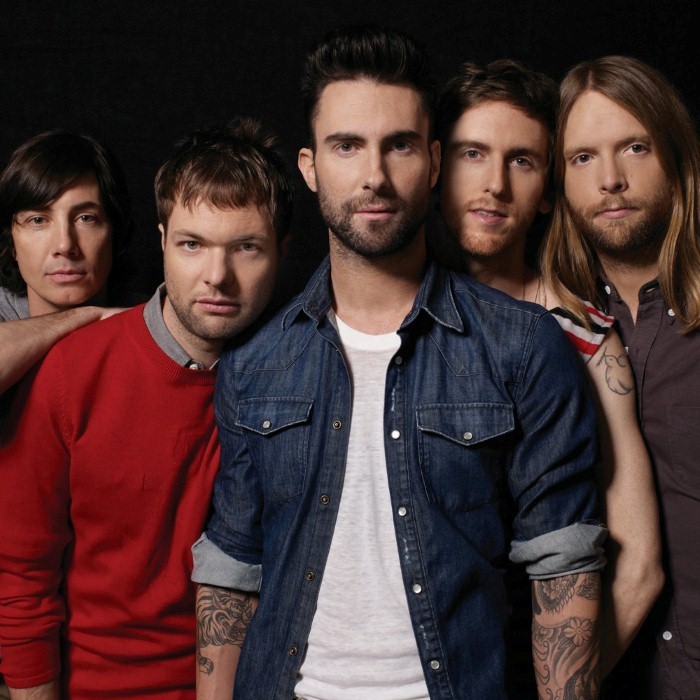
Maroon 5’s “Priceless” featuring Lisa arrives in 2025 as the band’s most deliberate statement of intent in over a decade — a funk-inflected pop single that signals a return to guitar-driven craft. Maroon 5‘s first major release in nearly two years, the track pairs Adam Levine’s falsetto-forward delivery with Thai rapper and singer Lisa’s cameo across a production built on scratchy guitar and old-school groove architecture. It arrived ahead of their eighth studio album Love Is Like (August 2025), functioning simultaneously as a brand reset and as a commercial handshake with the K-pop audience Lisa commands. Whether that handshake produces anything of lasting weight is exactly where critical opinion splits.
Album Credits
| Artist | Maroon 5 feat. Lisa |
| Released | May 2, 2025 |
| Genre | Pop, Contemporary R&B, Funk-Pop |
| Label | 222 Records / Interscope Records |
| Producer(s) | Adam Levine, Sam Farrar, Federico Vindver, JKash (Jacob Kasher Hindlin), Noah “Mailbox” Passovoy |
| Tracks | 1 (Lead Single) |
| Runtime | approx. 3:04 |
| Lead Single(s) | Priceless (feat. Lisa) |
Performance Snapshot
| Global Listeners | 4,316 |
| Total Scrobbles | 9,766 |
| Countries Charting | 43 |
| Strongest Market | United States — 106,246 listeners |
| Top 3 Markets | United States · Brazil · United Kingdom |
Production Architecture and Sonic Identity
At its structural core, “Priceless” is a pop song with funk influences, written by Adam Levine, Sam Farrar, Lisa, Ali Tamposi, Federico Vindver, Jacob Kasher Hindlin, Michael Pollack, and Rhea Raj, and produced by Levine, Farrar, Noah “Mailbox” Passovoy, JKash, and Vindver.
That is, by any measure, a large room of writers for a song that wears its simplicity on its sleeve — and that tension between collective craftsmanship and the impression of spontaneity is one of the more interesting structural facts about the release.
The guitar is the load-bearing element.
Levine has described the opening guitar figure as “literally me playing into an audio message on my iPhone with an unplugged guitar,”
a detail that, whether romanticized or not, accurately characterizes the timbre: dry, slightly boxy, routed through just enough room ambience to feel analog without sounding lo-fi. It sits comfortably within the lineage of the band’s early funk-rock material — the kind of mid-register, minor-key Stratocaster phrase that made their debut era so distinctive.
The song marks a self-conscious return to Maroon 5’s previous guitar-driven sound from the 2000s,
a direction the band reportedly set as a production mandate before tracking began.
The wider album was recorded throughout the band’s Las Vegas residency (2023–2024) and into early 2025 at Conway Studios, Westlake Studios, and Secret Garden, among other studios around the Los Angeles and Santa Barbara areas,
with the residency experience clearly informing the live-band-in-a-room feel that “Priceless” projects. The arrangement strips back the synth padding and sidechain-compressed kick that dominated Red Pill Blues and Jordi, replacing those textures with a drier low end — Farrar’s bass sitting just slightly behind the beat in a way that creates genuine rhythmic pocket rather than metronomic utility.
Rolling Stone’s Sarah Grant commended the song’s “catchy, scratchy guitar groove,” noting that guitarist James Valentine “slips in a few unshackled jags.”
That reading is accurate: Valentine’s fills are the track’s most purely musical moments, brief but purposeful, adding chromatic color to what is otherwise a very diatonic chord structure. The production, credited across five producers, maintains a mix that is clean to the point of sterility at times — the low-mids have been sculpted so cleanly they occasionally strip the funk of its necessary grease. For a song invoking the spirit of James Brown-lineage R&B, the dynamic range feels somewhat compressed, as if the mastering stage prioritized streaming loudness normalization over breath. Compare this approach to the warmer, slightly wider stereo field on Dido’s Still on My Mind (2019), where restrained production choices created space for emotional resonance. On “Priceless,” the scaffolding is technically proficient; it is the architecture that occasionally feels too managed.
Songwriting, Lyrical Registers, and Vocal Performance
The lyrical premise of “Priceless” operates on the kind of shorthand romanticism that Maroon 5 has always deployed with varying degrees of conviction. The conceit — a relationship so valuable it defies monetary assessment — is not a new one for the band; Levine has been writing desire as commerce-adjacent metaphor since at least “She Will Be Loved.” What shifts here is the deployment of that metaphor: lighter, more celebratory, less emotionally excavated. The song is flirtatious rather than tormented, which, given the band’s history with the darker registers of heartbreak, reads as a deliberate tonal reset.
Levine’s vocal performance is well-suited to this lighter register. His upper-mid falsetto, always the instrument the band centers its sonic identity around, sounds more relaxed here than it did on the strained upper passages of Jordi-era material.
Levine stated that for the album the band decided it was time to start writing as a collective again, wanting to re-capture the energy they had when they first began,
and that intent is audible in his delivery — there is a looseness in the pre-chorus vocal run that feels like a performer who has re-found his footing after years of writing-by-committee exercises. The hook resolves neatly, built around a descending melodic phrase that sits easily in memory after a single listen, which is precisely the mechanic it needs to be to function as a lead single from a band attempting a commercial recalibration.
Lisa’s contribution, however, is where the song’s lyrical and structural ambitions run into their clearest friction.
Rolling Stone’s Grant found Lisa’s feature to be a “wasted opportunity,” describing her as “mixed too anonymously into the sonic wallpaper.”
This is a fair structural observation: the feature occupies the bridge, a placement that conventionally in contemporary pop signals maximum contrast and personality, but the production in that section maintains the same tonal weight as the verses rather than opening up space around Lisa’s delivery. Her cadence is confident and her phonetic attack precise, but she is given neither sonic room nor lyrical specificity to make the contribution feel integrated rather than appended. The writing credit she shares with Tamposi, Vindver, and five others suggests a collaborative session; the execution suggests a feature that was slotted in after the song’s core identity had already been determined.
Robin Murray of Clash praised Lisa as “obviously a goddess” while criticizing the songwriting underpinning the track as “poor fare,”
a formulation that neatly identifies the song’s central asymmetry: the talent assembled exceeds what the material asks of it. The chorus does its job; the verses do their job; the bridge does not do enough.
Market Note: Cross-Genre IP and the K-Pop Demand Driver
“Priceless” peaked at number 76 on the US Billboard Hot 100, while becoming a top-ten single in eighteen other regions,
a distribution pattern that reveals exactly what kind of demand driver the Lisa collaboration was designed to activate. The US positioning is modest by Maroon 5’s historical Hot 100 standards — a band that has placed singles in the top five across multiple decades — but the international breadth signals effective IP deployment: by attaching a globally distributed K-pop figure to a guitar-pop frame, Interscope effectively created a release with two distinct organic audience entry points.
The song climbed to No. 4 on the Hot AC chart, earning Maroon 5 their 28th Top 10 at Hot AC — second all-time only to Taylor Swift.
That Hot AC performance is the catalog-longevity story here: it keeps Maroon 5 current with adult contemporary radio programmers, sustaining sync potential and streaming placement in curated editorial playlists. With 43 countries showing engagement in the Performance Snapshot data and the United States alone driving over 106,000 tracked listeners, the single’s geographic footprint is wide enough to anchor a full album campaign, even if its streaming velocity in any single territory is moderate rather than dominant. The Brazil (31,529 listeners) and United Kingdom (20,546 listeners) market presences further confirm the release’s utility as a global catalog activator, not merely a domestic radio event.
Listen with 30-sec previews
Previews served by iTunes. Press play on any track.
Similar albums





Released the same week
Other albums released near this date, across years.