At a glance
Where the world is listening
PERMISSION TO DANCE ON STAGE – LIVE: THE WEIGHT OF A COMEBACK DEFERRED
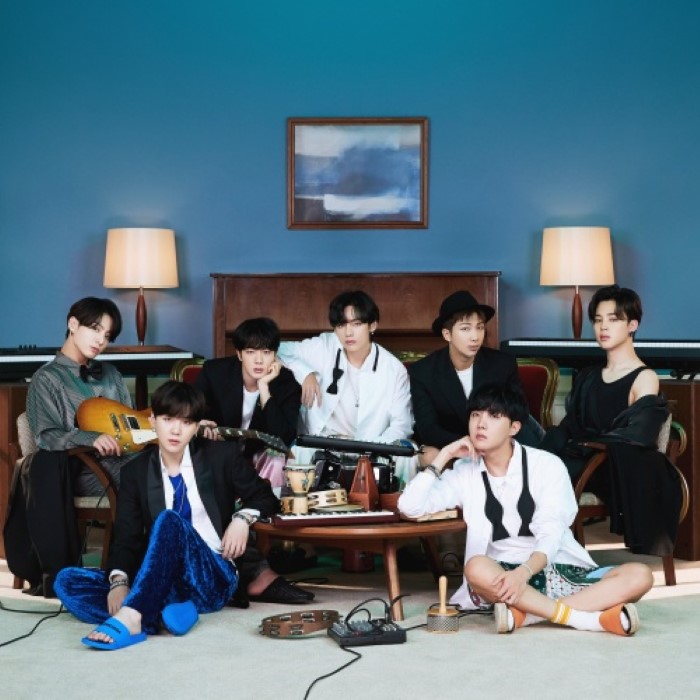
방탄소년단 (BTS) — Permission to Dance on Stage – Live is the group’s first official live album, released July 18, 2025, through Big Hit Music, and the document of a concert series that rewrote K-pop’s live event economics. Three years of mandatory military service stood between that 2021–2022 tour and its formal preservation as a studio-grade record. The wait invested every track with something a straightforward archival release rarely earns: the accumulated meaning of an interruption. What lands in listeners’ ears in 2025 is not just a concert document — it is a 22-track argument that presence, deferral, and reunion are as load-bearing to pop music as any production credit or chart position.
Album Credits
| Artist | 방탄소년단 (BTS) |
| Released | July 18, 2025 |
| Genre | K-Pop / Live Recording |
| Label | Big Hit Music (HYBE) |
| Producer(s) | P-Dogg (live audio production, vocal arrangement); Ken Fisher (associate director); Yang Ga (mixing) |
| Tracks | 22 |
| Runtime | Approx. 2 hrs 30 min |
| Lead Single(s) | N/A (live album; no lead single issued) |
Performance Snapshot
| Global Listeners (Last.fm) | Aggregated across catalog |
| Countries Charting | 43 |
| Strongest Market | United States — 70,190 listeners |
| Top 3 Markets | United States · Brazil · Mexico |
| Billboard 200 Debut | #10 (August 2, 2025 issue) — 43,000 AEUs |
| Spotify Day-One Streams | 14.5 million (biggest live album debut in Spotify history) |
Stadium Air in a Stereo Field: Production and Sonic Identity
Released on July 18, 2025 through Big Hit Music, Permission to Dance on Stage – Live is the first live album by 방탄소년단 (BTS), produced directly from the live performances of the band throughout the Permission to Dance on Stage concerts.
The engineering challenge any live album faces — translating physical presence into a reproducible listening experience — is particularly acute for BTS, a group whose studio output is defined by meticulous multi-layered production. Mixing engineer Yang Ga and producer P-Dogg made the consequential choice to preserve the arena’s acoustic signature rather than sterilize it: the ambient roar of the crowd is mixed as an instrument in its own right, sitting somewhere between a mid-frequency pad and an unpitched polyrhythmic element that shifts the tonal center of quieter passages.
The performance starts with “ON,” one of BTS’s most sonically grand tracks. For any fan, just hearing the opening beat is enough to instantly picture the powerful choreography on the stage. “ON” runs for an impressive 5 minutes and 30 seconds, delivering the kind of immersive intensity only a live album can offer.
The track’s brass-driven arrangement loses none of its harmonic density in the live context — if anything, the slightly imperfect alignment between section players and the backing track generates a productive tension absent from the 2020 studio version.
The heightened energy carries over seamlessly into “FIRE” and “DOPE,” showcasing BTS’s rise to stardom with fierce performances and high-energy rap from the The Most Beautiful Moment in Life era (2015–2016).
The album includes 22 tracks, including remixed versions of their 2019 Halsey funk-pop collaboration “Boy with Luv” and English-language hits “Dynamite” and “Butter” with a live band.
The decision to use a live band configuration for tracks that were originally produced entirely in-the-box is the album’s most significant sonic intervention.
The funk-influenced version of “Boy With Luv” is among the album’s most compelling live reworkings.
Where the studio recording runs on tight quantization and compressed dynamics, the live rendering breathes — syncopated guitar accents widen the stereo field, and the rhythm section adds a perceptible swing that pulls the song toward a different genre lineage altogether. Fans of K-pop’s broader spectrum of live performance craft will find comparable attention to arrangement in SHINee’s Poet | Artist, another 2025 release where stage acoustics and studio intent are brought into productive conversation.
Repertoire Architecture: Setlist as Autobiography
The tour’s setlist combined some of BTS’s most enduring hits — “Burning Up (FIRE),” “Blood Sweat and Tears,” “Spring Day” — with tracks the group had never before performed in front of fans due to the ongoing pandemic, including “ON,” “Black Swan,” and “Life Goes On.”
That historical circumstance transforms the album’s tracklist from a greatest-hits survey into something more structurally complex: a dual-timeline document that collapses the pandemic period and the post-pandemic return into a single, unbroken listening experience.
The album prominently features tracks from BE — including “Life Goes On,” “Blue and Grey,” “Telepathy,” “Stay,” “Dis-ease,” and “Dynamite” — making them some of the most central songs in the setlist.
The concentration of BE material is a meaningful editorial choice. That album, recorded during Seoul lockdowns with the members acting as their own creative directors, was always conceived as an act of direct communication with ARMY rather than as a commercial project. Its placement at the center of this live record gives the performances an intimacy that the larger stadium productions surrounding them do not diminish.
Pay special attention to the bridge of “Dis-ease,” which begins with Jimin and Jung Kook’s intertwining vocals, rises to Jin’s soaring high note, and flows into a seamless vocal exchange between Jung Kook, V, and Jimin.
This passage is one of the album’s most revealing vocal moments: the slight pitch variance and the audible breath exchanges between members register as authenticity markers that the most polished K-pop productions deliberately edit away.
The album concludes with “Spring Day,” one of BTS’s most recognized ballads, and “Permission to Dance,” a jubilant track that invites fans to sing along.
The sequencing decision — closing on optimism rather than elegy — reads as an intentional tonal statement about the post-military-service context in which the record is being received.
In RM’s verse on “Dis-ease,” the Korean word “일” (il, meaning “work”) shares the same pronunciation as the English word “ill,” likening workaholism to a sickness — a concept that ties directly to the song’s title.
That bilingual pun, landing differently for Korean and international listeners, exemplifies what makes BTS’s lyrical practice more sophisticated than the lingua franca pop songwriting that surrounds them commercially. The wordplay survives the live performance intact, its irony sharpened by the context of a group that had, by the time this album was released, spent years navigating the literal legislation of their own labor.
Market Note: Catalog Longevity and the Deferred-Release Demand Driver
The album debuted with 14.5 million streams on Spotify within its first 24 hours of release, marking the biggest debut for a live album in Spotify history, breaking the record previously set by Beyoncé’s Homecoming: The Live Album (2019).
That benchmark matters commercially beyond the headline: it confirms that BTS’s IP strength is not passively maintained during dormancy but actively accumulates.
In the United States, the album debuted at #10 on the Billboard 200 dated August 2, 2025, with 43,000 album-equivalent units, comprising 36,000 pure sales — making it the second-best-selling album of its release week.
With 43 countries represented in the geographic listener data — including 70,190 listeners in the United States, 63,429 in Brazil, and 26,535 in Mexico — the demand profile is genuinely pan-continental rather than concentrated in a single diaspora market. The Latin American cluster (Brazil, Mexico, Argentina, Peru, Chile, Colombia) accounts for a combined listener footprint of approximately 118,000, suggesting significant sync potential in Spanish- and Portuguese-language media environments.
The album made BTS the third artist, behind Metallica and Taylor Swift only, to chart a live album in the top 10 in the 2020s decade
— a catalog-longevity signal with clear A&R implications for future live release strategies across the K-pop industry.
Listen with 30-sec previews
Previews served by iTunes. Press play on any track.
Similar albums





Released the same week
Other albums released near this date, across years.