At a glance
Where the world is listening
DON’T TAP THE GLASS: PERMISSION TO MOVE
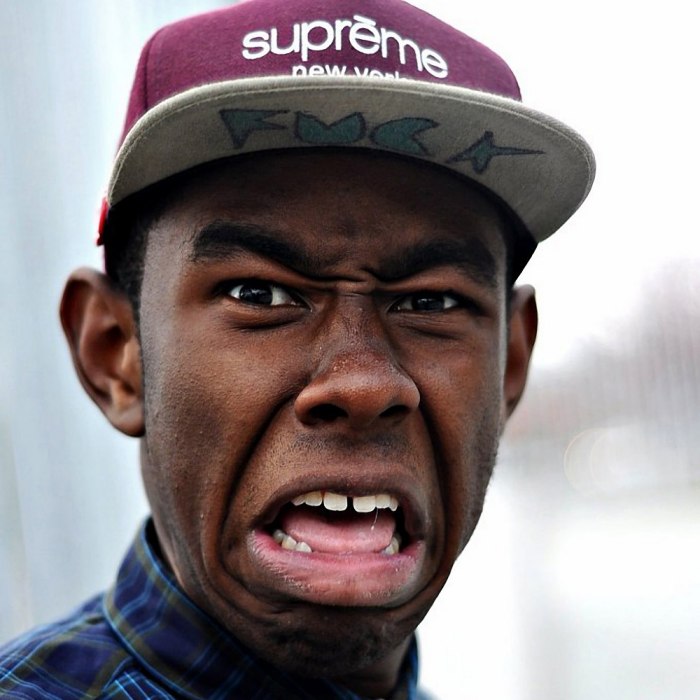
Tyler, the Creator’s DON’T TAP THE GLASS — his ninth studio album, released July 21, 2025 via Columbia Records — arrives nine months after CHROMAKOPIA as a deliberate gear shift: ten tracks, 28 minutes, no concept, no manifesto.
It is the ninth studio album by American rapper and producer Tyler, the Creator, released through Columbia Records on July 21, 2025.
Where his previous run of records leaned into psychological portraiture and ornate narrative architecture, this one is about displacement of a different kind — the physical, sweaty, embarrassing kind. It is a record that argues the best thing you can do with a body is forget that anyone is watching it move.
Album Credits
| Artist | Tyler, the Creator |
| Released | July 21, 2025 |
| Genre | Rap / Hip-Hop / Dance-Funk |
| Label | Columbia Records |
| Producer(s) | Tyler, the Creator (sole producer, all tracks) |
| Mixing | Neal Pogue; Zachary Acosta (assistant) |
| Mastering | Mike Bozzi |
| Tracks | 10 (+ 1 physical-exclusive bonus track) |
| Runtime | ~28 minutes |
| Lead Singles | “Ring Ring Ring” (July 30, 2025); “Sugar on My Tongue” (August 20, 2025) |
| Guest Features | Pharrell Williams (as himself and as alter-ego Sk8brd), Madison McFerrin, Yebba |
Performance Snapshot
| Strongest Market | United States — 231,908 listeners |
| Top 3 Markets | United States, Brazil, United Kingdom |
| Countries Charting | 43 |
| US Listeners (Last.fm) | 231,908 |
| Brazil Listeners | 72,968 |
| UK Listeners | 37,801 |
| Billboard 200 Peak | #1 (debut, week of August 2, 2025) |
| First-Week Units (US) | 197,000 equivalent album units (4-day tracking week) |
| Metacritic Score | 77 / 100 (11 critic reviews; 10 positive, 1 mixed) |
| Album of the Year Score | 75 critic / 76 user (28,400+ user ratings) |
Production Architecture: Crate-Digging at Concert Speed
Tyler began work on the album in December 2024 and recorded for most of it during his Chromakopia: The World Tour
— a production circumstance that leaves its fingerprints all over the final record. The immediacy is structural, not incidental. Ten tracks moving at a locked tempo, with minimal negative space and no spoken-word transitions or conceptual sutures. This is Tyler working closer to the edit-bay logic of a DJ mix than the orchestrated interiority of IGOR (2019).
Neal Pogue handled mixing, with Zachary Acosta as mixing assistant and Mike Bozzi on mastering,
but the primary engineering sensibility is Tyler’s own —
he was the sole producer of all ten tracks.
What distinguishes the production here from his post-Flower Boy run is the tonal register: early-80s funk machinery over neo-soul warmth.
Clocking in at a chiselled 28 minutes, the album is primarily anchored by disco-flavoured raps and Kangol-clad ’80s hip-hop; “Stop Playing With Me” digs up Whodini and Run DMC-style drums, while opener “Big Poe” samples Busta Rhymes and even a 2015 collaborative album by Radiohead’s Jonny Greenwood and India’s Rajasthan Express.
Tyler samples and interpolates liberally throughout, including some of his own tracks — “Cherry Bomb” surfaces on “I’ll Take Care Of You” and “THAT GUY” on “Sucka Free.”
These self-citations are not nostalgia; they read more like a producer looping his own archive the same way a beatmaker loops a vinyl break — extracting rhythmic utility from material that already belongs to him.
You’ll also catch glimpses of “My Humps” and “Knuck If You Buck” woven into the fabric.
The Frankensteinian logic of the record is precise: Tyler is not referencing these sources to signal taste. He’s using them as structural components, the way a producer uses a drum machine patch rather than a tribute.
The beats are designed to get you moving — from the nostalgia-inducing synth-funk of “Sugar On My Tongue,” “Ring Ring Ring,” and the Madison McFerrin-sung “Don’t You Worry Baby,” to the straight-up rave pulse of “I’ll Take Care of You.”
Pharrell Williams’ presence, appearing under
both his own name and his alter ego Sk8brd,
pulls the production tonal center closer to the Neptune-era funk of the early 2000s — a reference lineage Tyler has absorbed for years but rarely deployed this overtly. The result is an album where the production functions less as backdrop and more as choreography score.
Lyricism and Vocal Register: Silly Again, on Purpose
Tyler stated the goal of the album was “to be fun and say outrageous shit” and inside jokes shared with friends — that he “just wanted to be silly again.”
That declaration of intent carries more critical weight than it initially appears. After CHROMAKOPIA‘s emotionally forensic self-examination, after Call Me If You Get Lost‘s intricate persona play, a turn toward deliberate lightness is not a retreat — it is a position. The album’s lyrical register is designed to resist over-interpretation.
Thematically, the album is lighthearted, with Tyler using the project’s spread to call out the “weirdos” and haters that have polluted his life.
The braggadocio here is older than Instagram — it draws from the crass, block-party confidence of late-70s and early-80s rap, where flexing was communal rather than aspirational. “Don’t Tap That Glass / Tweakin'” deploys internal rhyme schemes and breath-pattern shifts that connect structurally to the Busta Rhymes lineage his production already cites.
On Don’t Tap the Glass, Tyler raps in a way he mostly avoided on CHROMAKOPIA; on the Busta Rhymes-sampling “Big Poe,” “Stop Playing With Me,” and “Don’t Tap That Glass / Tweakin’,” we get some of his hardest beats and hardest bars simultaneously.
The vocal performance across these cuts is looser in its attack than the measured, almost theatrical delivery of his last two albums — closer to the cadence of someone rapping at a barbecue than at an art installation. That is the point.
Where the vocal range widens is in the album’s melodic third: “Ring Ring Ring” finds Tyler working in an upper register over one of the record’s most classically structured funk arrangements.
Madison McFerrin carries the harmonic weight on “Don’t You Worry Baby,” with Tyler stepping back to layer synths and drums into a piece that feels almost orchestral in its spatial economy.
“Tell Me What It Is,” the album’s closer, shifts the register entirely —
the track is a bittersweet closer and emotional cooldown from the exuberant highs of the project, with Tyler pivoting from flexing to ask “Why can’t I fall in love?”
It is a small emotional aperture, but it earns its placement. The album would feel thematically sealed without it.
Lyrically, Don’t Tap the Glass finds Tyler untethered from both the gleeful mischief of his early provocateur phase and the raw vulnerability that gave Igor its emotional charge.
That is the critical reading one must grapple with honestly. But to fault the album for not being Igor is to misread its purpose. The register here is that of an artist who has already done the emotional heavy lifting and is now choosing, explicitly, to put the weight down for 28 minutes.
Market Note: Physical Sales as Demand Driver in a Streaming Era
Of DON’T TAP THE GLASS‘s 197,000 equivalent album units earned in the week ending July 24, album sales alone comprise 128,000 — debuting it at No. 1 on the Top Album Sales chart.
On a shortened release week — as the album dropped on a Monday — Tyler still totaled 197,000 equivalent units, a figure largely driven by physical sales with Tyler making various bundles available through his webstore.
The album was available in five physical variants (a vinyl LP, CD, and three deluxe boxed sets with branded clothing), sold exclusively via Tyler’s official webstore; each physical iteration also featured one bonus track absent from the standard 10-song digital version.
This marks Tyler’s fourth No. 1 on the Billboard 200, all earned consecutively.
The demand architecture here is instructive: in an era where streaming velocity determines most chart outcomes, Tyler’s webstore-first physical strategy demonstrates that IP strength and fan loyalty can override conventional format logic. The 43-country Last.fm footprint — led by 231,908 US listeners, 72,968 in Brazil, and 37,801 in the UK — signals a catalog with genuine cross-continental legs and strong sync potential across both North American and Latin American markets, the latter underlined by
Tyler’s Latin American tour in March 2026, headlining Festival Estéreo Picnic and its South American edition.
Listen with 30-sec previews
Previews served by iTunes. Press play on any track.




Released the same week
Other albums released near this date, across years.