At a glance
Where the world is listening
DON’T BE DUMB: THE HARLEM CURATOR’S LONG-OVERDUE RECKONING
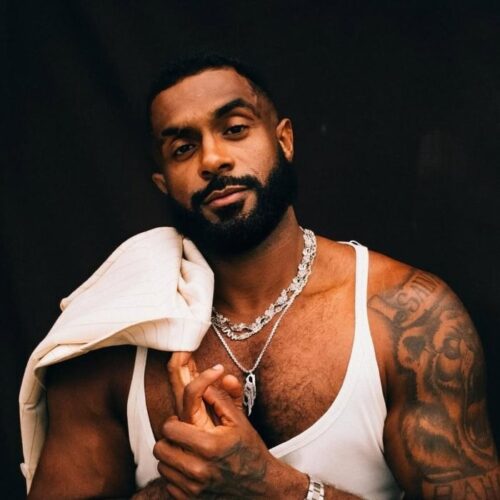
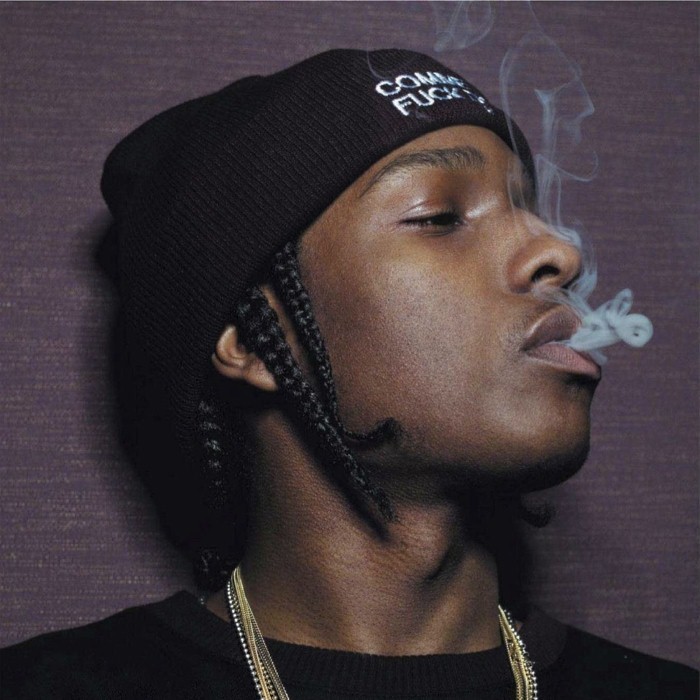
A$AP Rocky’s Don’t Be Dumb — his fourth studio album and first in nearly eight years — arrives January 16, 2026 as the most anticipated hip-hop return in recent memory.
Released through AWGE / ASAP Worldwide and RCA Records, it is the fourth studio album from the American rapper and record producer.
The weight of that eight-year silence is real: careers stall, cultural relevance migrates, and the audience that once tattooed LONG.LIVE.A$AP onto its consciousness has since grown up, moved on, and come back curious. What Rocky delivers here is not a simple resumption of service. It is a methodical, visually orchestrated, production-heavy statement from an artist who spent the intervening years studying — fashion, film, fatherhood, and the precise architecture of taste — and who returned with something to prove to nobody except himself.
Album Credits
| Artist | A$AP Rocky |
| Released | January 16, 2026 |
| Genre | Hip-Hop / Trap / Experimental Hip-Hop / Cloud Rap |
| Label | AWGE / ASAP Worldwide · RCA Records |
| Producer(s) | A$AP Rocky, Kelvin Krash, Clams Casino, Harry Fraud, Hit-Boy, T-Minus, Loukeman, Tyler, The Creator, will.i.am, Danny Elfman, ICYTWAT, SpaceGhostPurrp, Cardo Got Wings, Mike Dean, and others |
| Tracks | 15 (standard) / 17+ (digital/streaming editions) |
| Runtime | approx. 48 min. |
| Lead Single(s) | “Punk Rocky” (Jan. 5, 2026) · “Helicopter” (Jan. 12, 2026) |
Performance Snapshot
| Global Listeners (Last.fm) | Active across 43 countries |
| Countries Charting | 43 |
| Strongest Market | United States — 156,865 listeners |
| Top 3 Markets | United States · Brazil · United Kingdom |
| Extended Markets | Canada (19,296) · Australia (14,367) · Poland (12,564) · Germany (11,201) · Netherlands (7,149) · India (6,660) · Mexico (6,509) |
Production Architecture: German Expressionism Meets Cloud Rap Brutalism
The project features production from a “who’s who” of heavyweights, including Pharrell Williams, Madlib, Metro Boomin, The Alchemist, and Mike Dean
— yet the album’s most consistent throughline is not any single producer’s fingerprint but Rocky’s own editorial instinct in assembling wildly disparate timbral registers into something that holds.
The album’s cover art and promotional music video rollout was designed by American filmmaker Tim Burton,
and that collaboration sets the aesthetic framework: angular, gothic-leaning, with a theatrical flair that pulls as much from Burton’s Nightmare Before Christmas visual grammar as from Harlem’s streetwear codes.
The album opens with “ORDER OF PROTECTION” (produced by Kelvin Krash and Soufien 3000), “HELICOPTER” (produced by A$AP Rocky, Kelvin Krash, Soufien 3000, and Mike Dean), and “INTERROGATION (SKIT)” (produced by Rocky himself), followed by “STOLE YA FLOW” (produced by Kelvin Krash, ICYTWAT, and Danny Elfman).
That last pairing — ICYTWAT’s Memphis-derived crunch alongside Danny Elfman’s orchestral dissonance — is one of the album’s boldest engineering decisions.
Produced by Danny Elfman, ICYTWAT, and Kelvin Krash, the record’s menacing tone heightens its impact as Rocky escalates tensions.
The fifth-relation tension between the orchestral brass stabs and the distorted 808 sub sits unresolved throughout, which is precisely the point: this is music designed to feel structurally unstable.
“DON’T BE DUMB / TRIP BABY” is produced by Clams Casino and Harry Fraud,
a pairing that recalls the vaporous, pitch-shifted soul that defined New York cloud rap in the early 2010s — and its appearance here reads as both a callback and a reclamation. Clams Casino’s layered reverb beds and Harry Fraud’s sample-heavy harmonic palette create a low-pressure atmosphere where Rocky’s cadence can stretch without metric obligation.
Hit-Boy returns after producing some of Rocky’s best earlier cuts, popping up on the Brent Faiyaz-assisted “STAY HERE 4 LIFE.”
Produced by Hit-Boy, Brent Faiyaz, and Loukeman, the song glides over a hypnotic instrumental that gives Rocky space to explore the obsessive bond he shares with Rihanna.
The sidechain compression on that track is notably restrained — a deliberate choice that lets Faiyaz’s falsetto register as texture rather than competition.
Rocky continues his tendency for searching throughout Don’t Be Dumb, bouncing quickly from heavy trap and rage rap tracks to styles that seem wildly unconventional on a rap record.
The “ROBBERY” interlude,
which sounds like it could be played during an episode of Cowboy Bebop with its smoky jazz club production and Doechii’s guest appearance,
exemplifies how the album treats genre as a decision, not a default. For a related study in eclectic East Coast production ethics, check out Isaiah Rashad’s The House Is Burning — an album that similarly uses production plurality to resist easy categorization.
Songwriting and Vocal Architecture: Six Alter-Egos in Search of One Man
According to a press release, Rocky showcases six alter-egos across the album.
In collaboration with Instagram, he shared his algorithm on the app and broke down the alter egos on his album: Babushka Boi, Grim, Rocky, and Mr. Mayer’s Dad.
This is not a conceptual conceit in the manner of Kendrick’s To Pimp a Butterfly dialectics — it is closer to a structural organizing principle, each persona unlocking a different register of address. The Babushka Boi voice is arrogant, maximal, built for fashion weeks. Grim is confrontational, clipped, directional. Mr. Mayer’s Dad — the name alone signals an ironic domesticity that Rocky leans into with genuine warmth.
The album balances cocky boasts and one-liners with introspection on love, fatherhood, and personal growth,
and Rocky manages the tonal transitions between those registers with more finesse than Testing (2018) allowed. Where that record was restless in a way that read as unresolved, the writing here has the confidence of a man who knows which room he wants to be in.
On “WHISKEY (RELEASE ME),” Rocky weaves boasts about influence and legacy with reflective bars that read like a breakup letter to a vice he can’t quite quit, while Damon Albarn’s additional vocals lend a ghostly edge.
The project is a rollercoaster from beginning to end where the listener hears Rocky address his trial and the betrayal of his former friend, the mother of his three children in Rihanna, his influence on the game, swagger jackers, and fake friends over an eclectic array of production and genres.
The trial references are not emotive overreach — they are delivered with the same flat declarative cadence Rocky has always used for autobiographical material, which makes them land harder.
On “PUNK ROCKY,” the track thrashes forward while leaving room for introspection, as the usually cocksure lyricist exposes moments of vulnerability, admitting isolation and mistrust before pivoting into defiant self-questioning about love and regret.
The featured vocalists operate less as guests and more as timbral instruments within each track’s palette.
Rocky performed “Punk Rocky” and a medley of “Don’t Be Dumb/Trip Baby” and “Helicopter” alongside Danny Elfman and Thundercat playing drums and bass respectively, on Saturday Night Live.
That live configuration — orchestral horror-composer, jazz-funk bass virtuoso, Harlem rap auteur — encapsulates the album’s tonal ambition more efficiently than any press release could.
Market Note: IP Strength and the Physics of a Long-Delayed Return
With 43 countries registering listener activity and the United States anchoring the catalog at 156,865 listeners, Don’t Be Dumb‘s geographic spread confirms what chart data formalizes: this is a globally liquid IP event, not a regional rap cycle.
Of the album’s 123,000 equivalent album units earned in its debut tracking week, streaming equivalent album units comprised 76,000 — equaling 78.02 million on-demand official streams, Rocky’s best streaming week ever — while album sales comprised 47,000.
That split is significant: the physical sales figure (anchored by
more than a dozen vinyl variants, adding up to 40,000 sold, his best week ever on vinyl
) reveals a collector-grade demand driver that most streaming-era rap releases cannot activate. The Tim Burton visual branding is a direct contributor to that physical unit velocity — it converts the album into a cultural object rather than a playlist entry, increasing both sync potential and catalog longevity. Brazil’s 29,385 listeners and the UK’s 28,264 signal that the album’s cross-genre credentials — experimental, cloud rap, psychedelic — extend its addressable market well beyond American hip-hop’s primary audience. The European cluster (Poland, Germany, Netherlands) is particularly notable for an A&R angle: it reflects sustained demand in markets where experimental production values and fashion-adjacent aesthetics carry premium weight.
The project had already surpassed 1 million pre-saves on Spotify, becoming the platform’s most pre-saved hip-hop album to date.
Listen with 30-sec previews
Previews served by iTunes. Press play on any track.
Similar albums
Released the same week
Other albums released near this date, across years.