At a glance
Where the world is listening
CAYENDO: FRANK OCEAN’S BILINGUAL DESCENT INTO UNREQUITED GRAVITY
Frank Ocean’s Cayendo (“Falling”), released on Blonded in 2020, is a bilingual R&B single that distills longing, linguistic daring, and acoustic restraint into one of the decade’s most quietly devastating three-minute statements.
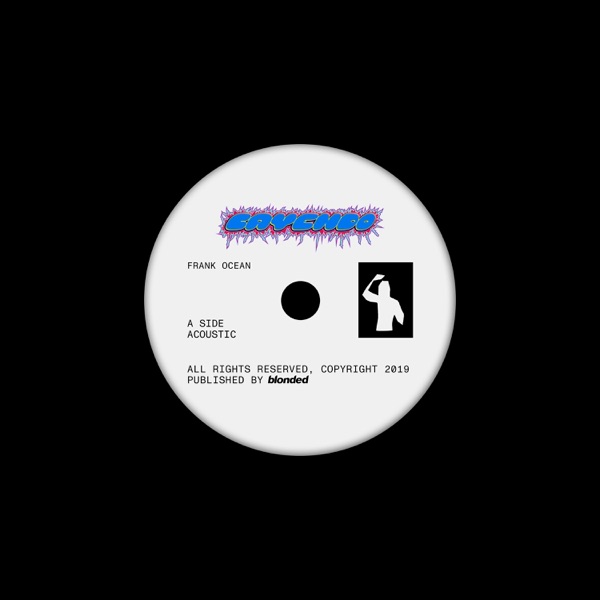
Ocean wrote the song and co-produced it with Daniel Aged, releasing it as a 7-inch single on March 25, 2020, concurrently with “Dear April.”
What makes the release significant beyond its emotional register is its formal audacity: a mainstream R&B artist of Ocean’s stature choosing nylon-string guitar, half-Spanish lyrics, and a vinyl-first distribution model as the architecture for a cultural moment. This is a single that rewards attention far beyond its running time, and whose downstream reach — across 43 countries and into Billboard’s Latin charts — speaks to a demand profile that defies the usual genre fences.
Album Credits
| Artist | Frank Ocean |
| Released | March 25, 2020 (vinyl); April 3, 2020 (digital) |
| Genre | R&B / Acoustic Soul |
| Label | Blonded |
| Producer(s) | Frank Ocean, Daniel Aged |
| Mixing Engineer | David Wrench |
| Recording Engineer | Caleb Laven |
| Tracks | 2 (Side A: Acoustic; Side B: Sango Remix) |
| Runtime | 3:22 (Acoustic); 2:09 (Sango Remix) |
| Lead Single(s) | Cayendo (Acoustic) / Cayendo (Sango Remix) |
Performance Snapshot
| Global Listeners | 1,465 |
| Total Scrobbles | 16,375 |
| Countries Charting | 43 |
| Strongest Market | United States — 184,959 listeners |
| Top 3 Markets | United States · Brazil · United Kingdom |
Production Architecture: Restraint as Statement
The most immediately striking thing about Cayendo is what Ocean and Daniel Aged chose to leave out. In an era when R&B production default settings involve 808 sub-bass, sidechain compression against four-on-the-floor kicks, and layered synthetic texture, this record is built around nylon-string acoustic guitar — the kind of timber that sits in the upper-mid frequencies and decays with deliberate openness.
The song is an acoustic ballad in which Spanish guitars accompany Ocean’s vocals, matching the Spanish lyrics.
The arrangement is almost monastic: no drum machine, no pad wash, just the guitar’s body resonance and Ocean’s multitracked vocal stacks providing all harmonic and rhythmic information.
Daniel Aged, one half of the Los Angeles duo Inc. No World, brings exactly the right sensibility here.
He co-produced the track alongside Ocean, and had previously contributed to the production of “DHL.”
His production fingerprint on Inc.’s own catalog — negative space, reverb-saturated guitar, emotional temperature held just below the surface — maps precisely onto what Cayendo requires. The decision to track at relatively low dynamic density means every vocal inflection in Ocean’s performance gets full room to breathe. David Wrench’s mix, credited on the release, makes intelligent choices about where to place Ocean in the stereo field: the lead vocal sits slightly forward of center with enough early reflections to suggest intimacy without muddiness.
The release consists of an “acoustic” version as side A, and a remix by Sango as side B.
Sango’s approach — which Ocean first previewed at his PrEP+ club event — operates on a different register entirely.
The Sango Remix seems to function as a 2-in-1 track; at 45 RPM it becomes a fast-paced track with Ocean’s vocals pitched up, echoing techniques heard on Blonde.
The RPM ambiguity is a deliberate formal game, one that rewards the attentive vinyl listener and draws a clean line between the physical-object experience and the streaming platform experience. The acoustic side is the emotional anchor; the Sango side is the conceptual provocation. Together they form a complete argument about grief and transformation. For another producer-forward R&B single that plays with format and texture in comparable ways, see Bobby V.’s Electrik in our catalog.
Songwriting and Lyrical Register: Two Languages, One Wound
Cayendo is a half-English, half-Spanish ballad in which Frank Ocean sings of an unrequited passion — the sensation of falling for another man, only to find the feeling is not reciprocated. Though left heartbroken, Ocean continues to love him.
The bilingual structure is not decorative. Spanish and English carry different emotional frequencies for a listener, and Ocean exploits that asymmetry: the Spanish-language hook lands with a kind of phonetic unfamiliarity for non-Spanish-speaking audiences that actually heightens emotional exposure, the way a chord modulation into a foreign key disorients before it resolves.
This marked the first time Ocean had sung in Spanish on a released song.
Ocean sings the hook in Spanish while the verse and outro are in English.
This structural division — Spanish for the emotional apex, English for the analytical framing — mirrors the dissociation of someone trying to intellectualize a feeling they cannot contain. The verse positions the speaker observing from a slight remove; the chorus drops the observational mask. It is a precise piece of songwriting architecture, not a bilingual gimmick.
Ocean interpolates a line from Sade’s 1988 hit “Love is Stronger Than Pride” when he sings in the verse: “I still really, really love you, yes, I do.”
That intertextual pull is worth dwelling on. Sade Adu’s catalog is built on the same aesthetic coordinates as this record — acoustic restraint, emotional precision, adult-contemporary instrumentation in service of genuinely complex interiority. Citing her here is not name-dropping; it is placing Cayendo inside a lineage. Ocean is identifying the tradition he is working within and updating it with a queerness and linguistic duality that Sade’s era couldn’t have accommodated so openly. The lyric functions simultaneously as tribute and claim.
Vocally, Ocean performs with exceptional technical control, holding back vibrato almost entirely until the moments where the lyric requires it most. The restraint amplifies the emotional weight considerably — excess ornament here would have been a betrayal of the song’s core thesis, which is about the effort of containing feeling rather than releasing it.
As one critical listener noted, “Frank Ocean’s Spanish is rough but the emotion is so honest and the vocals are so pure and great that it justifies it.”
That roughness is, arguably, part of the point: linguistic imperfection as emotional authenticity, the accent as evidence of reaching across a boundary.
Market Note: Bilingual IP and Cross-Format Demand
Cayendo‘s IP profile is unusually strong for a two-track single. The vinyl-first release strategy — limited 7-inch through blonded.co as a direct-to-consumer pre-order — established collector demand before the song was even available on streaming platforms, creating a scarcity premium that drove disproportionate press attention.
Upon its digital release, Frank Ocean netted his first top 10 hit on the Hot Latin Songs chart, arriving at No. 8.
The chart position was driven primarily by streaming activity, registering 4.4 million U.S. clicks in the week ending April 9, debuting at No. 7 on the Latin Streaming Songs chart.
The geographic data reinforces this cross-market thesis: with Brazil sitting as the second-strongest territory (55,393 listeners) behind the United States (184,959), and the United Kingdom (34,796) and Canada (21,381) rounding out the top four, Cayendo‘s appeal maps across both Anglophone and Latin-adjacent markets simultaneously. With 43 countries registering meaningful listening activity, the catalog longevity here extends well beyond Ocean’s core fanbase. The song’s sync potential remains high: its acoustic palette, bilingual lyric, and association with queer experience position it well for film and prestige TV licensing, markets that actively seek emotional specificity over genre-legibility.
Cultural and Geographic Context: Who Is Listening and Why
The performance data tells a story about how Cayendo travels. The United States dominates with nearly 185,000 listeners — unsurprising given Ocean’s foundational status in American R&B and the decade-long cultivation of his audience through Channel Orange and Blonde. But Brazil’s position as the second-largest market, with over 55,000 listeners, is the more interesting data point. Brazil’s music streaming culture has made it one of the world’s most significant consumption markets for emotionally literate R&B and pop, and the Spanish-language hook in Cayendo — while Spanish and Portuguese are distinct languages — almost certainly functions as a point of cultural proximity for Brazilian listeners in a way it doesn’t for, say, an English-only audience in the United Kingdom.
Ocean first premiered the track at his PrEP+ nightclub event in New York City on October 17, 2019.
PrEP+ is Ocean’s own queer-centric club night, and that context matters. Cayendo entered the world in a specifically queer space, through a Black queer artist singing in Spanish about loving a man, before it became a streaming commodity. That origin shapes its cultural meaning: it belongs to a tradition of queer music that circulates in community-specific spaces before reaching general audiences, and the authenticity of that trajectory is precisely what distinguishes it from a calculated cross-market positioning exercise.
The United Kingdom’s 34,796 listeners, and Germany’s 8,139, speak to the specific way European audiences have processed Ocean’s post-Blonde catalog — with a patience and a critical vocabulary for emotional minimalism that the Anglo-European listening public tends to apply to certain Black American artists it categorizes as “literary.” The Netherlands (7,241), India (6,949), and Poland (6,248) completing the top ten listening territories is its own kind of argument: this record reaches listeners who are not necessarily R&B format regulars, which means its demand driver is emotional and aesthetic intelligence rather than format familiarity. That’s a rare quality in a commercial single and it explains why the record’s streaming velocity has not collapsed in the years since release.
As of January 2026, Ocean has not had any releases on a music platform since 2020, making it his longest career hiatus thus far
— which places even more weight on Cayendo as the most recent artifact in an unresolved discography.
Critical Assessment: Where It Lands and Where It Strains
There is a category of release that resists conventional critical frameworks because it refuses conventional scale. Cayendo is not trying to be a hit in the sense that it chases format dominance or production trend-alignment; it is trying to be a precise emotional object. Measured against its own stated ambition, it mostly succeeds. The production by Ocean and Aged is so clean in its intention that the guitar’s sustain and decay become the primary emotional carrier — not the lyrics, not the vocal phrasing, but the physical resonance of a plucked string. That is a sophisticated compositional decision.
The bilingual structure has attracted some criticism, specifically around Ocean’s Spanish-language execution.
Listeners have noted that “Frank Ocean’s Spanish is rough,” though most conclude that “the emotion is so honest” that the technical imprecision becomes a feature rather than a liability.
That’s a generous reading, but not an inaccurate one. Ocean is not performing fluency; he is performing effort and vulnerability. The Spanish is a reach, and the audience feels the reach. Whether that constitutes a flaw depends entirely on what you believe a song is for.
What strains slightly is the comparison with the ambition of the broader Blonded singles run. “DHL” (2019) had formal adventurousness — that fragmented structure, the production collage — that made it feel like a genuinely new compositional argument from Ocean. Cayendo is more resolved and more contained, which is either its virtue or its limitation depending on listener expectation. For those who came looking for the formal restlessness of Blonde, the acoustic simplicity might register as retreat. For those who prioritize emotional precision over structural complexity, it is exactly right.
The Sango Remix as side B is strategically smart but creatively unequal to the A-side. Sango’s production skill is not in question — his work in tropical bass and diasporic electronic music is genuinely distinguished — but the RPM-dependent concept, while clever, diffuses rather than deepens the listening experience. The A-side is definitive; the B-side is a footnote with an interesting idea.
As a data point in Ocean’s catalog, Cayendo holds significant weight by circumstance as much as by design.
Ocean has not released music on any platform since 2020
, which means this record and its companion “Dear April” carry the full burden of representing where his artistic practice currently resides. That’s a heavy load for a three-minute acoustic ballad. It carries it — not effortlessly, but with unmistakable intention. For listeners approaching Ocean’s catalog from adjacent sonic territories, Aaliyah’s Heartbroken offers useful comparative context on the R&B tradition of controlled emotional restraint, and Earth, Wind & Fire’s You Want My Love charts a parallel arc of Black American acoustic-soul heritage that illuminates the lineage Cayendo quietly claims.
Frequently Asked Questions
Where can I stream or purchase Cayendo by Frank Ocean?
The acoustic version was released on digital platforms on April 3, 2020, after the 7-inch vinyl began shipping on March 25.
The single is available on all major streaming platforms including Spotify, Apple Music, and Tidal under Frank Ocean’s Blonded imprint. The physical vinyl, a limited 7-inch issued through blonded.co, carries collectible value and appears intermittently on secondary markets at a significant premium over original retail.
How did Cayendo perform commercially and critically?
“Cayendo” gave Frank Ocean his first top 10 hit on the Hot Latin Songs chart — arriving at No. 8 — and was also his first-ever entry on that chart, which blends airplay, digital sales, and streaming data.
It also appeared at No. 3 on Latin Digital Song Sales
upon its streaming debut. Critically, the record was received with strong enthusiasm, with listeners and critics alike singling out the production restraint and vocal honesty as its central strengths.
What are the standout tracks on this single?
The A-side, Cayendo (Acoustic), is the definitive version — the one that registers as a complete emotional statement and drives the record’s streaming numbers and chart performance.
The B-side is a remix by Sango
, which takes the original into a different tempo and textural territory at varying RPM speeds. For most listeners, the acoustic version is the anchor; the Sango Remix functions as a supplementary formal experiment rather than a competing interpretation.
What similar albums should I explore after Cayendo?
Listeners drawn to Cayendo‘s blend of acoustic precision and R&B emotional intelligence should explore Aaliyah’s Heartbroken, which traces the earlier lineage of controlled vulnerability in Black American R&B, and Earth, Wind & Fire’s You Want My Love for the acoustic-soul tradition Ocean draws from. Both are in our catalog and offer strong contextual framing for what Cayendo is reaching toward.
Girls Choice Music · Curation and Analysis
Authored on May 26, 2026
Listen with 30-sec previews
Previews served by iTunes. Press play on any track.
Similar albums






Released the same week
Other albums released near this date, across years.